Share this page
Literature
Read the street. Don't invent its biography.
Poe and Woolf offer two ways of looking at a city: the urge to decode strangers, and the lives that continue beyond our view.
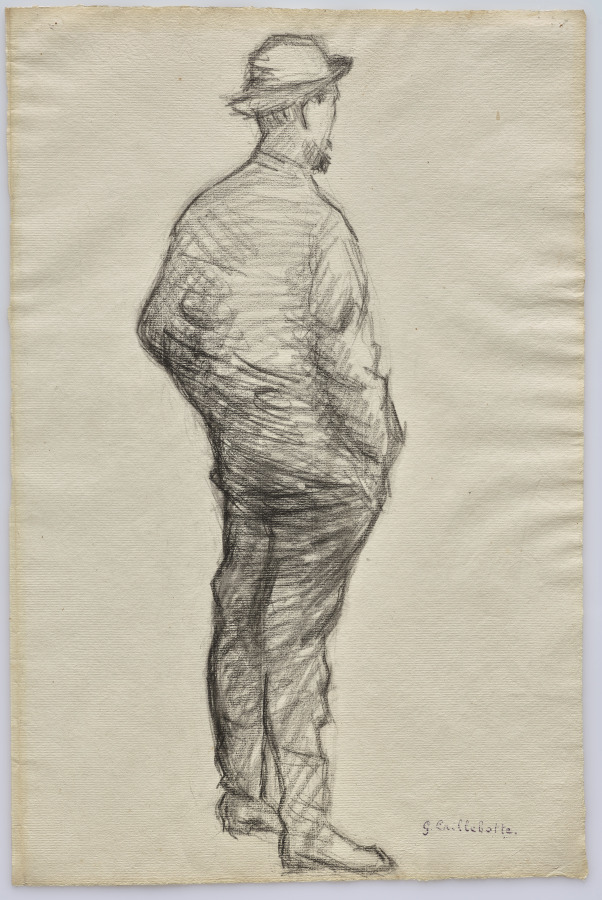
The Cleveland Museum of Art, John L. Severance Fund, 2020.260. CC0. · CC0 · Collection record ↗
Poe puts the observer on trial
Edgar Allan Poe's The Man of the Crowd first appeared in 1840. Its narrator watches London through a coffee-house window, sorts passers-by into types, then follows an older stranger whose appearance defeats him. Read the original story through the Poe Society's edition and pay attention to how confidently the narrator converts a glimpse into a verdict.
Our photographic comparison is the danger of knowing too much too quickly. A bowed head becomes 'despair'; an old coat becomes a complete social history. The picture might support neither claim. Poe's observer makes an excellent companion for a street session precisely because we should distrust his certainty. He would be exhausting in the group critique. He would also have written every caption before importing the files.
Woolf lets the city hold several lives
Virginia Woolf's Mrs Dalloway follows intersecting lives through London. The Virginia Woolf Society's walking guide connects Clarissa's route to the movements of Rezia and Septimus, including the car backfire they hear. One urban occurrence enters several people's experience without making those experiences identical.
A photograph cannot enter those private thoughts as a novel can. It can, however, hold different centres of attention: someone waiting, someone hurrying, someone absorbed in a shop window. Try resisting the urge to nominate a single heroic subject. Look for a frame in which two gestures coexist. Their relationship may be spatial, not social. Two strangers sharing your rectangle need not be sharing a story, a mood or a destiny.
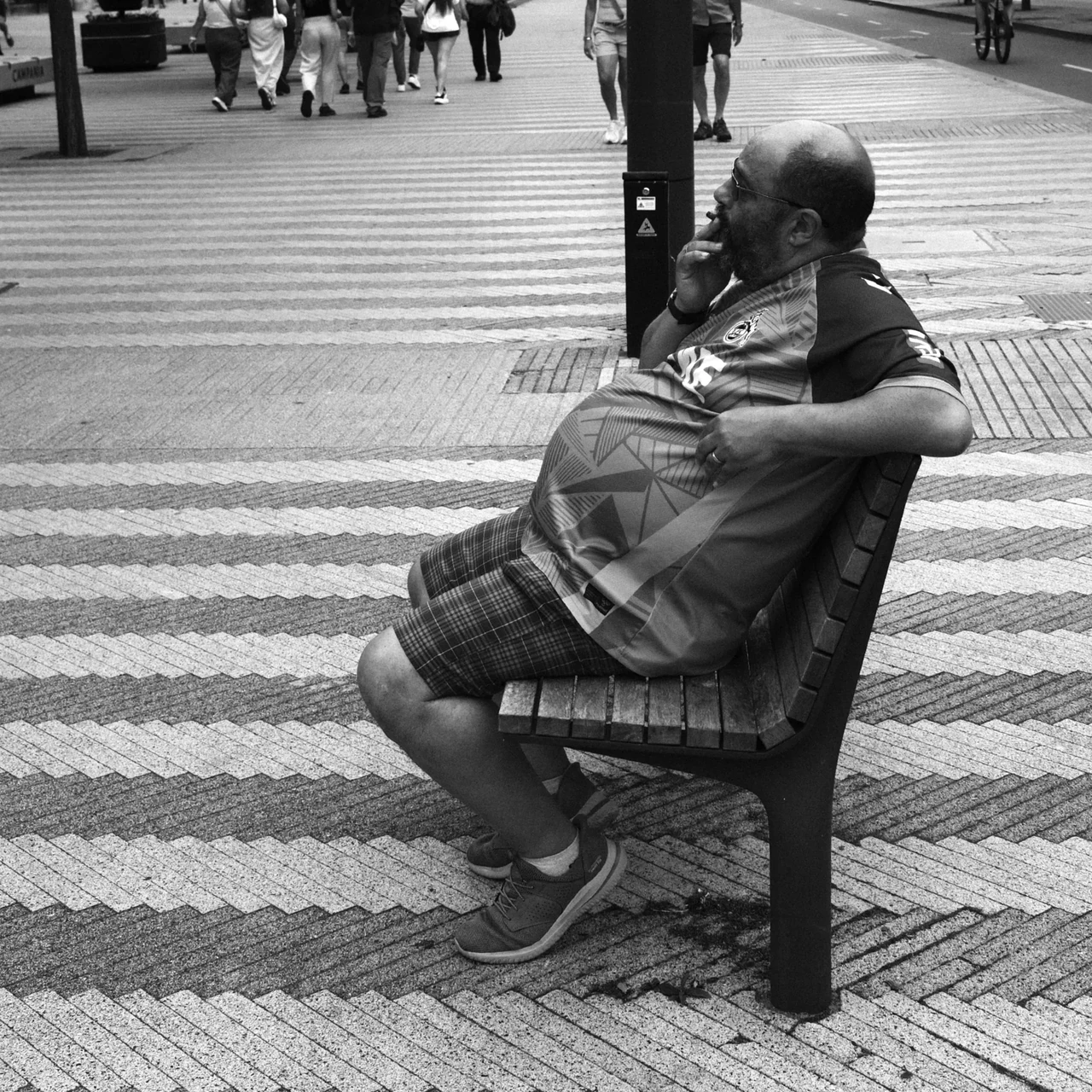
A contemporary practice example, by Mark C Grant. An editorial comparison, not a work by the artist discussed.
What a picture can leave unsaid
The Caillebotte drawing shown here is a visual comparison, not an illustration commissioned for either book. The turned figure offers posture without a full face. It gives enough to look at and plenty we cannot know. Beside it, Mark's bench photograph is a present-day practice study, not evidence about a fictional character.
Read both slowly. Name the angle of a shoulder, where the weight sits, what space surrounds the figure. Then write the temptation: tired, impatient, lonely, content. Put those guesses in a separate column. The gap between the two columns is useful. It shows where observation ends and your projection starts. Ambiguity can be a strength without becoming an excuse for vague captions about the human condition.
Give the sequence a point of view
Literature also helps with editing. Who appears to be looking? What does the reader learn first? What remains outside the account? Three photographs of the same pavement can imply a rush, an interruption or a pause simply through their order. That is an editorial construction, not proof of what every person there felt.
Take a short walk with the camera lowered for the first five minutes. Write down a sound, an action and something you cannot explain. Then make three frames that answer those observations without trying to solve a stranger. A useful caption can say where and when, describe the visible action and admit what is unknown. The photograph can keep its mystery. It does not need a small detective agency beneath it.
Sources & further looking
- Read Poe's The Man of the Crowd — 1845 text ↗
- Poe Society: publication history of The Man of the Crowd ↗
- Virginia Woolf Society: a Mrs Dalloway walk in London ↗
Sources checked 2026-10-22. Visual readings and proposed connections are our editorial interpretation.
Bring another connection.
Name the work and the detail. “It has a vibe” can be the beginning; it cannot be the whole argument.
Discuss art & influence ↗Your turn / photographs & ideas
Bring a frame. Leave a thought.
What did this make you notice? Bring your own photograph, try the exercise, or give us a considered disagreement. The camera bag can wait.
Sign in or make an account to post. Share your own work, credit your sources and keep the conversation generous. Reader photographs remain the work of their contributors.