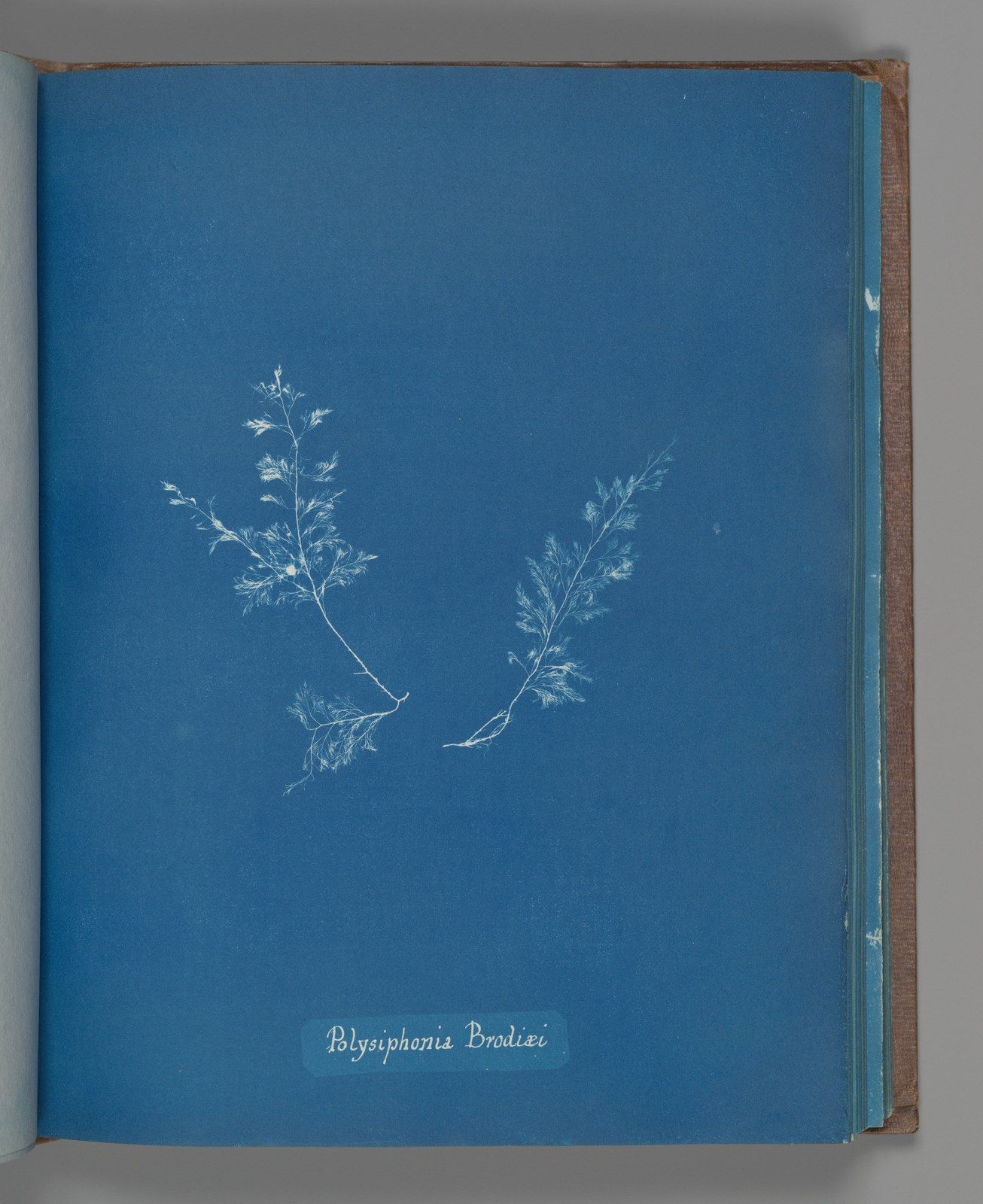
British botanist Anna Atkins (1799–1871) used cyanotypes in Photographs of British Algae, issued from 1843 and recognised as the first photographically printed and illustrated book.
No lens. Still photography. A useful disturbance.
These pale stems are records of contact with light-sensitive paper. Atkins placed specimens on the prepared surface, exposed it and made their branching structure visible without a camera. The blue belongs to the cyanotype process; turning this reproduction black and white would erase something worth learning. Watch how the two main forms balance without becoming identical. The surrounding space is doing real work, and the handwritten name connects looking with identification.
Her algae books joined scientific observation to photographic publishing at the beginning of the medium’s history. They also complicate any tidy definition of a photograph as a lens-based view of the world. Here selection, arrangement and direct physical traces do the job. For a studio full of people arguing about camera bodies, that is wonderfully inconvenient. The transferable skill is precise attention: what does this individual thing look like, and how little else does the picture need?
Sources & further looking
Checked 22 October 2026. Visual readings and proposed connections are our editorial interpretation.
What does the picture make you notice?
Does the botanical label change how you look at the shapes?
Discuss photography & art ↗