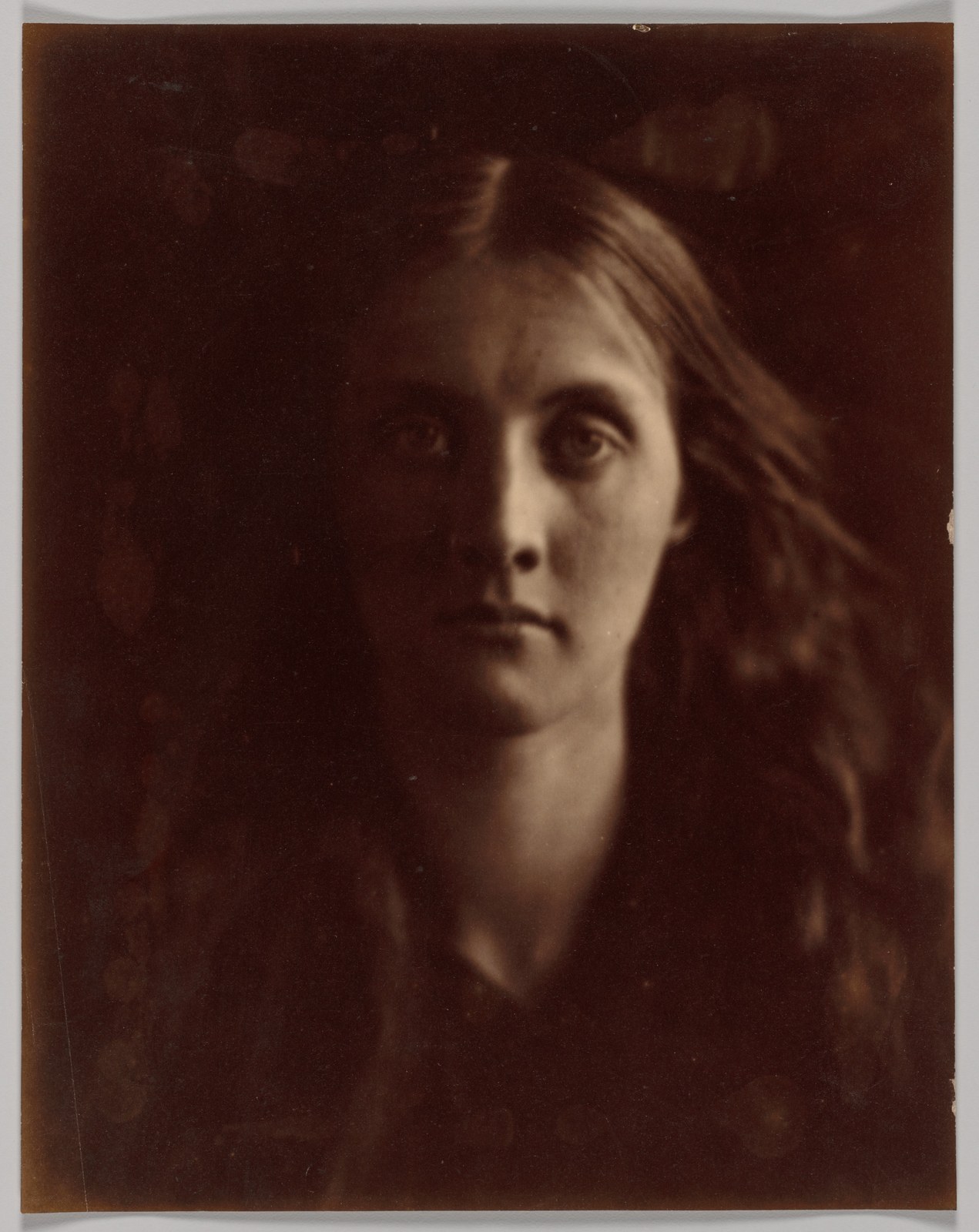
Julia Margaret Cameron (1815–1879), a British photographer born in Calcutta, became known for closely framed portraits and staged literary subjects.
Sharpness is not the same thing as presence.
One side of Julia Jackson’s face arrives in the light; the other stays uncertain. Hair and background merge, so the eyes and mouth hold the picture without a busy supporting cast. Cameron made this portrait of her niece in 1867. The close framing feels strikingly immediate, but do not confuse that feeling with access to Jackson’s thoughts. A photograph can suggest an inner life without telling us exactly what it was.
Cameron’s importance here is a challenge to the idea that better photography always means more resolved detail. The picture directs attention through light, tone, proximity and the sitter’s gaze. That is a useful argument to have beside a modern screen at two hundred per cent magnification. Before announcing that an image has failed the eyelash inspection, ask whether you can stop looking at the person. Technical choices should serve that encounter, rather than replace it.
Sources & further looking
Checked 22 October 2026. Visual readings and proposed connections are our editorial interpretation.
What does the picture make you notice?
How much detail can disappear before the portrait loses its hold on you?
Discuss photography & art ↗