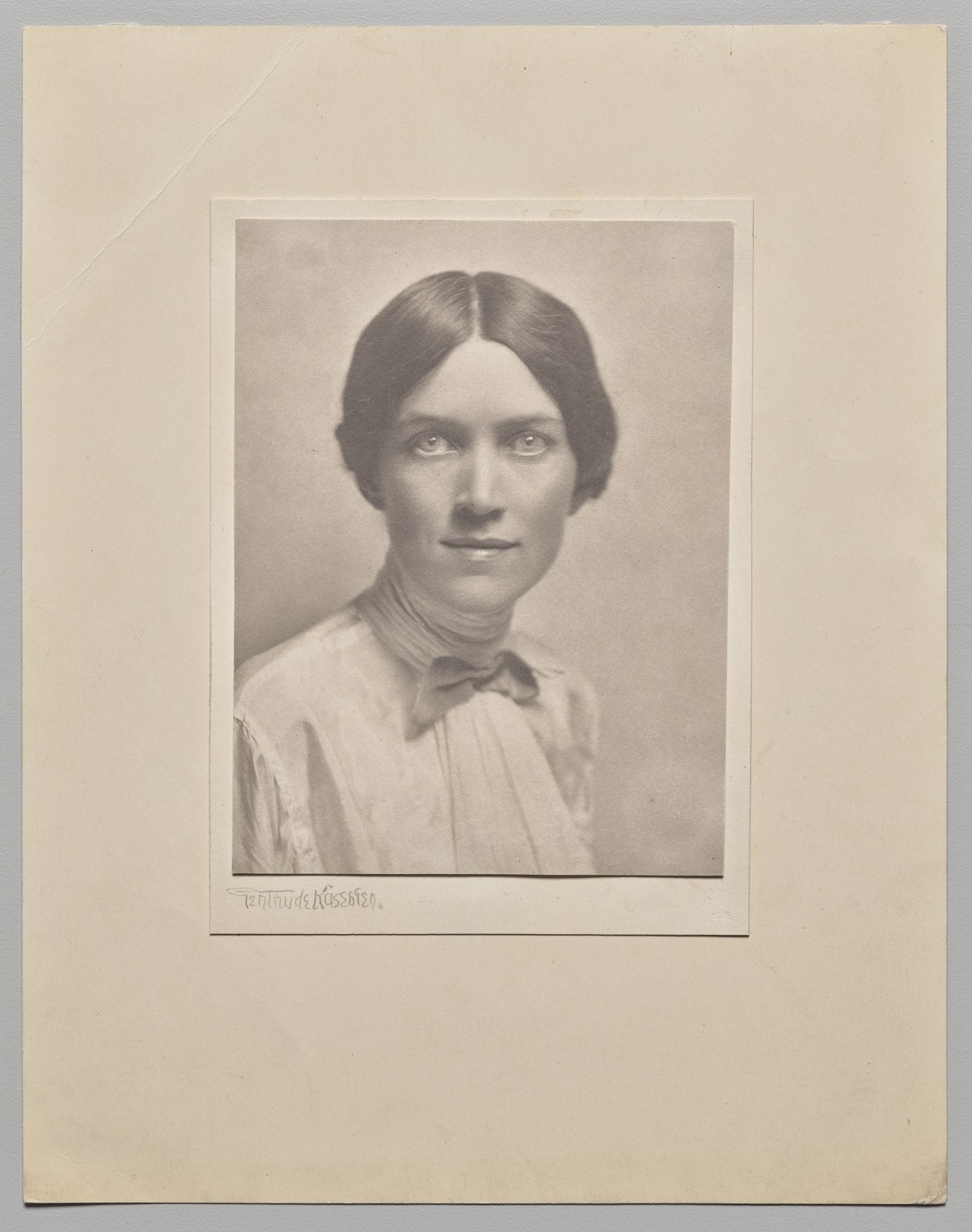
American photographer Gertrude Käsebier (1852–1934) brought an artistic approach to portraiture; this sitter, Honoré Willsie Morrow, was an author and magazine editor.
A portrait is a negotiation, even when it looks simple.
Morrow meets the camera with a direct gaze, while the slight turn of her body prevents the portrait becoming a flat inventory. The pale blouse and background let the darker hair and eyes establish the hierarchy. The mount gives the small image considerable breathing room. Resist cropping it away automatically: the presentation is part of how this particular object asks to be seen.
The Cleveland Museum describes this as an example of Käsebier bringing artistic judgement to commercial portrait work. That matters because the history of photography is also a history of skilled working photographers, commissions and collaboration. Art did not happen only when someone escaped the studio. Nor does a calm expression prove a complete personality. For a contemporary street portrait, the lesson is to give the sitter time and agency. A few honest minutes together can make a stronger picture than a rapid ambush followed by an extravagant caption.
Sources & further looking
Checked 22 October 2026. Visual readings and proposed connections are our editorial interpretation.
What does the picture make you notice?
Whose judgement should have the final word in a collaborative portrait?
Discuss photography & art ↗