Literature / Portrait / Street
Baudelaire: the window is not the whole story.
Read a prose poem, look at Nadar’s portrait, then take a walk. The city supplies fragments; the caption must know when it is guessing.
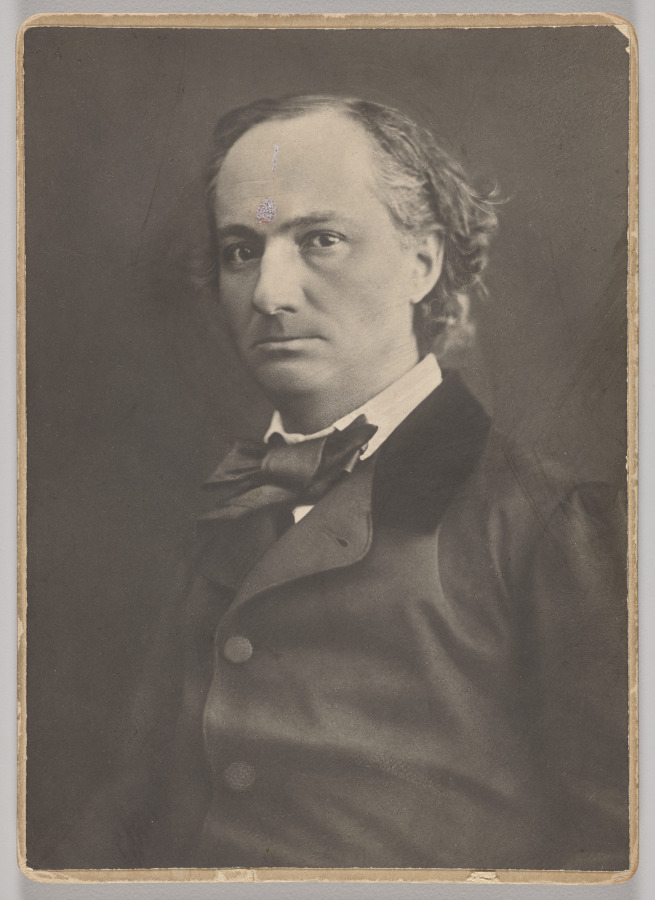
The Cleveland Museum of Art, Gift of Nina Rosenblum and Lisa Rosenblum, 2022.350 · CC0 1.0 · Collection record ↗
A glimpse becomes a life
In Baudelaire’s short prose poem Windows, an observer looks towards a woman beyond the roofs and constructs a story from a glimpse. The writing makes the act of invention visible. Its power comes partly from the distance between what the narrator sees and what the narrator needs the scene to mean. Read the linked Arthur Symons translation, then ask where observation gives way to projection.
For photography, that is a useful discomfort. A coat, a posture and a lit window can suggest a life, but suggestion is not verification. A personal sequence can acknowledge its imagined story. A factual caption should not quietly borrow that freedom. The word “lonely” has been attached to enough strangers waiting for buses to qualify for its own season ticket.
Nadar gives us a person, not a key
The portrait above does not unlock the poem. It offers a different object: an albumen image of a named writer, carried on a cabinet card. The eyes look towards us, the dark coat occupies most of the lower frame, and the light collar separates head from clothing. Knowing the name changes our encounter, but the photograph is not a recording of the poem being thought.
Beside it, look at Atget’s Paris street below. Its signs, shadows and route into the distance invite a wandering eye without supplying a central character. Pairing these works is our exercise in looking and reading, not proof that the photograph illustrates Baudelaire. The conversation is useful precisely because the media do different things.
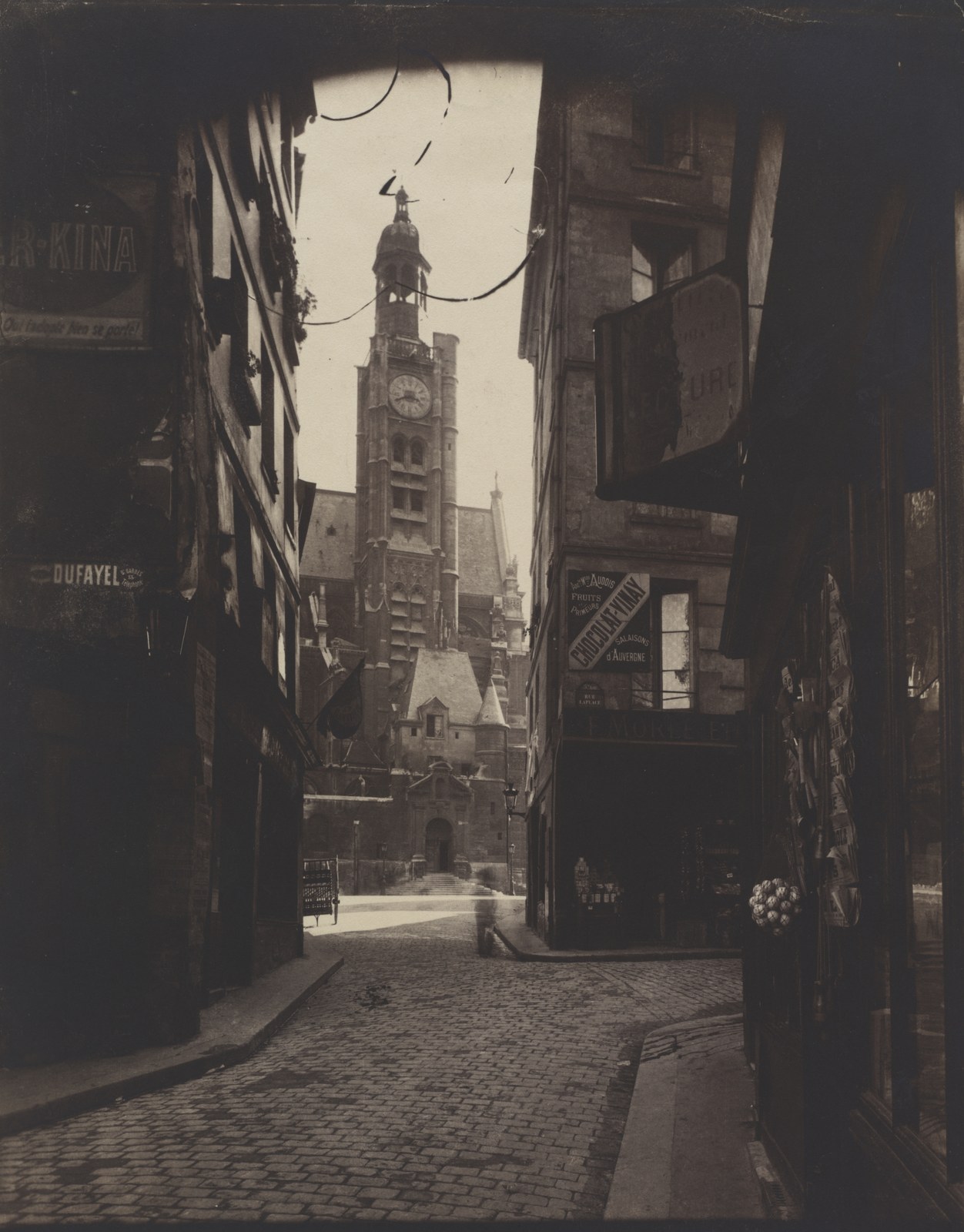
The Cleveland Museum of Art, John L. Severance Fund, 1985.115 · CC0 1.0 · Collection record ↗
Try a prose-poem edit
A short prose poem can build pressure through juxtaposition instead of a conventional beginning, middle and end. Borrow that as an editing question. Put a threshold beside a gesture, then beside a trace left by someone who has gone. The sequence may suggest a city mood without requiring the people in different frames to be connected.
Keep the connection honest. Two people photographed on separate streets did not meet merely because you placed their pictures next to each other. If your sequence is a constructed association, let its presentation make that clear. The relationship between images is something you make; the events inside them still deserve accurate descriptions.
Write two captions, then keep them apart
For one photograph, write a short factual caption: place, date, visible activity, any information confirmed by the subject. Next, write a paragraph beginning “This makes me think of…” The second may be more vivid. It also tells the reader whose thought it is. That small change in grammar makes room for imagination without passing it off as somebody else’s biography.
Read the poem again after the walk. Has it changed what you notice, or merely supplied a grand title for a frame that was already there? Either answer can be useful. The point is to let literature sharpen attention and self-awareness. Your pavement need not cosplay nineteenth-century Paris to deserve a photograph.
MoMA’s film about Lange examines the relationship between words and pictures. Use it as a comparison with the poem: what can a caption add, and what can it impose?
Watch, then try
Dorothea Lange: Words & Pictures | MoMA EXHIBITION

Compare the photograph before and after its caption. Name what the words establish, what they suggest, and what remains unknown. Then try two clearly distinguished captions for one of your own pictures.
Sources & further looking
- Baudelaire: Windows and Crowds, translated by Arthur Symons, in the 1919 anthology ↗
- Nadar: Portrait of Baudelaire ↗
- Atget: the Paris street ↗
Sources checked 2026-10-23. Visual readings and proposed connections are our editorial interpretation.
Bring another connection.
Name the work and the detail. “It has a vibe” can be the beginning; it cannot be the whole argument.
Discuss art & influence ↗