Choose the photograph before you make it
Here is the proposition. Load a look into the camera. Go for a walk. Make twelve photographs. Keep every one, in order, and do not edit them. No straightening the horizon while nobody is looking. No rescuing the shadows, replacing the sky or turning a near miss into the picture you meant to take. Twelve encounters, twelve decisions, and the evidence of being there with a body rather than a surveying instrument.
A lopsided frame? For this walk, let it lean. A soft subject? Perhaps its presence matters more than the inventory of its eyelashes. Movement traces? Let the photograph breathe. This is permission to meet what happened before ordering it to improve its posture. You can still dislike a picture afterwards. You simply have to look at it before reaching for the repair kit.
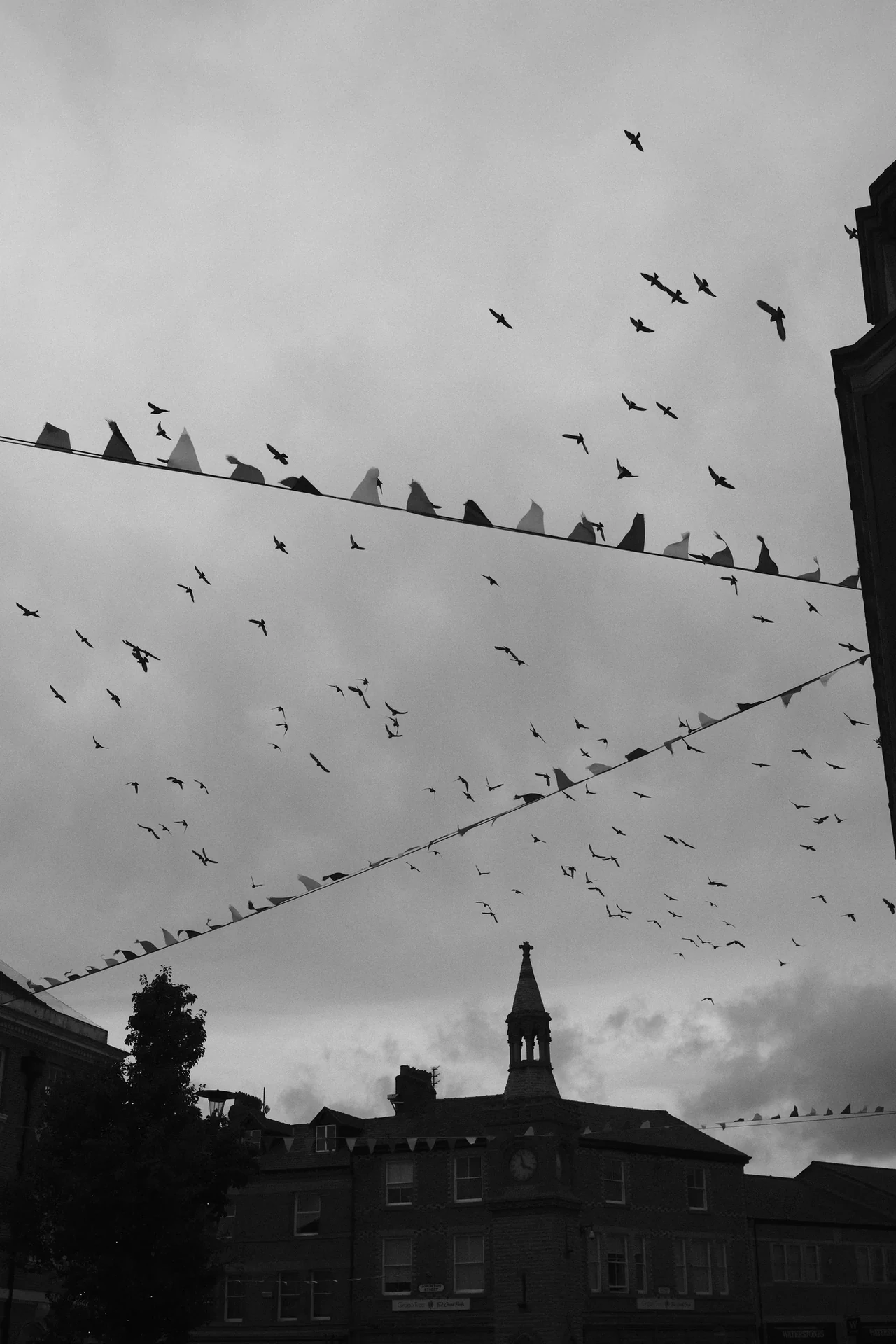
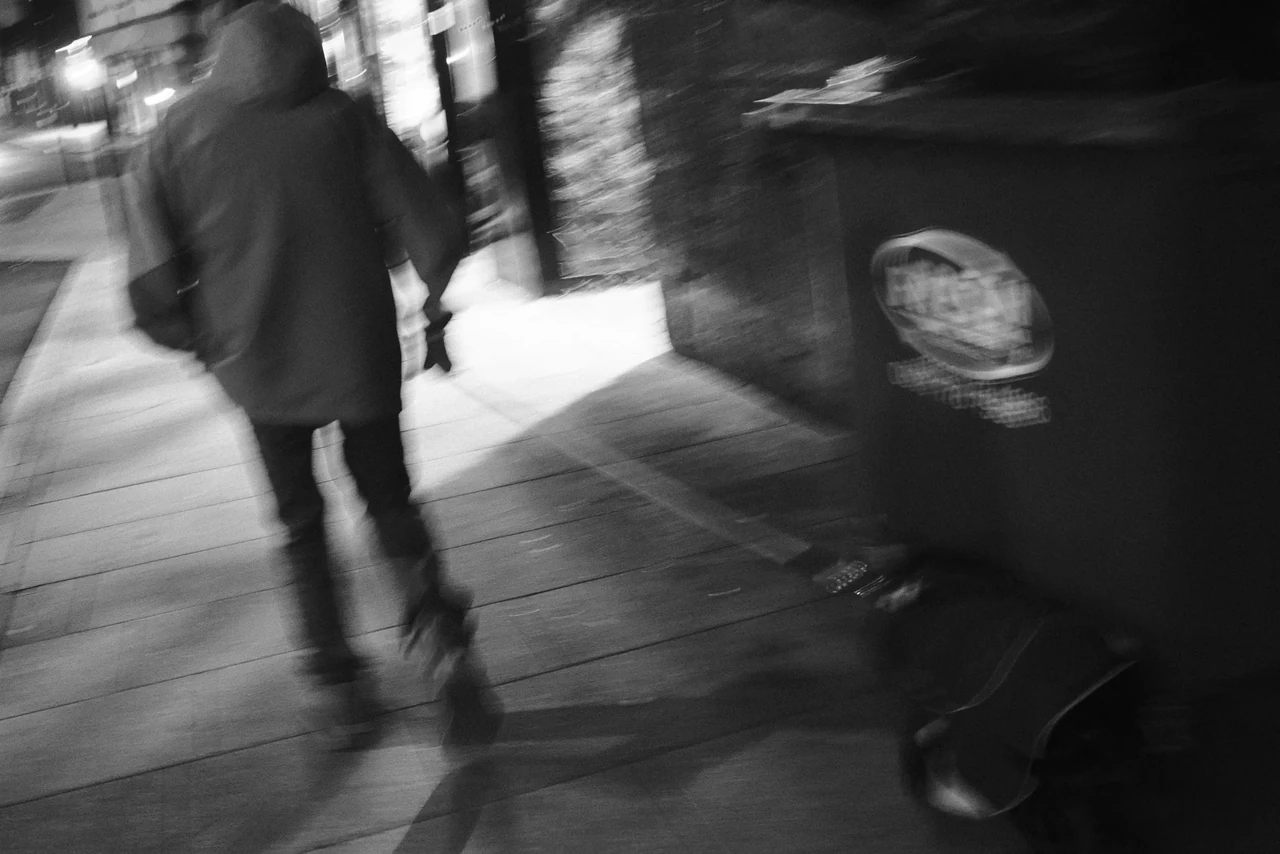
The photographs illustrating this essay are existing works by Mark C Grant. They offer things to look for—motion, interruption and hard light. They are not a claimed twelve-frame submission, a test of a Fujifilm recipe, or evidence of particular camera settings. Your own twelve will supply that experiment.
The foreground interrupts
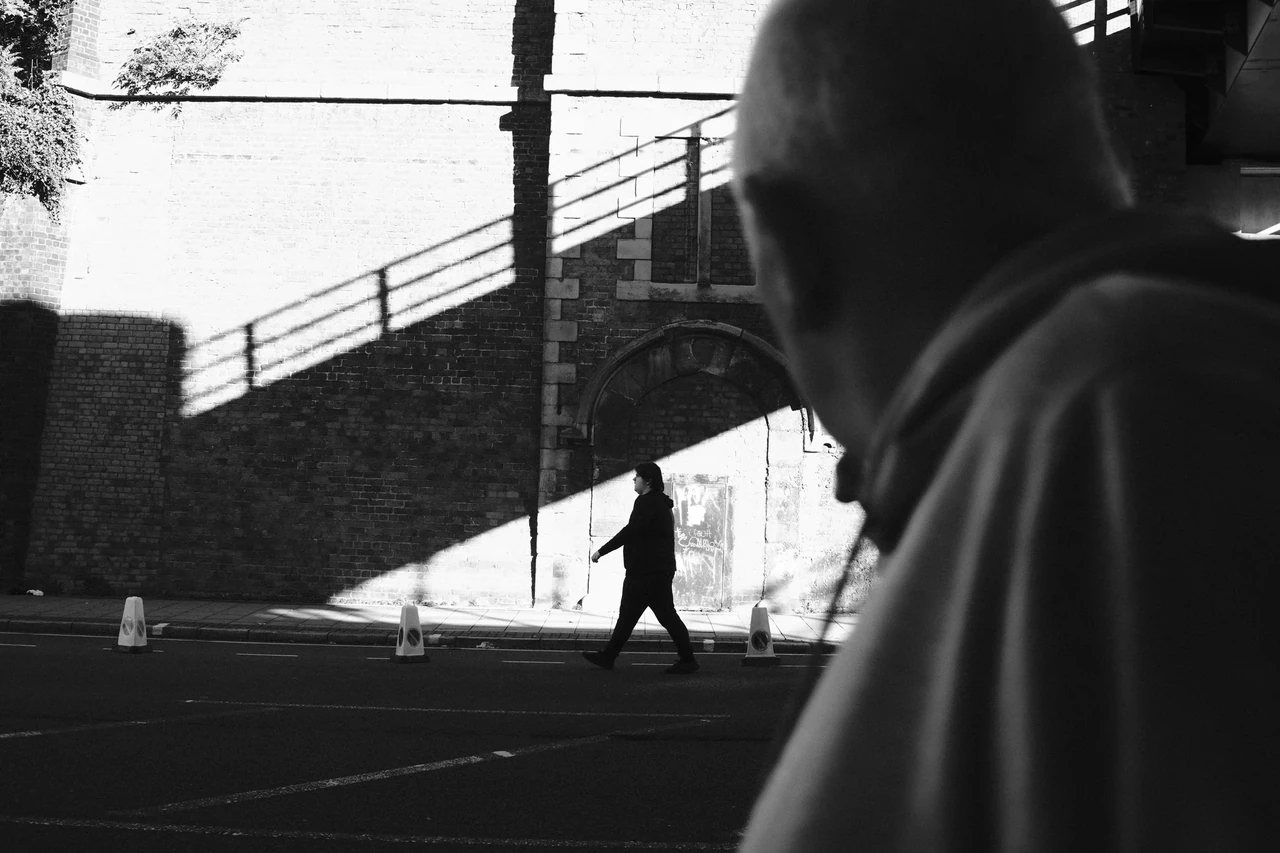
A large, partly cut-off passer-by occupies the near edge while a smaller figure crosses the bright wedge beyond. Your eye has to negotiate two distances. The interruption makes the view feel occupied. Cover the foreground briefly and notice how much tidier—and less layered—the picture becomes.
Passing through the Frame · Photograph © Mark C GrantWhat a film recipe actually does
Fujifilm calls its built-in rendering styles Film Simulations. A recipe combines a simulation with other available image settings: a tone curve, grain, white balance and detail treatment, for example. The simulation is one ingredient; the saved combination is the recipe. It is a way of deciding how the camera will turn a capture into a finished image.
Choose those settings before releasing the shutter and the camera applies them when it processes the JPEG. The edit is committed at capture, rather than literally burned into a file before that file exists. Fujifilm’s own recipe guide explains how the image-quality controls work together. A colour recipe might lean on white-balance shifts; a monochrome recipe asks different questions about the separation of greys, contrast and texture.
The film-stock analogy is useful because it gives the walk a consistent starting character. You choose a response and learn to notice situations that speak through it. But a sensor does not become a particular emulsion. A borrowed stock name is a creative comparison, not proof of identical grain, highlight behaviour or colour. The light, lens, exposure and camera generation still matter. Buying the recipe is not buying its maker’s afternoon.
One step changes the picture
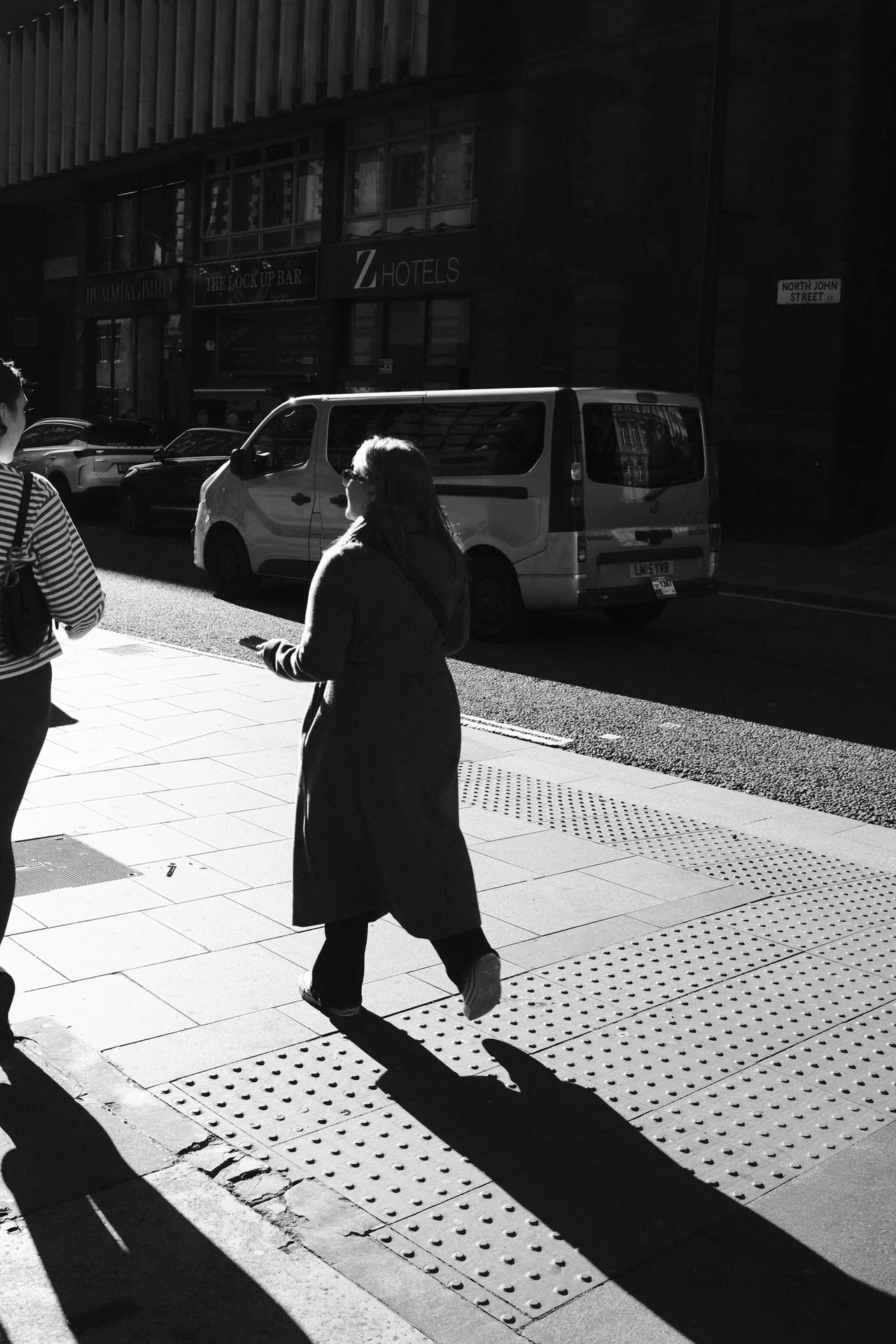
A figure crosses a sharply divided patch of pavement, with a long shadow extending across it. Light makes the pedestrian and the ground separate clearly. Follow the shadow towards the edge. It is part of the composition, not an accessory to the person.
Crossing into Sunlight · Photograph © Mark C GrantWatch, then try
Film Simulation - ACROS Promotional Video/ FUJIFILM

A manufacturer’s promotional film, not a recipe tutorial. Compare the bright edges, middle greys and dark areas. Choose a tonal direction for your own twelve frames; the photographs here do not promise the same result from one setting.
JPEG commitment, RAW insurance
A JPEG already contains processing. “Unedited” in this challenge means no adjustments after capture; it does not mean untouched by interpretation. Fujifilm’s JPEG/RAW guidance makes the practical distinction clear: you can record a finished JPEG and a RAW file together, retaining a more flexible starting point for another rendering later. For this exercise, put the RAWs aside until the twelve-frame review is over.
The look is baked into the JPEG, but the JPEG is not uneditable. You can change it later; you have simply agreed not to. Nor does selecting a monochrome simulation turn the sensor’s RAW data into monochrome data. Software may display a matching preview or interpretation, which can make this distinction less obvious. A RAW backup does not disqualify you. Quietly substituting a developed RAW for an awkward original JPEG does.
Nothing here requires a new Fujifilm. Ricoh’s GR III and IIIx offer Image Control looks including Hard Monotone and Hi-Contrast B&W, with adjustable parameters. Other cameras have their own picture styles. Use a supported monochrome rendering you can repeat. Check the manual for your actual model: a rangefinder-shaped body, an optical viewfinder and a coupled optical rangefinder are different things. None is a moral qualification for the walk.
A modest starting look
On a compatible Fujifilm, start with ACROS, or MONOCHROME if ACROS is absent. Keep the first experiment restrained: neutral highlight and shadow settings, modest grain if you want it, and no elaborate chain of special effects. The suggested setup below is our exercise baseline, not a measured emulation of a named film stock. Make your setup tests before declaring frame one, then stop changing the rendering.
Save the combination using the route described in your model’s manual. Fujifilm’s custom-setting guide explains that access and storage differ between bodies. Check what the bank actually remembers, including white balance, exposure and focusing choices where applicable. Give it a name you can recognise. “Twelve” is sufficient. “Existential Dockside Silver Halide V7 FINAL FINAL” may be asking a small camera to carry too much.
Dynamic Range is a particular camera control, not a synonym for mood. The X100VI manual says its higher settings help retain highlight detail and have ISO requirements: DR200 starts at ISO 250 and DR400 at ISO 500 on that model. Other models differ. D Range Priority can also take over the tone curve. Read the manual, choose once and keep the setting consistent. Exposure remains a decision you make for the actual scene.
The rules: twelve releases, no rescue
Before the walk, select JPEG or RAW+JPEG, a fixed image rendering, one aspect ratio and a lens or focal length you know. Turn off bracketing and use single-frame drive. Test that the file is being saved as intended. Those setup pictures do not count; everything after your declared start does. Choose a short route you can walk comfortably and start with a clean tally, not by deleting anything from the card.
Make exactly twelve exposures. Do not shoot fifty and nominate twelve as the honest ones. No deleting a miss to buy another go, no burst dressed up as one moment, and no swapping the recipe when the light becomes inconvenient. Adjust focus, aperture, shutter speed, ISO or exposure compensation when the photograph needs it. The fixed part is the rendering and the twelve-frame limit, not a refusal to operate the camera.
After frame twelve, stop. Copy the original JPEGs, keep them safe and arrange all twelve in capture order. No crop, rotation, tonal adjustment, denoising, sharpening or object removal. A contact sheet can resize each full image to fit the page; leave the originals intact. The sheet is a record, not a makeover. Give it a date, route and recipe name. That is plenty of graphic design for one evening.
Imperfection needs a job
A tilted photograph can carry speed, instability or the pressure of a crowded pavement. Softness can move attention from small detail towards gesture and mass. A blurred arm can tell you more about an action than a perfectly separated cuff. In Passing in a Blur, look at the moving figure against the more stable surroundings. The difference lets you feel an event stretching through time.
None of that makes every mistake good. A tilt can also empty the picture of tension. Missed focus can bury the very gesture that attracted you. The challenge suspends correction so that you can discover which is happening. Ask what the irregularity contributes before asking how to remove it. “The subject wasn’t sharp enough” is a useful studio joke; it is not an optical explanation.
Do not manufacture twelve fashionable accidents. Deliberately wrecking everything is another preset, only with more wrist movement. Give the world room to interfere with a real intention. If the best frame is level, crisp and beautifully exposed, keep it without apologising. The quest for imperfection is a release from compulsory polish, not compulsory failure.
Twelve pictures, then twelve honest sentences
Leave the sheet overnight. Tomorrow, write one sentence beneath each frame: what happened here that I did not completely control? Name something visible. A person crossed the edge. The shadow swallowed a hand. A reflection joined two scenes. “It is cinematic” does not get you out of this; the kettle has heard that one before.
Mark three frames that became more interesting because you left them alone. Mark three that taught you where technique would have helped. These groups may overlap. Ask someone else to look before giving them your defence. What do they notice first? Which frame makes them stay? Their answer need not match the intention you remember having.
Twelve moments of truth does not mean twelve objective truths. Choosing a viewpoint, a fraction of time and a tonal rendering already shapes the account. Here, truth means keeping your side of the experiment: these are the twelve encounters you made, including the awkward ones. Take what they teach you into another walk. A new twelve may use a new look. The previous twelve get to remain themselves.
Watch, then try
Fujifilm Film Simulations Settings Simplified (Part 3) | Assign Custom Settings
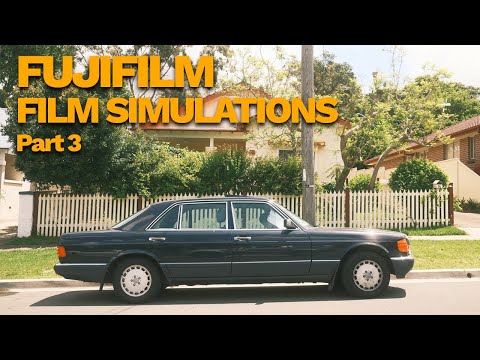
An independent walkthrough of assigning custom settings. Follow the saving process, then check your own model’s manual: menus and the settings stored in a bank vary. Name one saved bank before starting your twelve exposures.
Watch, then try
Matt Stuart on Failure in Street Photography - How I See

Listen for the role of repetition and failed attempts. Choose one useful habit to repeat for a week rather than expecting every walk to produce a keeper.
Sources & further looking
Facts checked 22 October 2026. The practical exercises and critical readings are this publication’s editorial interpretation.
Take this to the discussion.
A question, an example, a picture that proves us wrong. Specific beats loud.
Open the conversation ↗