A sequence makes a route of its own
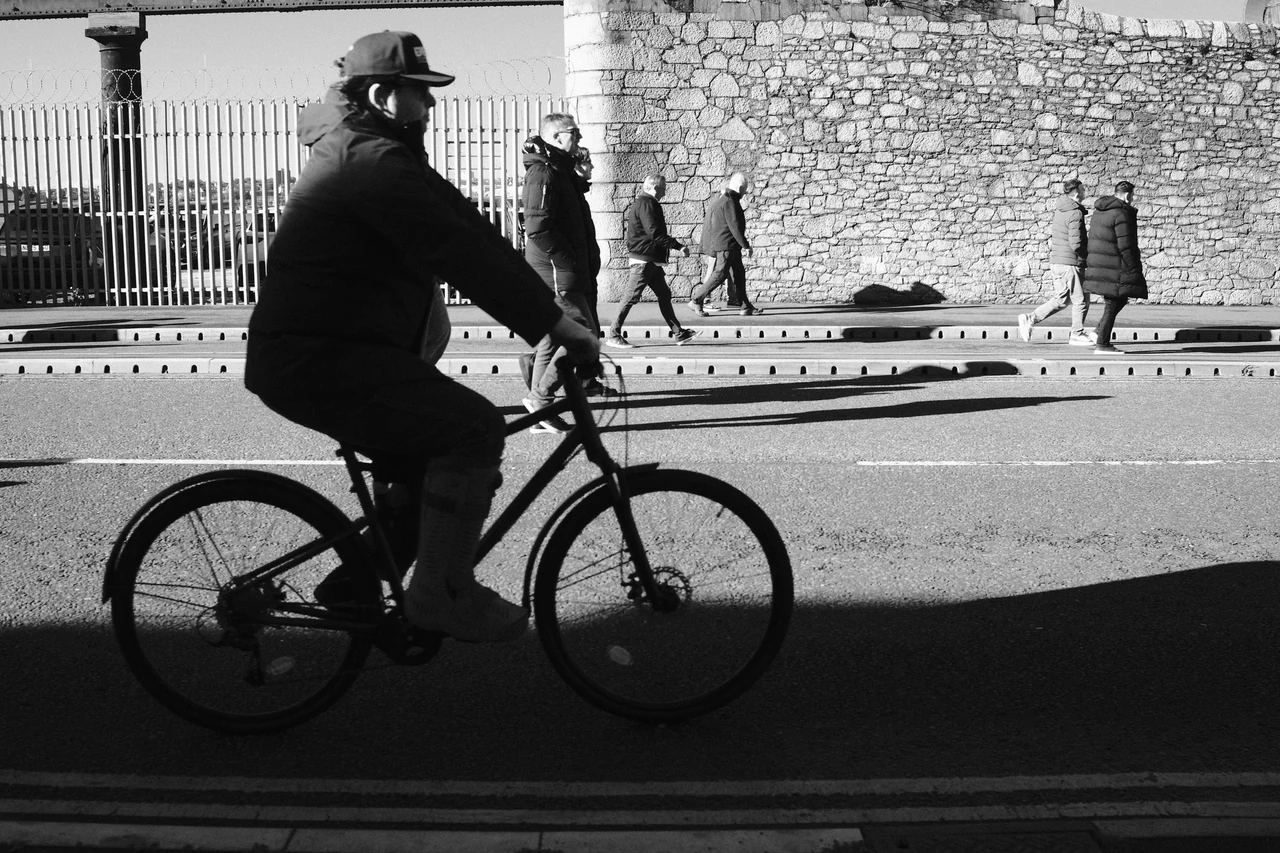
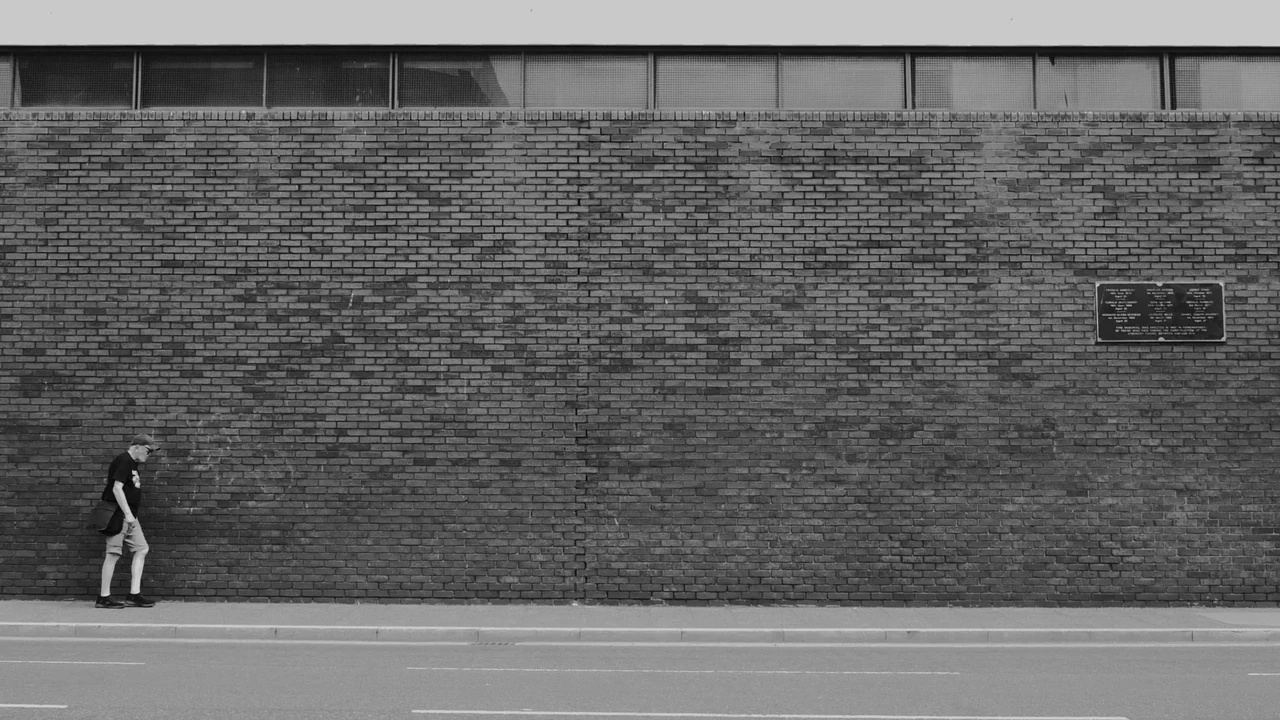
These six photographs are an editorial selection from the archive, not a claim that they were taken on one continuous walk. Putting them together creates a new route: a small figure against a wall, an enclosed crossing, a close interruption, a pause at a station, a crowded stall and an opening into light.
Read the sizes of the human figures as you go. Distance changes. So does density. The city is not presented as a single mood, and the photographs do not need a famous skyline to make a relationship.
A frame inside a frame
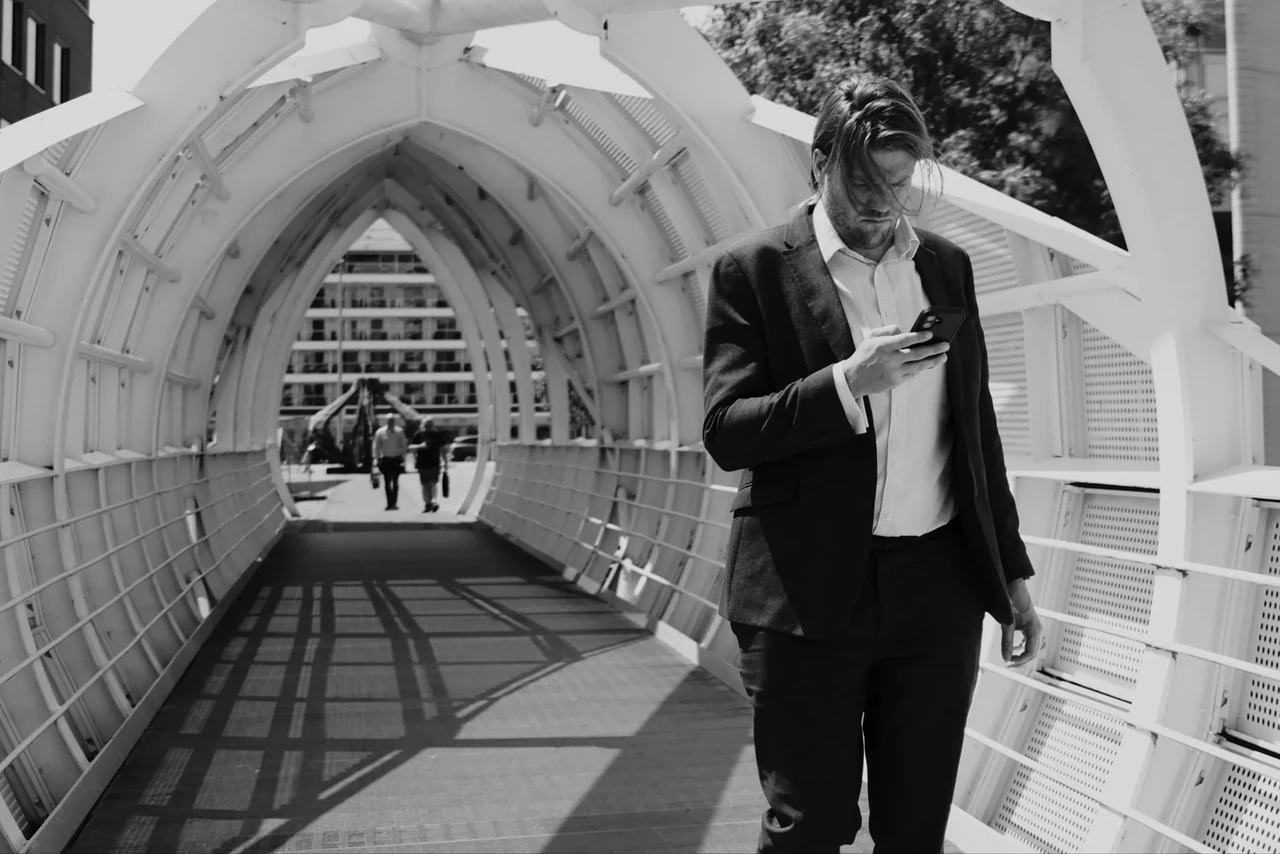
The repeated white arches pull towards the centre, while the foreground figure refuses to sit neatly at the vanishing point. Look at the difference in scale between that person and the smaller figures behind. Depth is being described by bodies as well as architecture.
Princes Dock Footbridge · Photograph © Mark C GrantGive each picture a different job
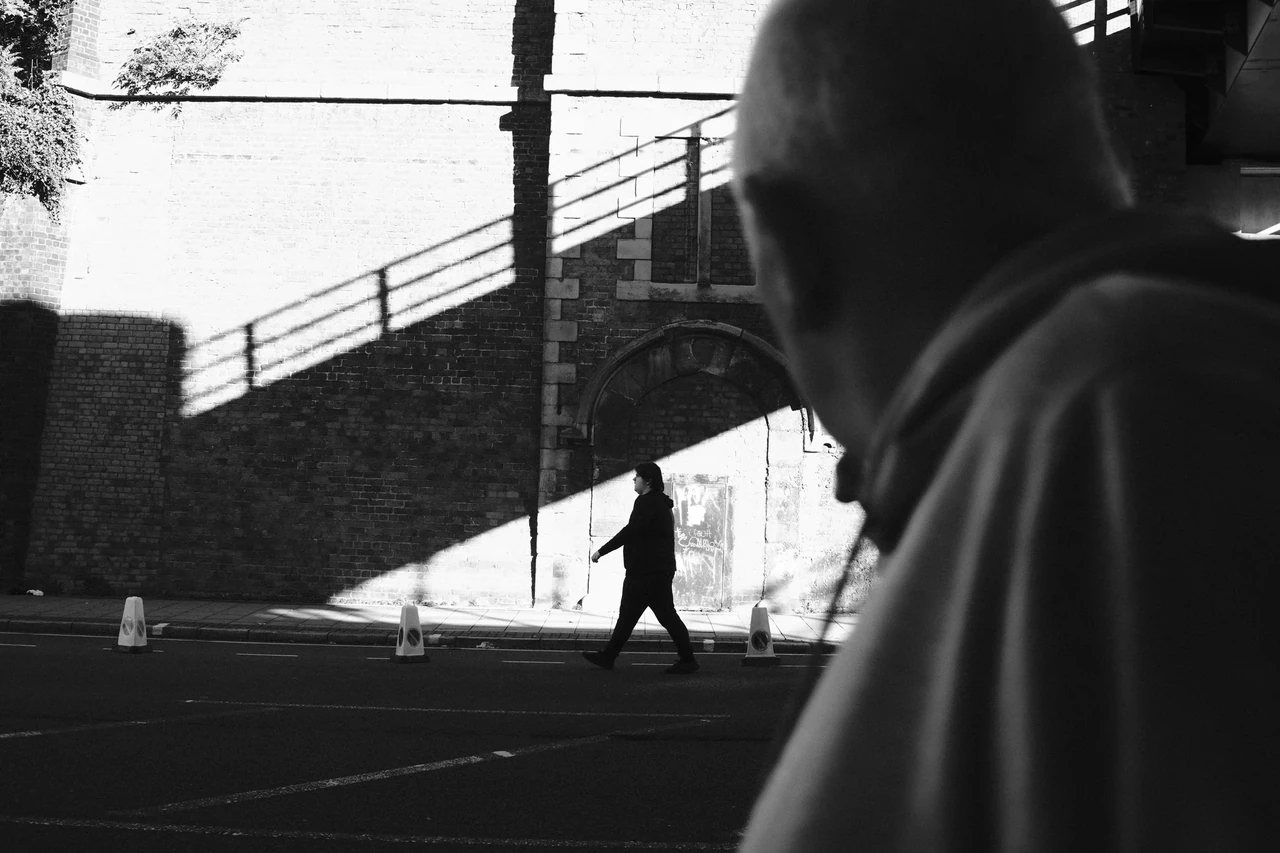
Along the Brick Wall begins with room and scale. Princes Dock Footbridge draws that room into a passage. Passing through the Frame brings someone suddenly close. Waiting at Moorfields slows the pace, before Scarves and Faces fills the view with repeated objects. Light outside the Cafe opens the space again.
That is one possible reading. The sequence has not uncovered a secret story hidden in the files; it has proposed an arrangement. Try moving the station photograph to the end. Waiting becomes the destination instead of a pause. Same photographs, different sentence.
The foreground interrupts
A large, partly cut-off passer-by occupies the near edge while a smaller figure crosses the bright wedge beyond. Your eye has to negotiate two distances. The interruption makes the view feel occupied. Cover the foreground briefly and notice how much tidier—and less layered—the picture becomes.
Passing through the Frame · Photograph © Mark C GrantThe quiet photograph earns its place
If every image is visually loud, the reader has nowhere to rest. A quieter photograph can establish scale or make a later interruption feel stronger. It is doing work even when it is not the image you would choose as a thumbnail.
Build your own six with the Notebook’s selection exercise. Choose an opener, a change of distance, a pause and an ending. Then make another version that breaks those roles. Compare what actually changes rather than defending your first edit on principle. It has only been your favourite for ten minutes.
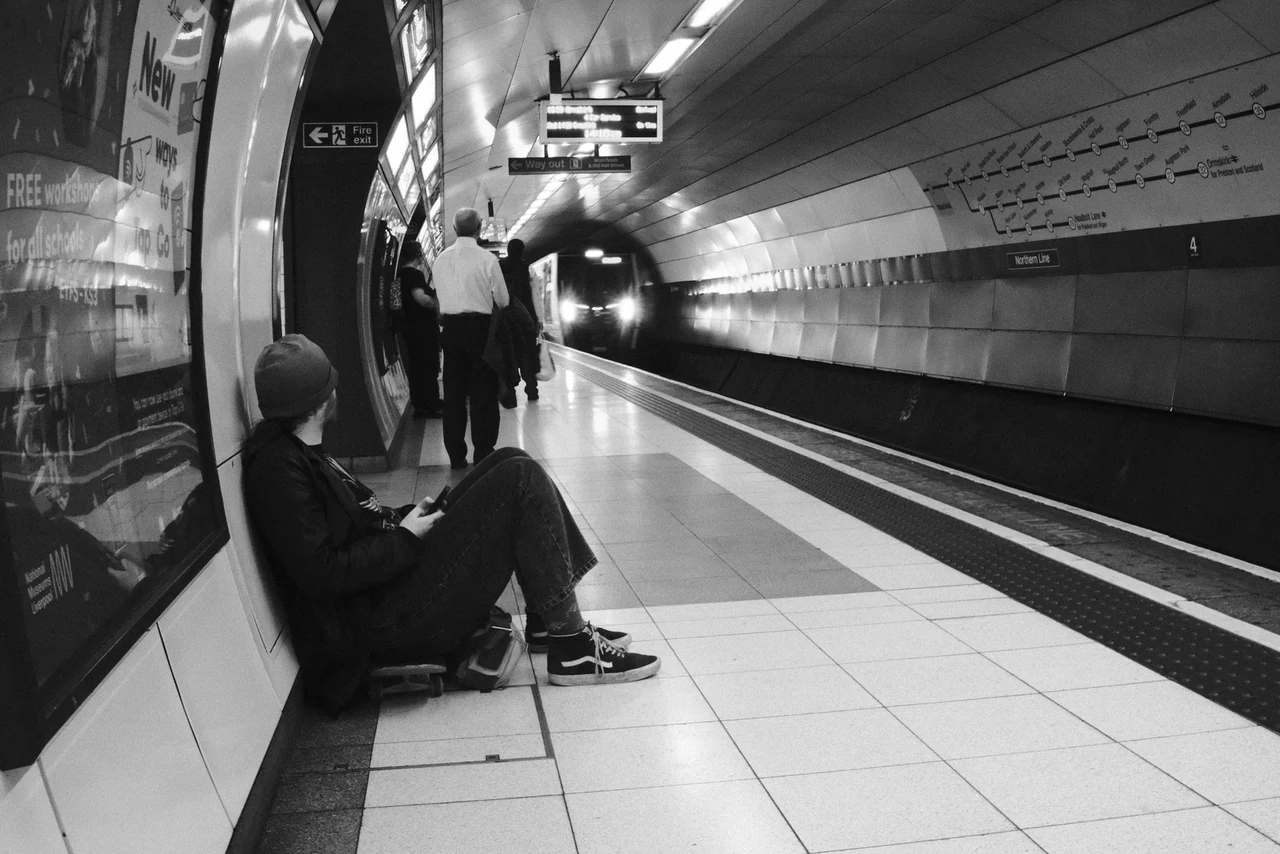
A still figure, an approaching light
The seated passenger and the approaching train set up different kinds of time. One holds still while the other advances. The platform lines connect them. Notice how little information the dark tunnel needs to contain: the approaching light already gives that darkness a purpose.
Waiting at Moorfields · Photograph © Mark C Grant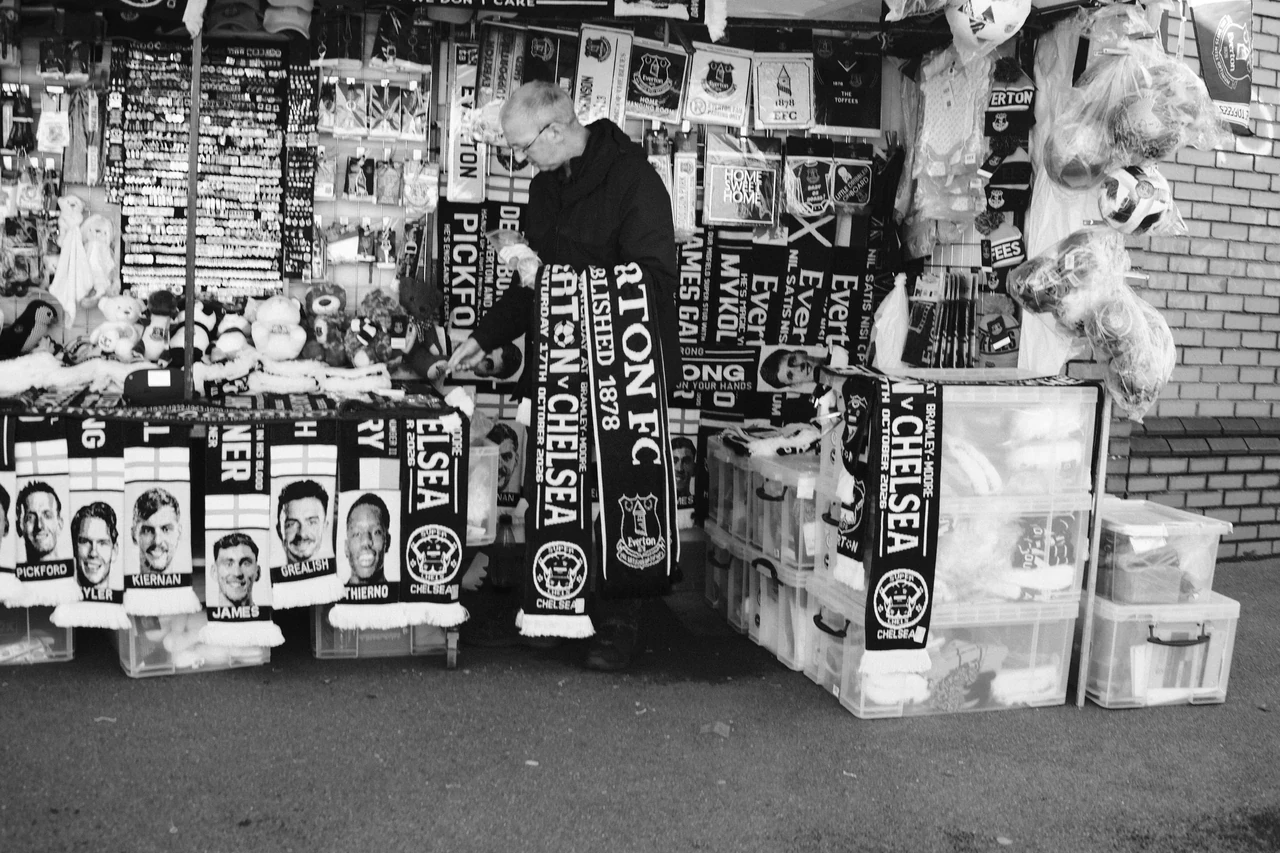
A frame full of things looking back
Printed faces and repeated scarves pack the stall with competing points of attention. Rather than searching for a single isolated subject, follow the repetition. Where does one face break the pattern? Dense pictures need relationships too; they just refuse to give you an empty wall as a favour.
Scarves and Faces · Photograph © Mark C Grant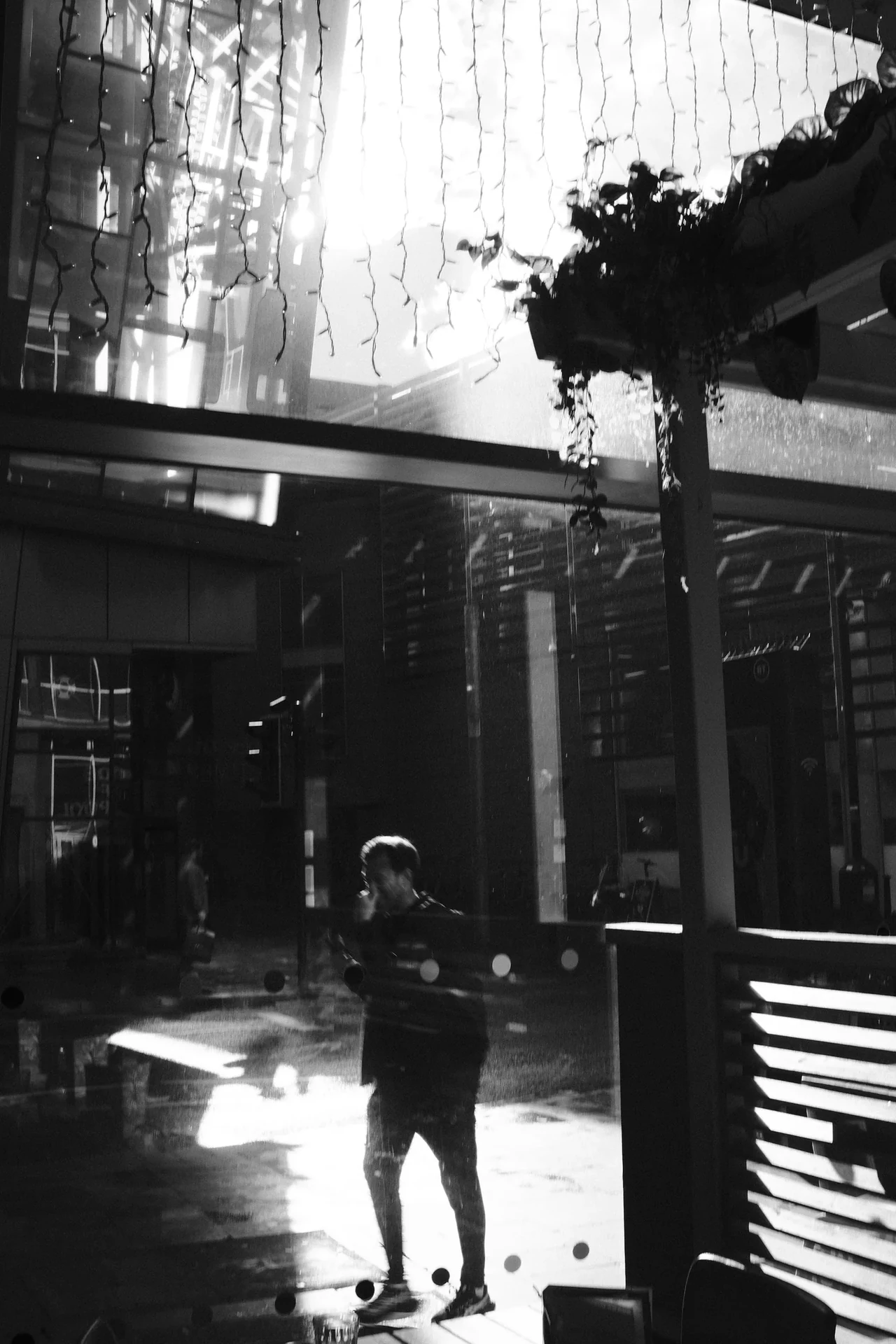
Look through the shade
The shaded frontage creates a near layer; the brighter pavement and figure create another beyond it. The contrast invites the eye outward. Notice how the surrounding darkness frames the light without needing to disappear entirely. Keep enough of that structure to understand where you are looking from.
Light outside the Cafe · Photograph © Mark C GrantPractical guidance from Captured Moment. Starting points to test in your own work, not universal camera settings.
Take this to the discussion.
A question, an example, a picture that proves us wrong. Specific beats loud.
Open the conversation ↗