The landmark is the easy part
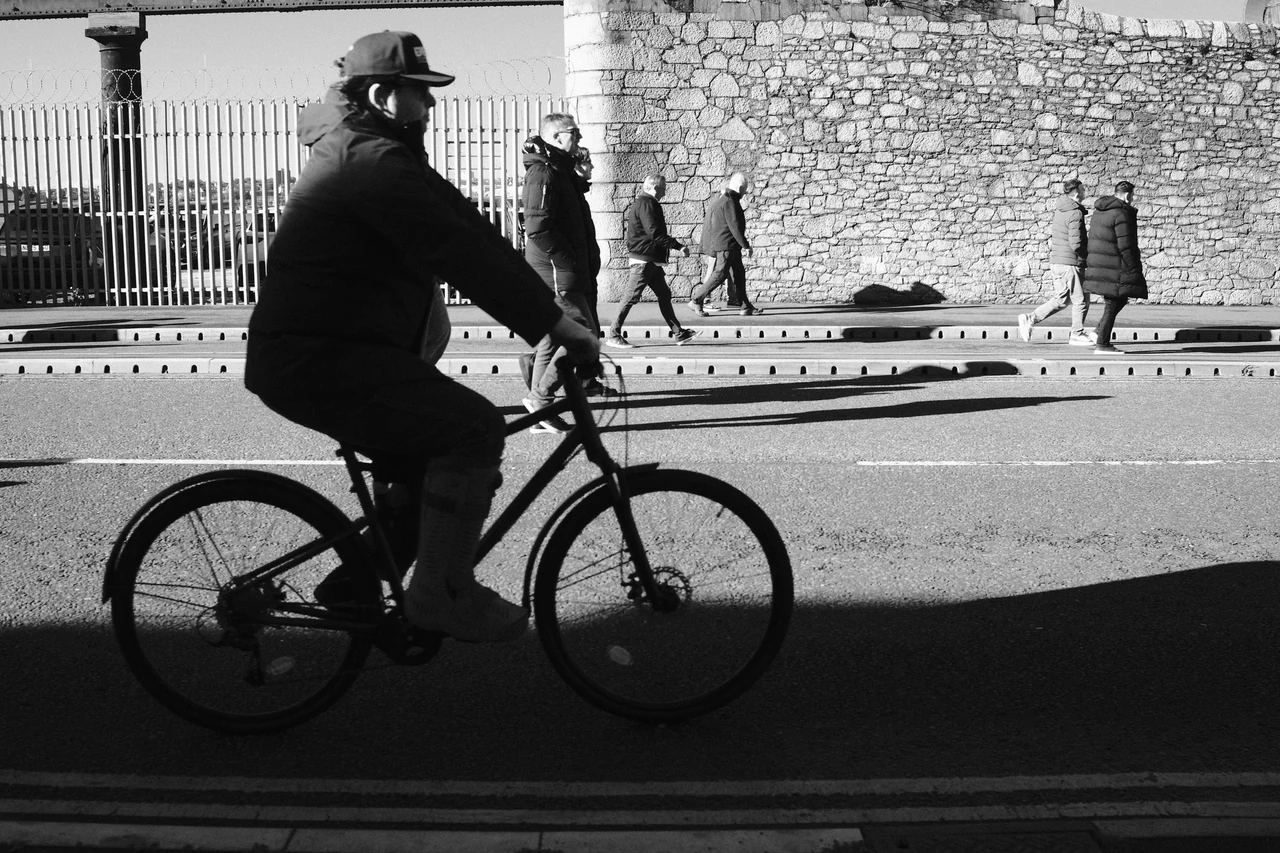
Liverpool has buildings that announce themselves before you even lift the camera. Photograph them if they interest you. But a city is also the wait at a crossing, the worn shop threshold, a strip of reflected light and the short walk between one destination and the next.
Try making a sequence in which no single frame needs a famous building to explain where it belongs. Look at materials, distances, public space and the way people occupy them. A local eye develops through repetition, not through adding a place name to the filename.
A still figure, an approaching light
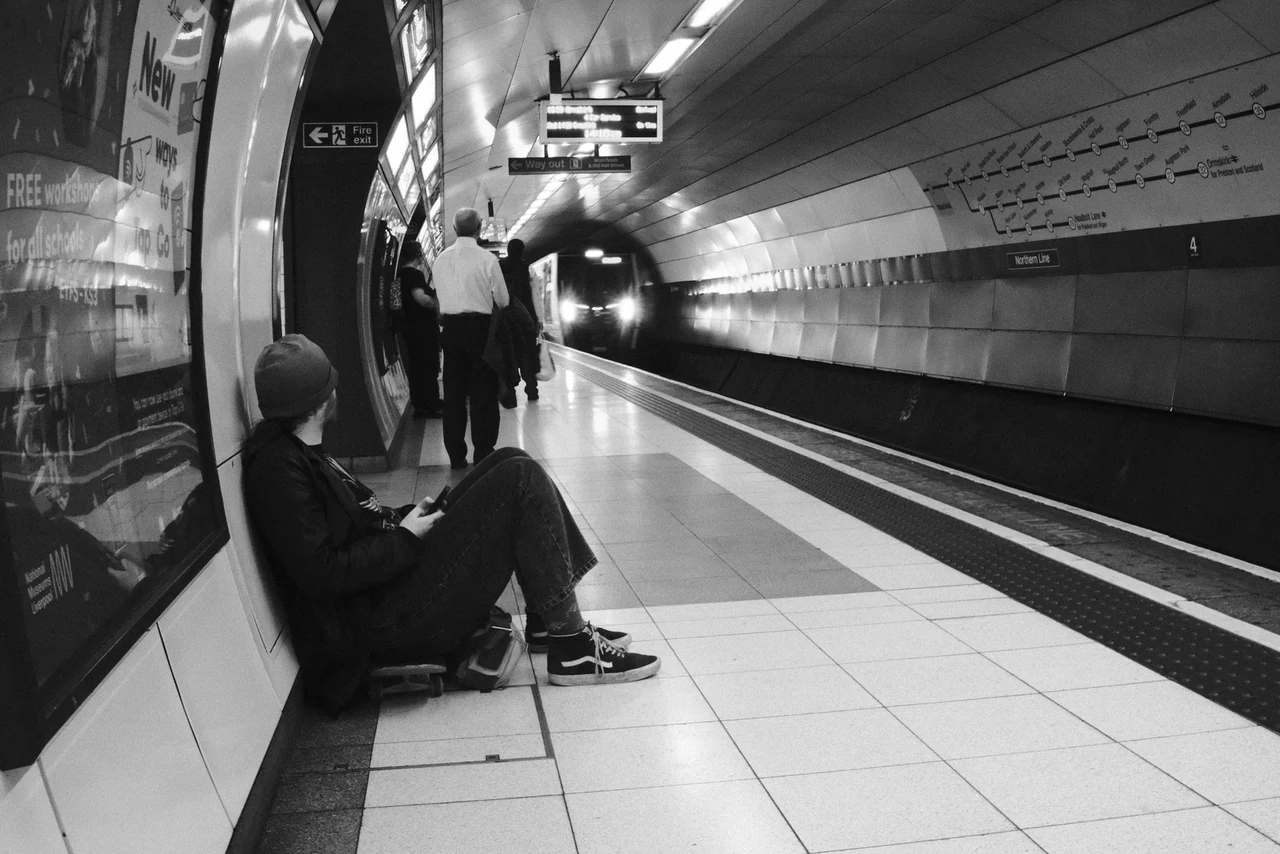
The seated passenger and the approaching train set up different kinds of time. One holds still while the other advances. The platform lines connect them. Notice how little information the dark tunnel needs to contain: the approaching light already gives that darkness a purpose.
Waiting at Moorfields · Photograph © Mark C GrantRepeat one route
Choose a walk you can return to without treating it as an expedition. Visit at different times and in different weather. Notice where light catches an edge and where the pavement narrows. Learn where you can stand without getting in the way. Repetition makes small changes visible.
Do not promise yourself a masterpiece on every circuit. Set a question instead: what happens at the edge of the shade today? Which surfaces reflect a figure? Where does a gap briefly open? You are collecting observations, not completing a tourist checklist.
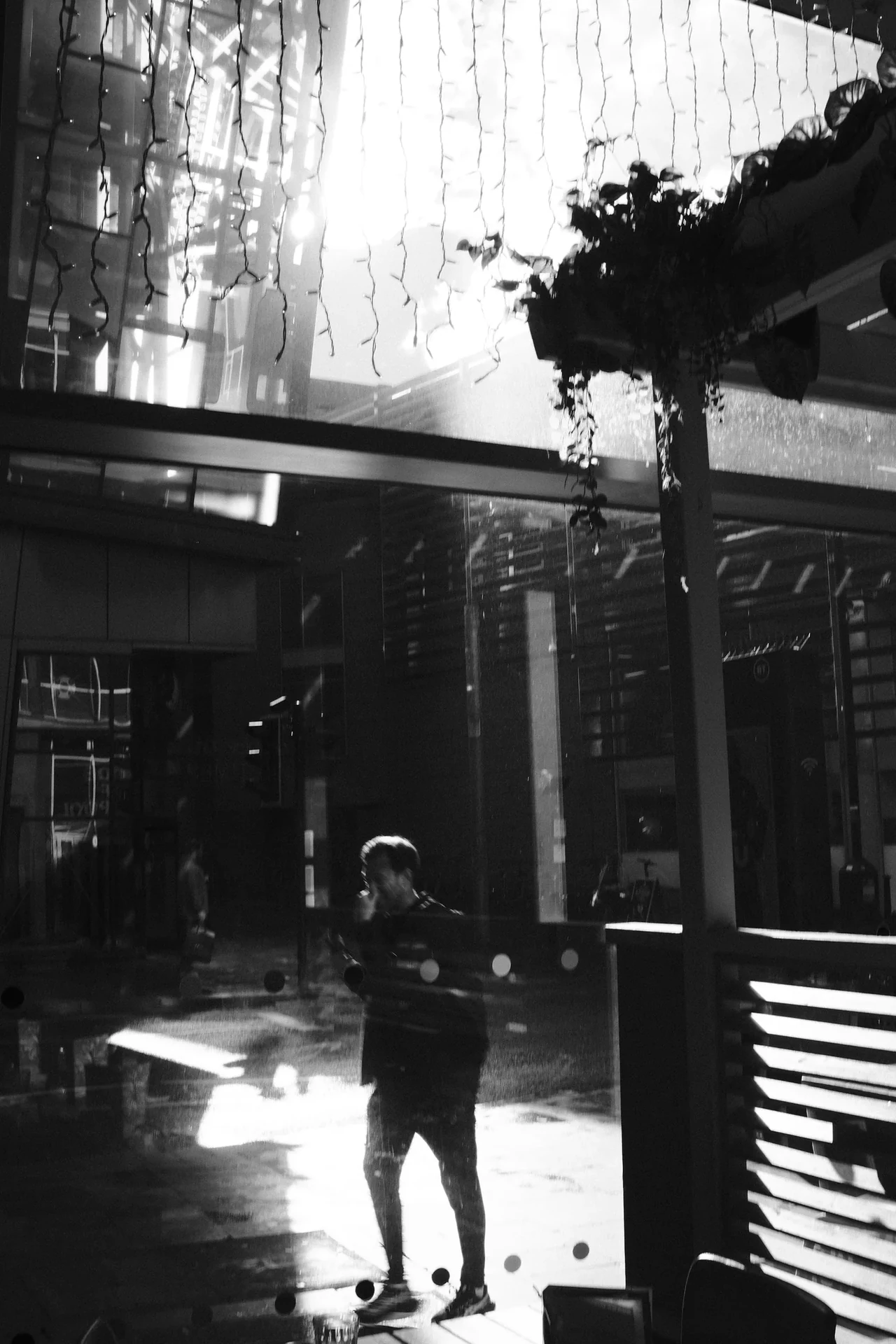
Look through the shade
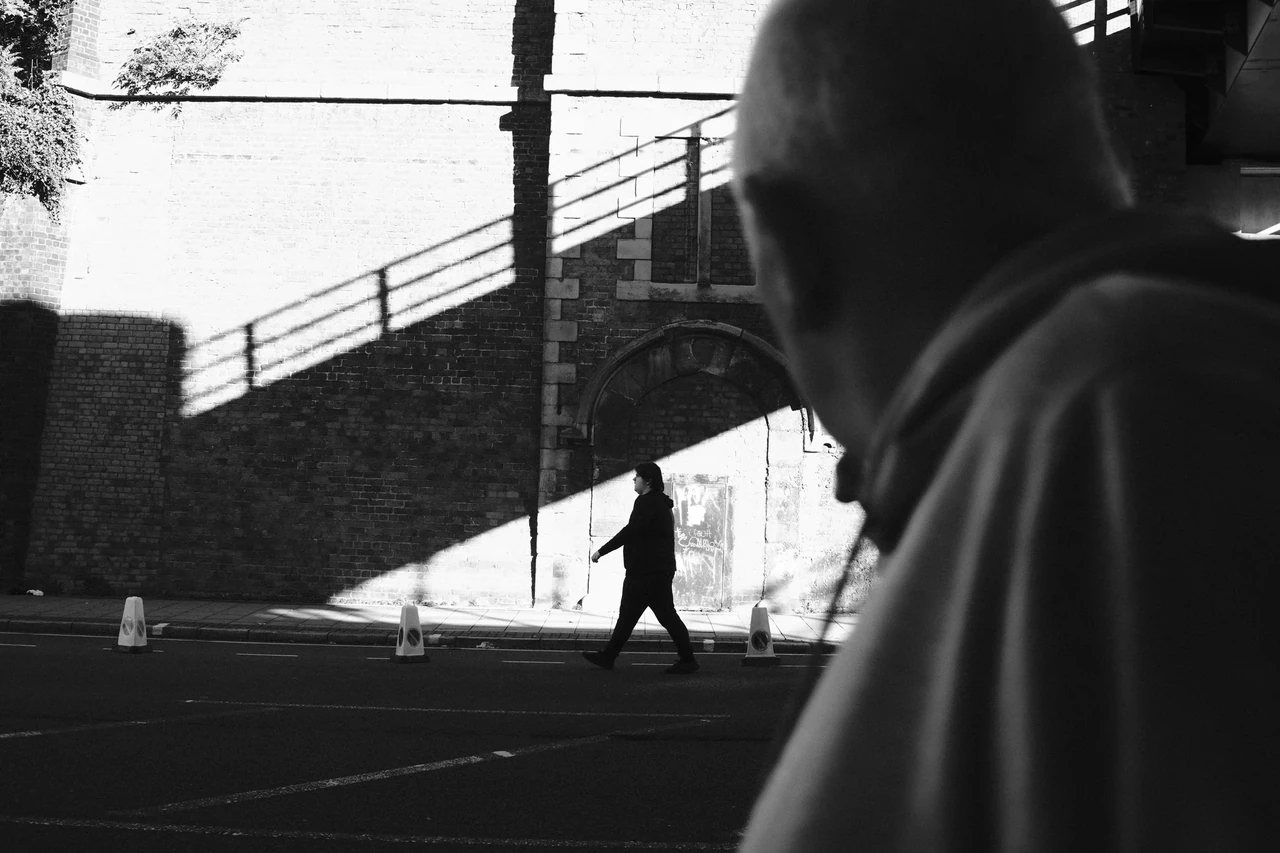
The shaded frontage creates a near layer; the brighter pavement and figure create another beyond it. The contrast invites the eye outward. Notice how the surrounding darkness frames the light without needing to disappear entirely. Keep enough of that structure to understand where you are looking from.
Light outside the Cafe · Photograph © Mark C GrantGive people a place in the city
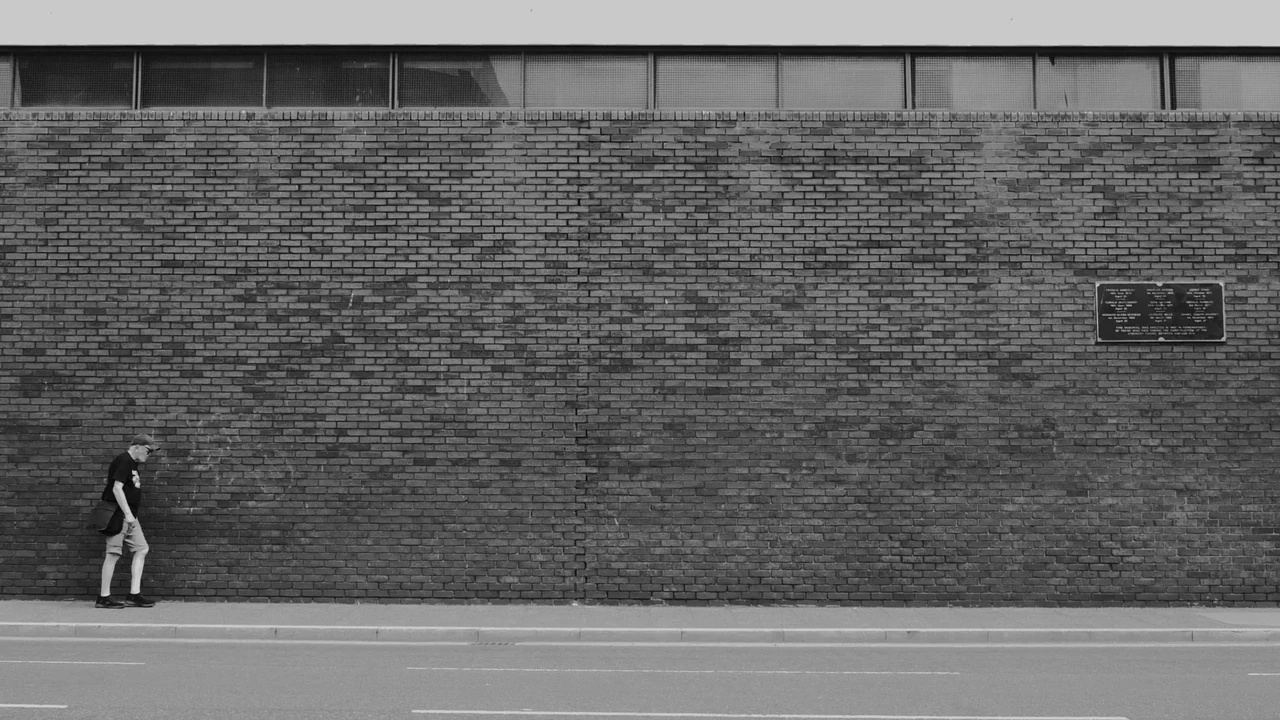
A distant figure can tell you scale. A pair of people can describe a relationship. An empty stretch of pavement can describe waiting or exclusion, but it does not prove a social story by itself. Resist writing a whole biography for a stranger because their coat looked lonely.
Caption what you know. If a location or date is uncertain, leave the uncertainty visible. Do not turn a private person into an emblem of decline just because the wall behind them needs painting. Black and white already carries enough borrowed seriousness.
Bring it back to the page
A Liverpool-rooted zine should make room for its own pictures, not just borrow the visual shorthand of Tokyo or New York. Provoke is a useful challenge to neatness and certainty. It is not an instruction to pretend Lime Street is Shinjuku.
Use influence to sharpen a question, then answer it where you actually are. The best result may be quieter than the reference. It may be funnier. It may have a wheelie bin in it. Sound. That is the street you have.
Practical guidance from Captured Moment. Starting points to test in your own work, not universal camera settings.
Take this to the discussion.
A question, an example, a picture that proves us wrong. Specific beats loud.
Open the conversation ↗