Look for separation
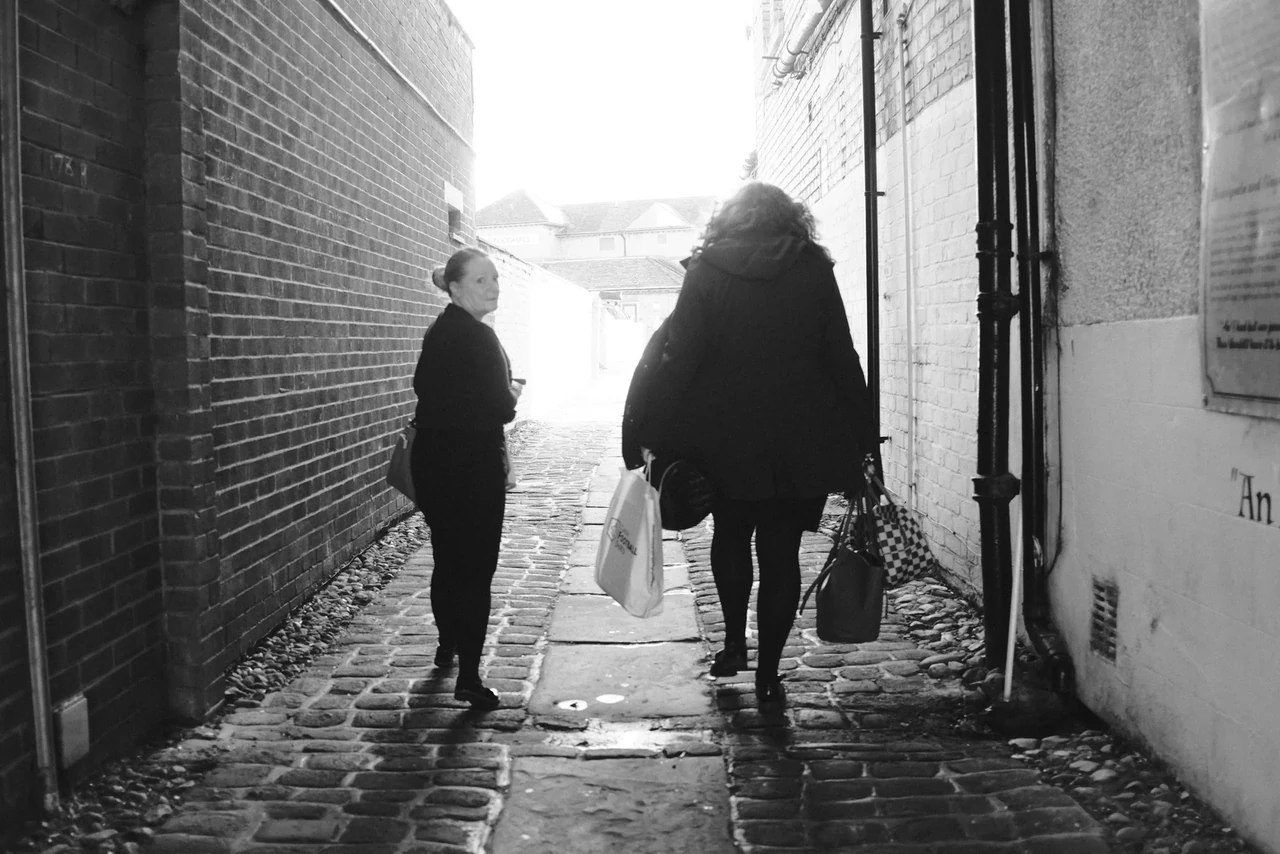
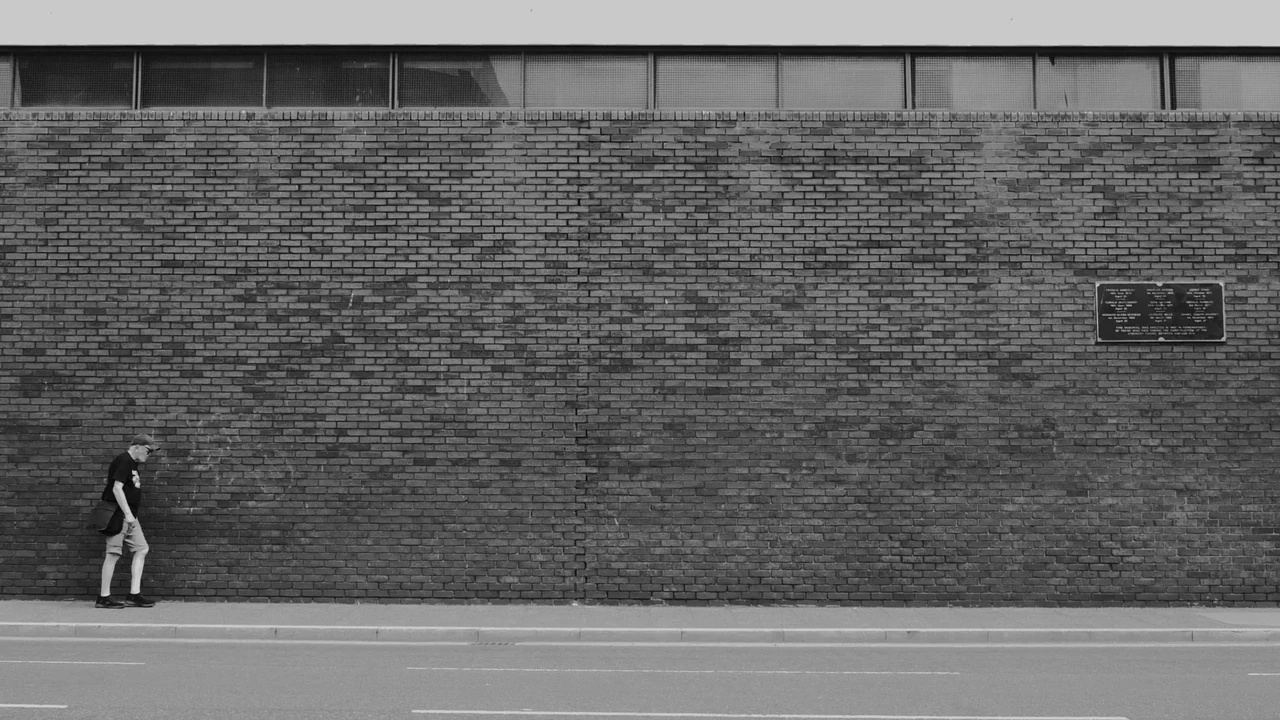
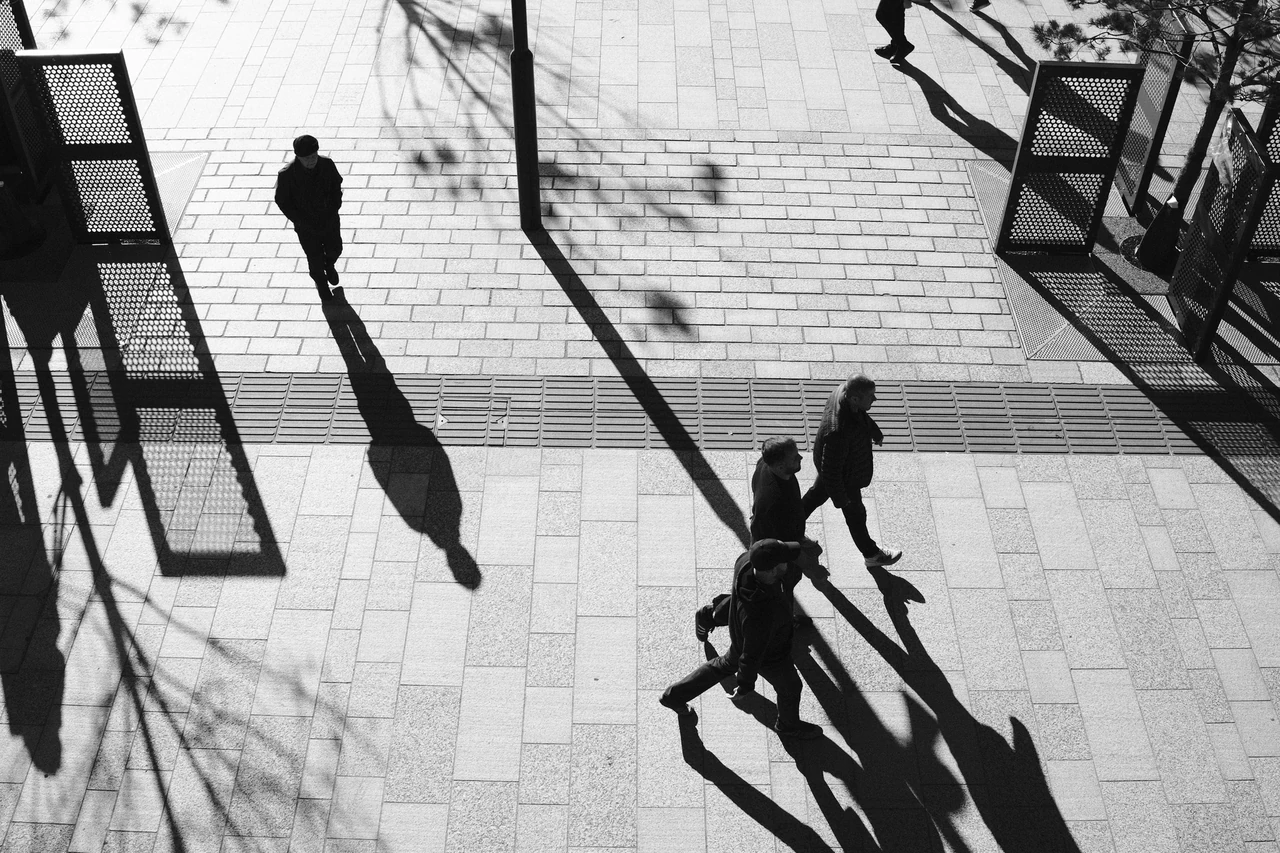
Two surfaces can be different colours and almost the same tone. Once colour goes, the subject may disappear into the background. Before making the frame, look for a light face against a darker doorway, a pale coat crossing a shaded wall, or a dark figure breaking a bright window.
Squinting can help simplify the scene into masses. A monochrome preview can help too, if your camera offers one. When shooting RAW on a conventional colour sensor, that preview usually does not remove the underlying colour information from the RAW file; check your camera and workflow rather than assuming a JPEG setting changes every file.
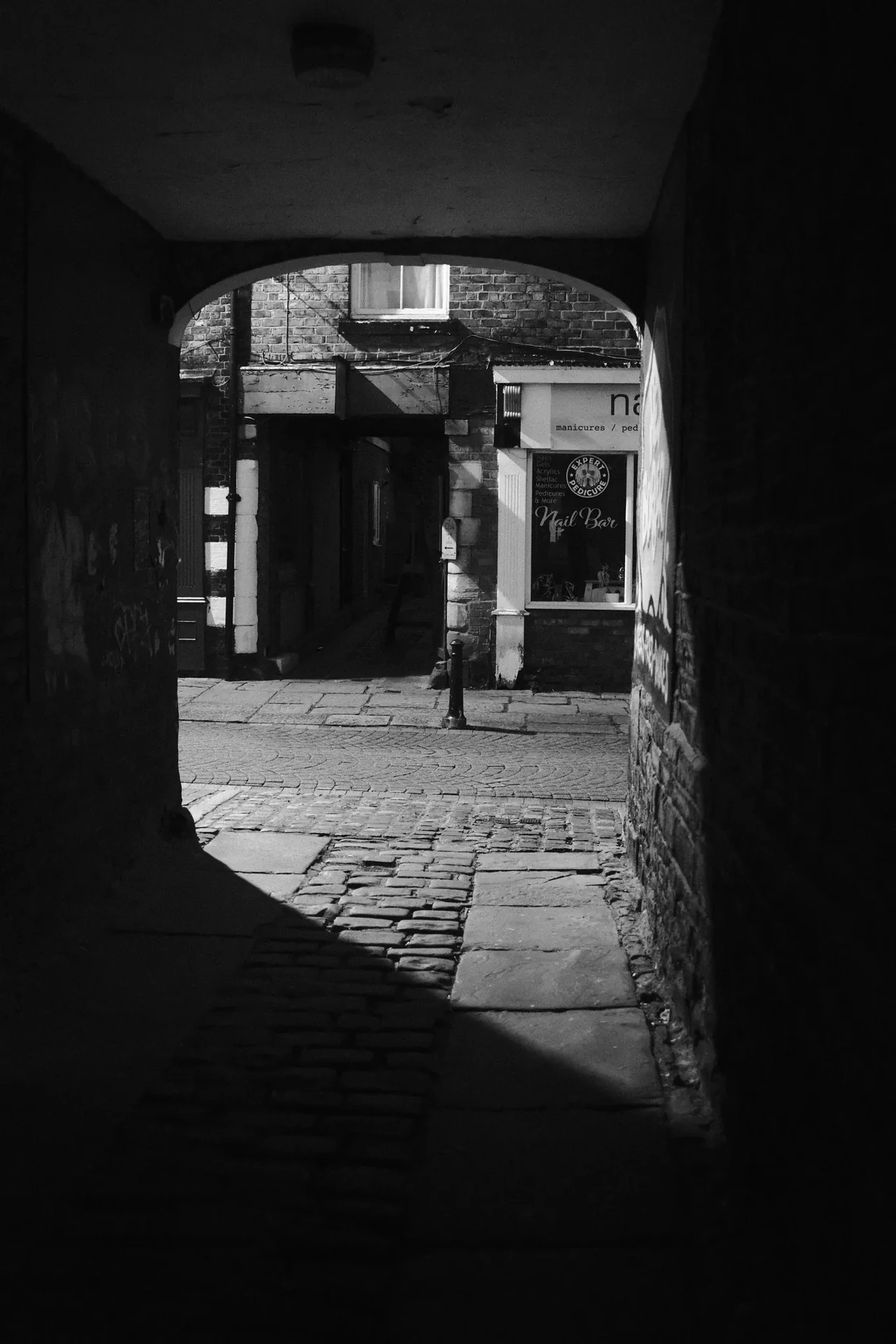
A doorway edits the street
The darkness of the passage works like a frame around the brighter doorway beyond. It removes distractions before any editing software gets involved. Watch the boundary between those tones: that edge does much of the compositional work, even when there is very little happening.
Doorway off Burscough Street · Photograph © Mark C GrantLet the light have a job
Hard light can divide a scene into stage and curtain. Overcast light can hold subtle textures in brick, skin and wet fabric. Neither is automatically better. Decide whether the photograph needs a clear silhouette or detail in the middle tones. Then expose and edit for that decision.
A bright reflection can pull the eye away from your subject. Sometimes moving a foot sideways does more than fifteen minutes with a brush tool. Watch the corners as well as the centre: stray bright patches are very good at behaving like unwanted guests.
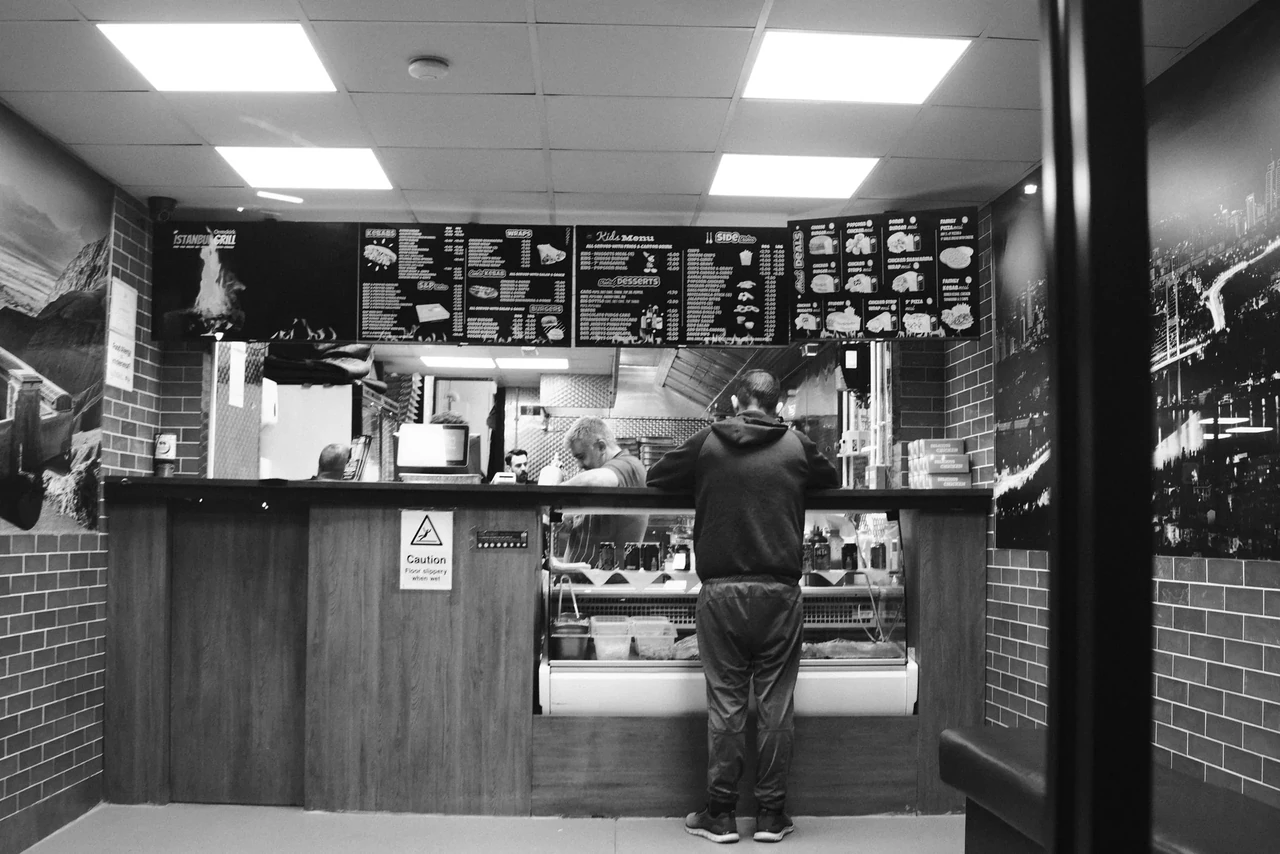
Light with somewhere to go
The illuminated counter creates a small stage. The person standing there gives that light a scale and a reason to matter. Look at the bright rectangles around them and decide which one pulls your eye first. This is a useful exercise in hierarchy, not an invitation to lift every shadow.
At the Takeaway Counter · Photograph © Mark C GrantBuild a tonal hierarchy
In the edit, establish black and white points carefully, then work on the middle tones. Compare a restrained version with the dramatic one. If every surface is shouting, the frame has no emphasis. Deep blacks can be right for the picture; crushed shadows are not automatically a signature.
Use local adjustments to support an existing relationship, not to manufacture a spotlight the scene never had. Keep an untouched original and make reversible edits. Dust removal and a tonal interpretation are not the same thing as moving a person or inventing a sky. Be clear about what the work is.
Grain is seasoning
Grain can contribute to atmosphere and to a sequence’s consistency. It cannot supply a missing gesture, a clean edge or a reason for the image to exist. Look at the photograph small. If it only becomes interesting at 200 percent, you may have made a texture sample.
Print one image or look at it away from the editing screen. Let your eyes reset. The version that looked thrilling at midnight sometimes looks like a photocopier dispute over breakfast.
Practical guidance from Captured Moment. Starting points to test in your own work, not universal camera settings.
Take this to the discussion.
A question, an example, a picture that proves us wrong. Specific beats loud.
Open the conversation ↗