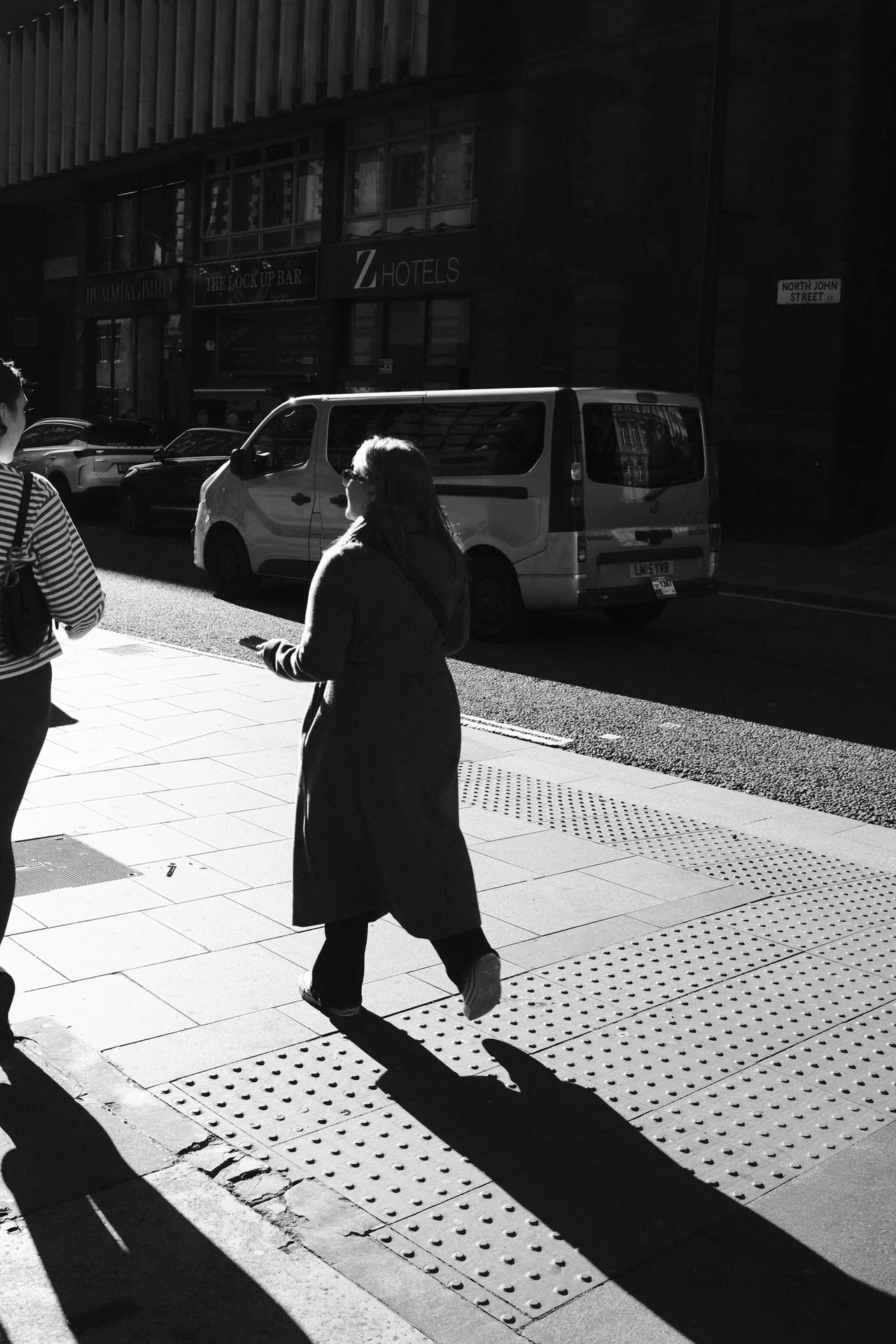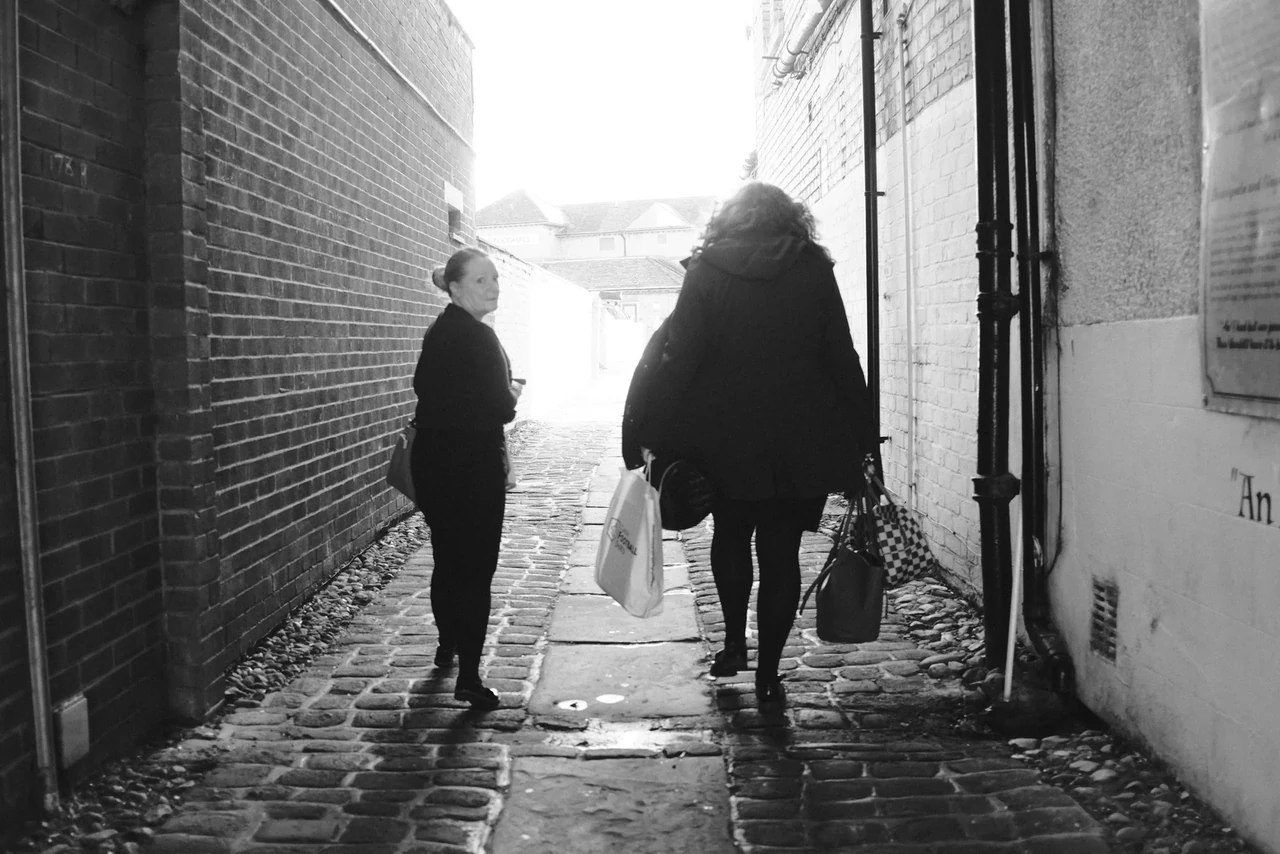
Start with the picture, not the person
Find a patch of light, a layered shop window or a corner where the background does something useful. Decide where a person would sit within that frame. Then wait somewhere you are entitled to stand, without blocking anyone. You now have a composition to work on rather than a stranger to pursue.
This changes your body language. Repeatedly circling someone, hiding the camera and suddenly lunging for a frame looks odd because it is odd. A small camera held normally, a few deliberate exposures and a calm expression are a better starting point. Nobody needs your impression of an undercover operative outside Greggs.
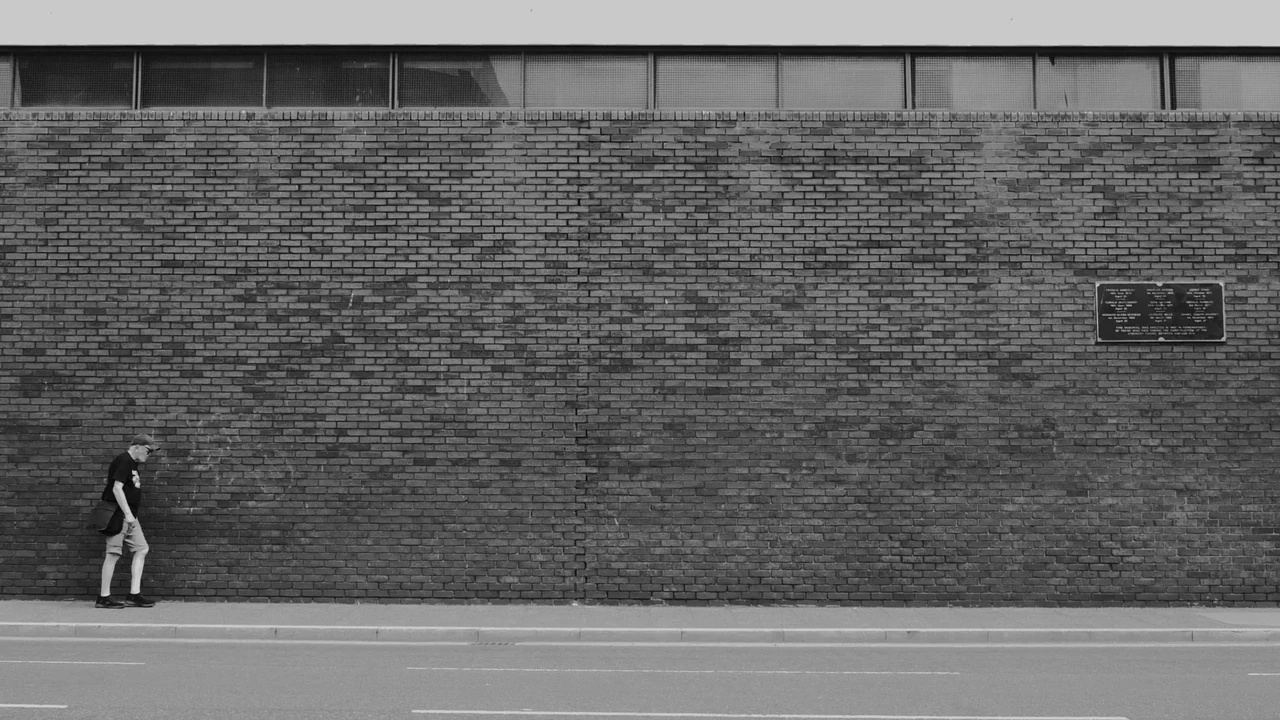
Let the wall be enormous
The pedestrian occupies very little of the picture. That is the point: the brickwork carries weight and the small figure measures it. A tighter crop would produce a more obvious subject, but it would also remove the relationship that makes this frame worth looking at.
Along the Brick Wall · Photograph © Mark C GrantMake the first outing easy
For twenty minutes, photograph people as small figures within a wider scene. Work in an ordinary busy public place, in daylight, with room to move. Avoid pointing a lens straight into somebody’s face while you are still learning to manage your own nerves. Choose a shutter speed that suits the movement, set your focus method before the moment arrives, and keep the equipment fiddling to a minimum.
A useful exercise is to make one frame, lower the camera and remain where you are. Do not bolt as though the shutter has set off an alarm. If someone meets your eye, a nod or a simple smile may be enough. It is also fine to miss the photograph. There will be another bus, another shadow and probably another bloke looking at his phone.
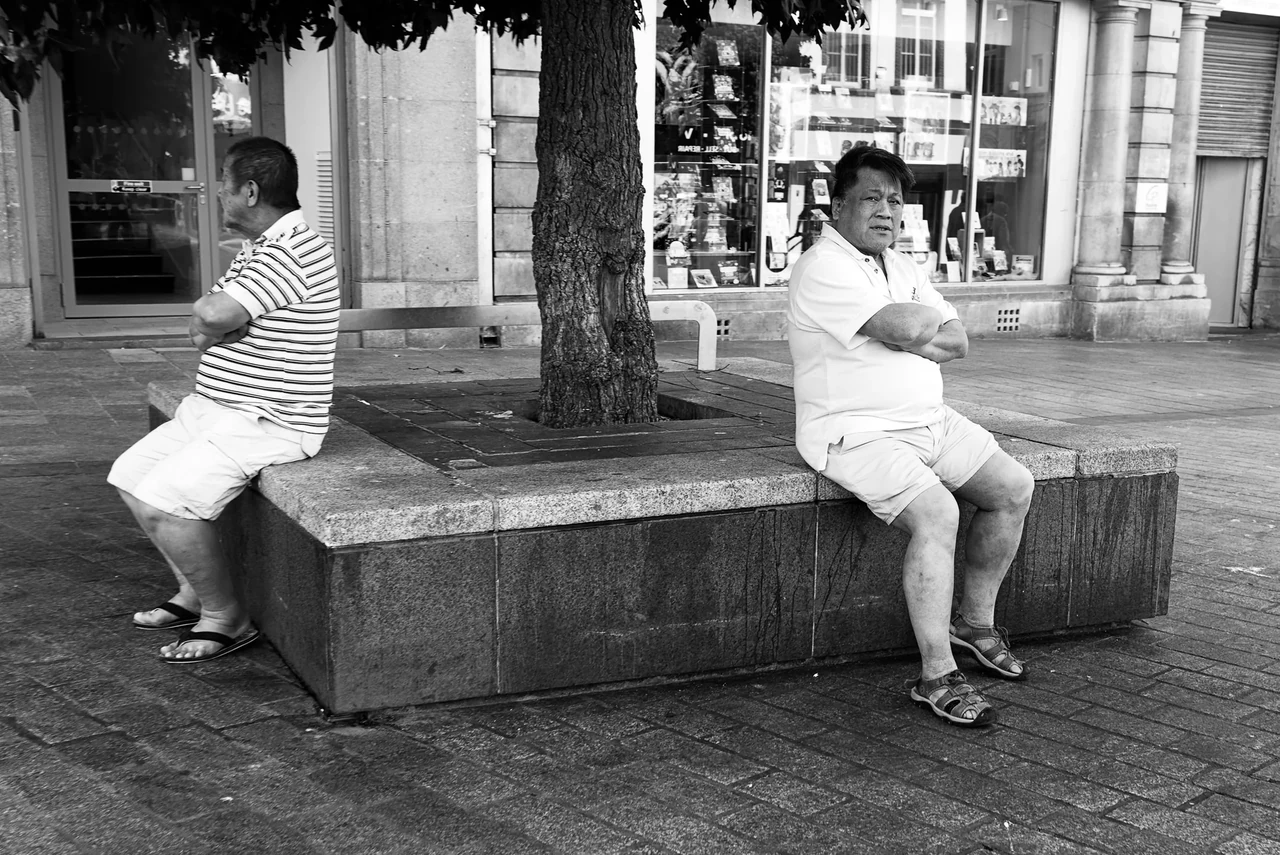
The space between people
Two seated figures share a structure without becoming a single group. Read the direction of their bodies and the empty stretch between them. The gap is active information. You can describe that arrangement without claiming to know whether they are strangers or what either is feeling.
Two Seats beneath a Tree · Photograph © Mark C GrantIf someone asks
Answer plainly: “I’m photographing the light and the street. You were part of the scene.” Explain what you actually intend to do with the picture. Do not invent a commission, pretend you photographed something else or promise it will stay private if you plan to publish it.
If the person is uncomfortable, listen and move on. Asking for a portrait is another legitimate approach; it produces a different relationship, not an inferior photograph. Never follow someone who has disengaged. Avoid using distress, vulnerability or children as easy visual material. Being legally able to stand somewhere is not a complete editorial judgement.
Rights are not a conversation starter
The Metropolitan Police’s guidance says members of the public do not need a permit to photograph in public places. That is not permission to trespass, harass or ignore restrictions on particular premises. A shopping centre can feel public while being privately managed. Photographing and publishing are also different decisions.
Use the linked police guidance for the general position, and get specific advice if a disputed situation or a commercial use needs it. On the pavement, opening with a lecture about your rights usually makes a small conversation considerably bigger. Your aim is a photograph, not a seminar with security.
Sources & further looking
Facts checked 22 October 2026. The practical exercises and critical readings are this publication’s editorial interpretation.
Take this to the discussion.
A question, an example, a picture that proves us wrong. Specific beats loud.
Open the conversation ↗