The masterpiece had neighbours
A single great photograph can make photography look suspiciously easy. A person steps into the light, a gesture appears, everything agrees to be interesting at once. The photographer presses the button. Lovely. Meanwhile the rest of us have photographed the back of a bus and our own optimism.
Put that picture back beside the frames around it and a different story becomes visible. Someone is searching. They move, hesitate, repeat themselves, arrive early, stay too long. A contact sheet gives those decisions a surface. It does not diminish the chosen photograph. It makes the achievement more intelligible, and the next unsuccessful walk rather less personal.
Editing here means selecting and arranging photographs. It does not initially mean changing their pixels. Before moving a contrast slider, decide which picture deserves the conversation. A beautifully processed near miss is still a near miss, only wearing better shoes.
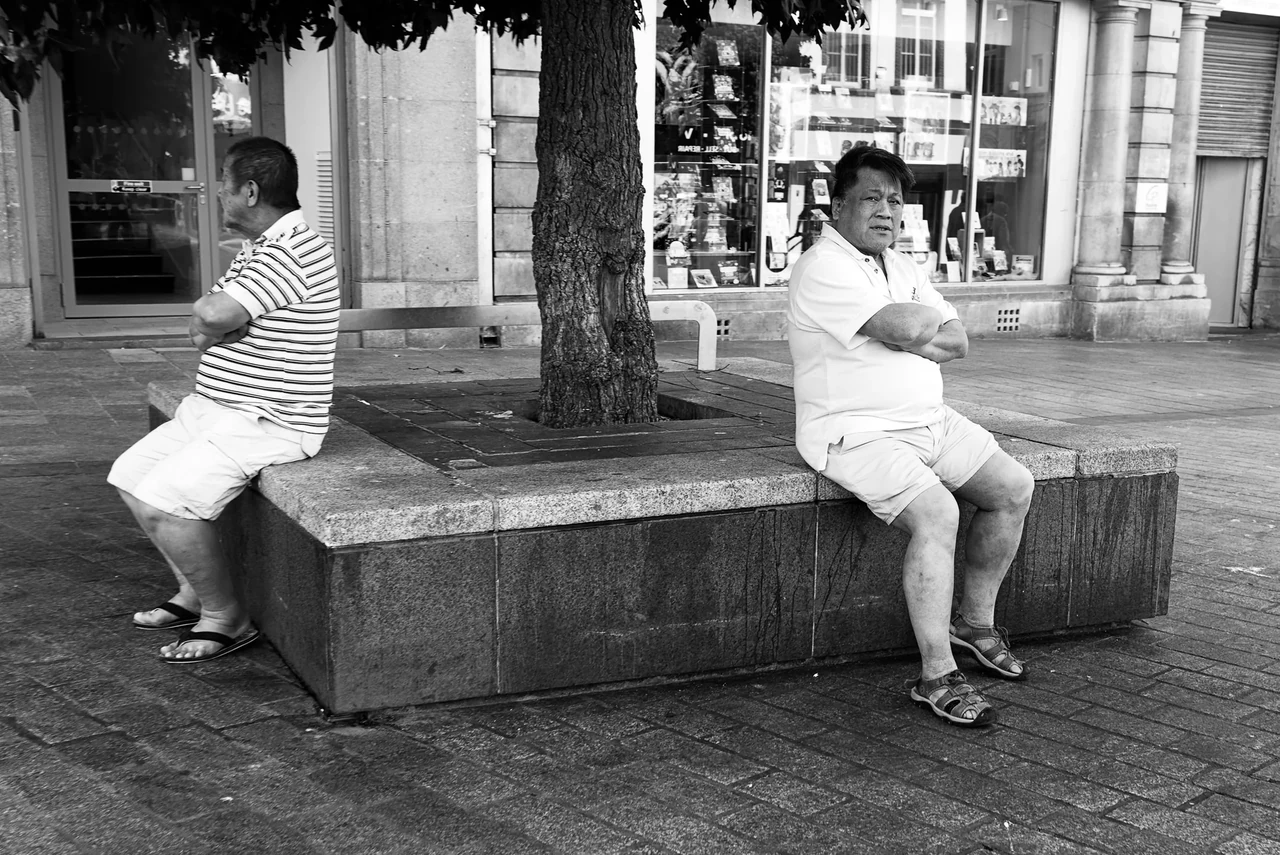
The space between people
Two seated figures share a structure without becoming a single group. Read the direction of their bodies and the empty stretch between them. The gap is active information. You can describe that arrangement without claiming to know whether they are strangers or what either is feeling.
Two Seats beneath a Tree · Photograph © Mark C GrantWhat the sheet records—and what it cannot
A traditional contact sheet is made by exposing negatives in direct contact with photographic paper. The resulting small positives allow a roll or sequence to be surveyed together. A digital proof sheet does a similar reviewing job with thumbnails. It is not the same physical object, but it can preserve the important discipline: see the neighbouring attempts, with their identifiers, before hiding the awkward ones.
The International Center of Photography’s Magnum Contact Sheets exhibition drew on Kristen Lubben’s book of 139 sheets. Its examples include Eve Arnold’s Joan Crawford, René Burri’s Che Guevara and Jonas Bendiksen’s Satellites. Follow the museum link below to examine the original works. These are photographers’ working materials, not a universal recipe for the correct number of attempts.
A sheet is evidence with limits. Missing negatives, an earlier selection, reordered files or a crop can change what it appears to tell us. Capture order records an order of exposures, not every thought or every second between them. Do not invent a photographer’s intention from a grease-pencil circle. A later editor may have made the mark.
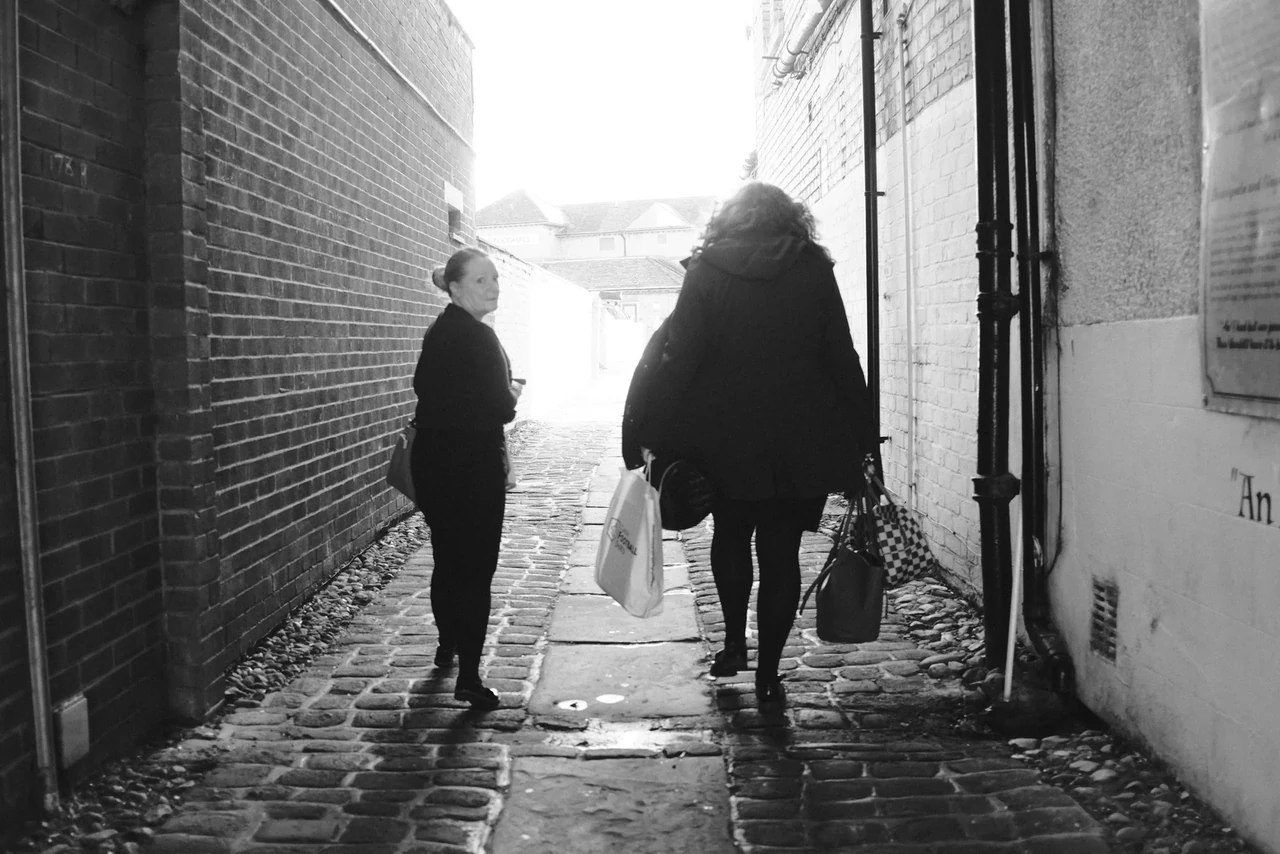
The background is already working
The bright opening pulls the eye through a darker passage. People crossing that route supply changing silhouettes and overlaps. Look at the gap between the two larger figures. You can understand the composition without knowing their destination, their names or the camera settings.
Figures in the Cobbled Passage · Photograph © Mark C GrantWatch, then try
How to Recognise the Right Shot

Jamie Windsor examines how a successful frame is recognised. Before accepting a selection, compare what changes in its neighbours. Write a visible reason for choosing your own frame.
Three passes, with a kettle break
First pass: survey. Keep capture order and look at the whole sheet. Notice recurring distances, subjects, gestures and backgrounds. Where did you become interested? Where did you stop exploring? Mark possibilities without ranking them. Include one frame that makes you uncomfortable for a reason you cannot yet explain. Discomfort is not proof of quality, but it can reveal a habit being interrupted.
Second pass: compare neighbours at a useful viewing size. In one frame a hand separates from a dark coat; in another it disappears. One step opens the space between two heads. A foreground shoulder gives depth, then blocks the event. Describe the actual change. “This one has more impact” is a start, not an explanation. Impact has been doing unpaid overtime in photography clubs for decades.
Third pass: choose for a purpose. A stand-alone image needs to sustain attention on its own. A sequence also needs transitions, variation and room to breathe. The loudest six photographs do not automatically make the strongest six-picture story. Sometimes a quieter frame earns its place because it changes how the next one is read.
Try an edit with these photographs
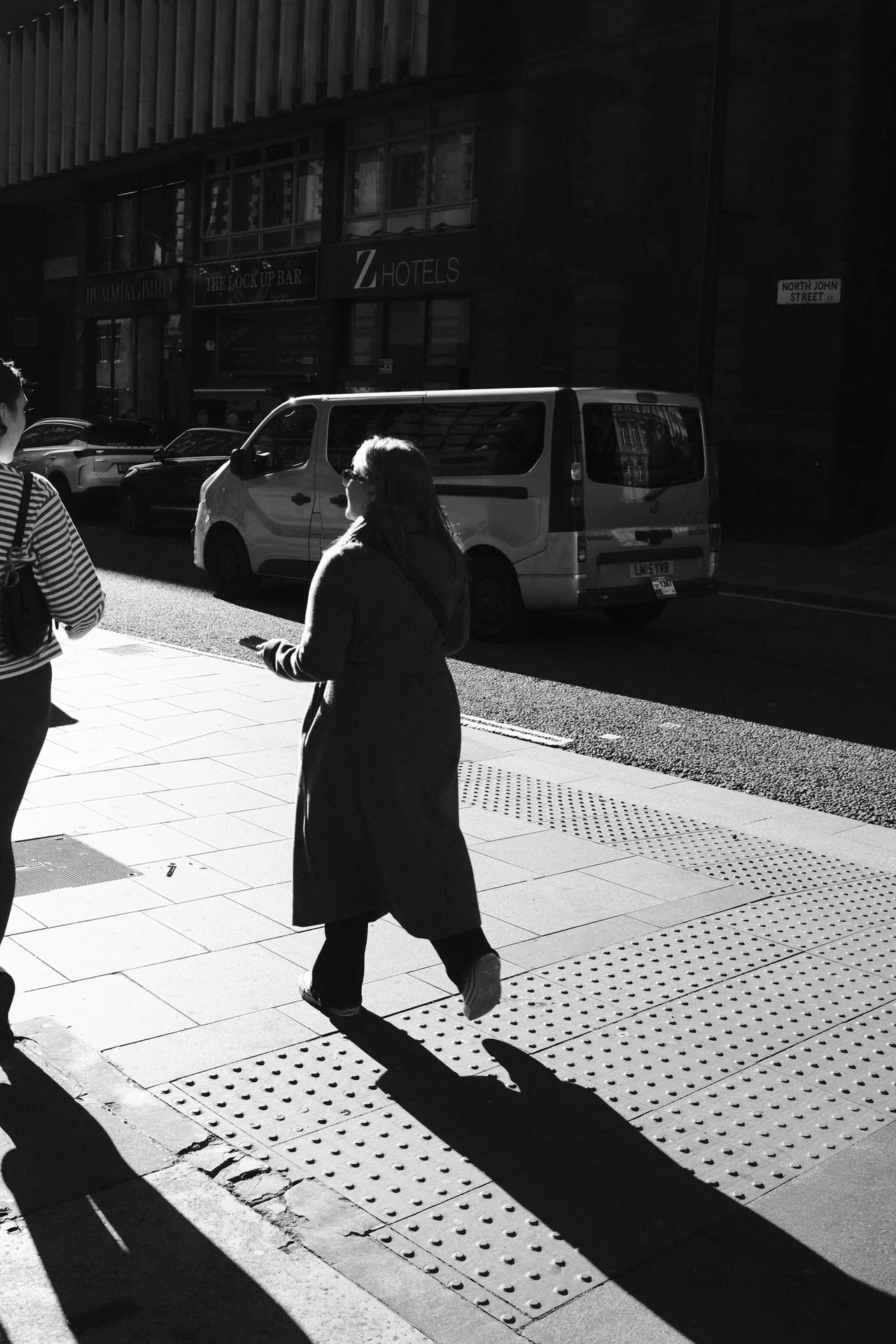
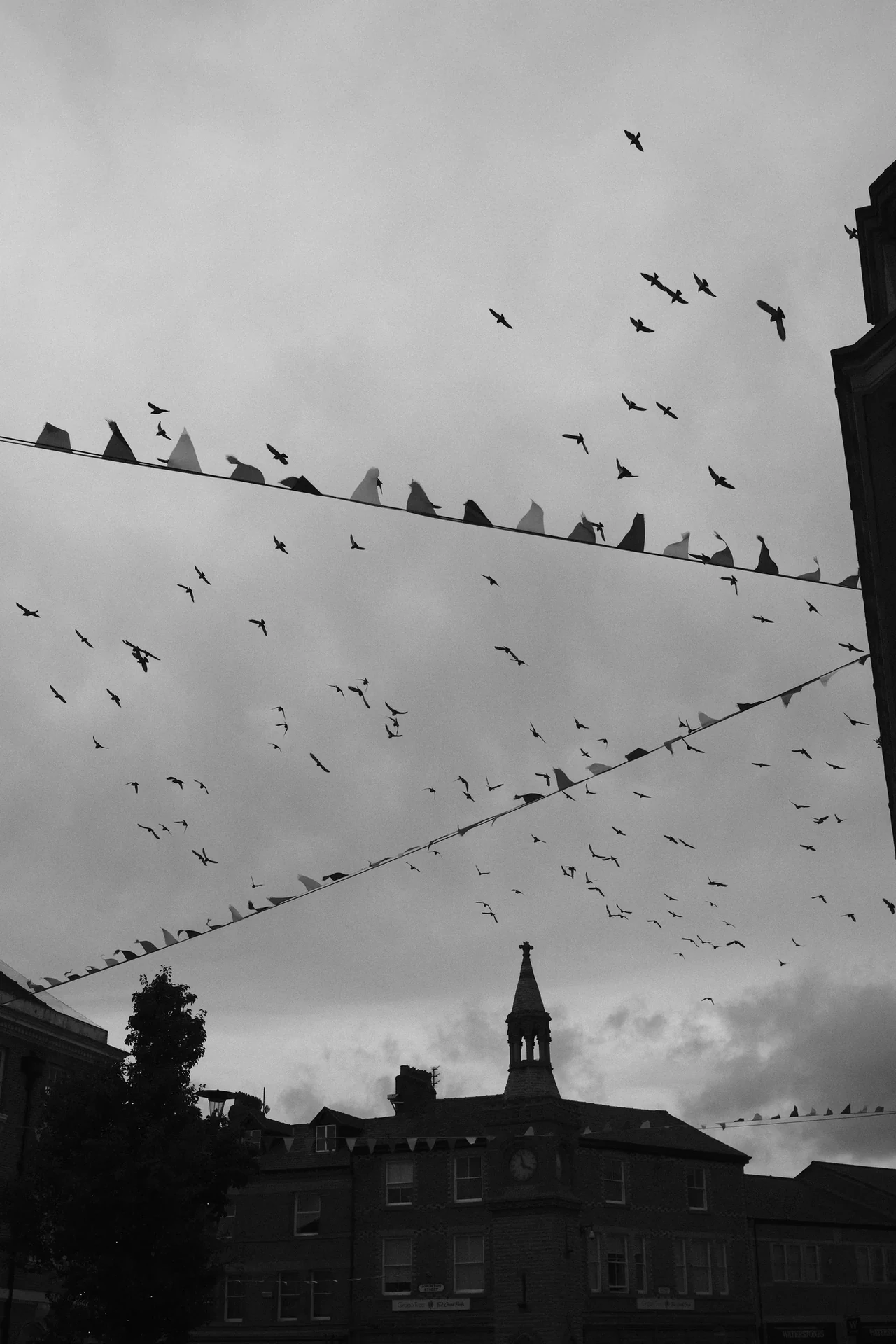
The six-image practice board below contains existing photographs by Mark C Grant. They were assembled for this lesson: they are not consecutive exposures, a recovered roll or a record of his rejected frames. Keep that distinction in mind. You can practise choosing and sequencing here; your own uncut shoot will teach you about the decisions between exposures.
For the brief “passing through”, try 01, 02 and 03: interruption, movement, then a glance back through a passage. Ask whether that order feels like entering, moving and being noticed. For “being together, being apart”, start with 04, then test 01. The physical separation around the tree becomes a different kind of separation between near and far figures. These are editorial proposals, not the photographs’ official meanings.
Now reject one of those suggestions. Name the visible reason: a repeated gesture, too little change of distance, an abrupt light transition, a picture that asks an unrelated question. You have just done more useful editing than awarding everything four stars. Open each full photograph before deciding; a thumbnail rewards bold shapes and can conceal the small relation that matters.
Six pictures. Two different stories.
A teaching selection, not a consecutive shoot. All photographs © Mark C Grant. Open a frame to inspect the full image.
Keep the twelve–three–one field card ↓ · Download the review log ↓
Keep the misses; diagnose them
Separate three kinds of disappointment. A technical miss hides something the picture needed: perhaps the expression vanished into blur. A timing miss has the ingredients but their relationship has not formed. An editorial miss may be a perfectly good photograph that does not belong in this particular set. Those demand different responses. Only the first is likely to improve through operating the camera differently.
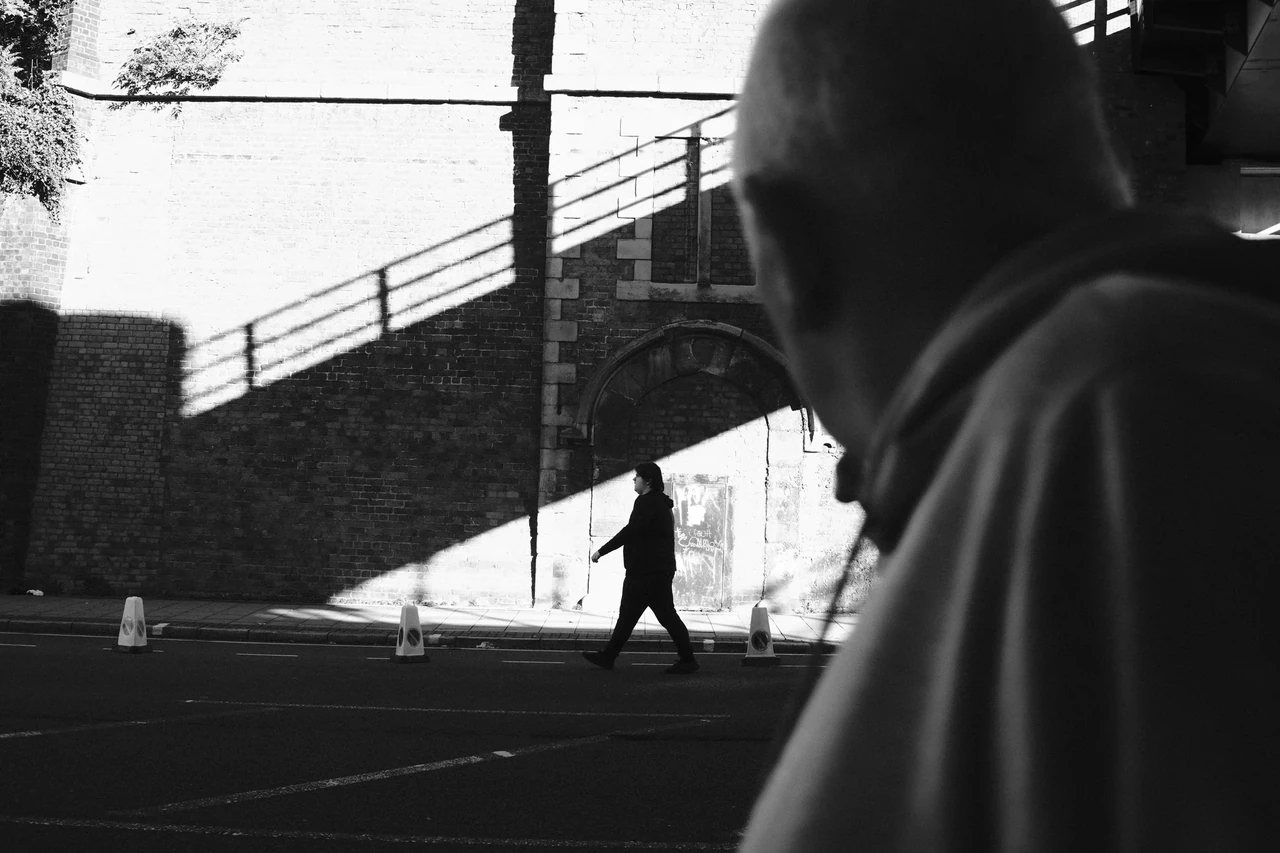
Then reserve a fourth category: the useful accident. Passing through the Frame contains a large, soft foreground figure. If your brief were a clean record of the architecture, that might be an obstruction. Here it places the viewer inside a busy space and sets up a strong change of scale. The lesson is not “obstructions are good”. It is to ask what this obstruction does in this photograph.
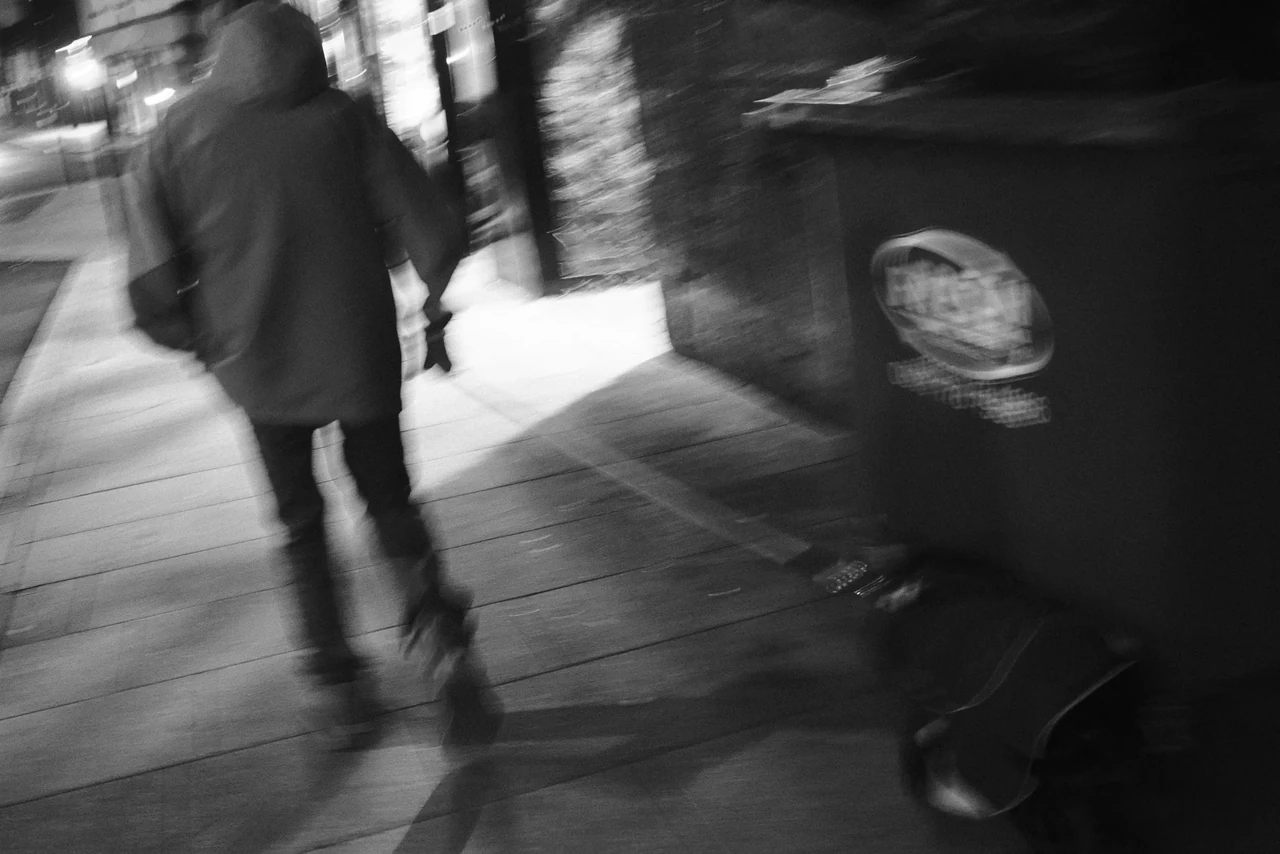
Look at Passing in a Blur. Smearing extends beyond the pedestrian into the surroundings; the whole view carries movement. We cannot identify the exact shutter speed or divide subject motion from camera movement from this finished image alone. We can describe its effect. If the picture conveys an unsettled passage through space, sharpness may not be its deciding test. If your subject were a small readable sign, the same softness might defeat the task.
A miss is useful when it tells you what to change next time: move before the overlap closes, wait for the hand, watch the bright edge, leave earlier. “I am rubbish” is not an instruction a camera can execute. Nor is “buy a new lens”. Write the actionable sentence instead.
Do not erase the evidence of learning
In her ICP Library interview, Lubben discusses contact sheets as records of working methods and of meanings that change over time. She also raises the preservation problem posed by digital material outside the final selection. That is a useful challenge to the delete key. Today’s rejected picture may hold a detail, a person or a place that becomes important later.
Keep a backed-up original set and make selections with ratings, collections or a separate list. Retaining an archive does not mean publishing everything. Review privacy, dignity and context before sharing a sheet: a rejected photograph can expose a person just as clearly as a selected one. A private learning document and a public portfolio have different jobs.
Leave an audit trail you can understand. Record filenames, capture order, your chosen frame and a short reason. Date the edit. In six months you may choose differently. That does not make the first decision dishonest; it gives you two records of how you looked. The archive becomes a conversation rather than a trophy cupboard.
The challenge: twelve, three, one
Take one familiar route and make exactly twelve photographs in single-frame drive. Work three situations with up to four exposures each, where it is considerate to remain. Let changes in gesture, distance or light motivate the next exposure; do not machine-gun a stranger or block their way. If a situation ends, move on and note the change. Keep all twelve files, including mistakes.
Make a numbered sheet in capture order with the entire frame visible and filenames beneath. Keep rendering consistent for this first comparison. If you are following our Twelve Moments of Truth challenge, use the original JPEGs without adjustments. A 4-by-3 arrangement is convenient; no particular app or printer is required. Check the files at a larger size before judging fine detail.
Next day, nominate three possibilities and choose one. For each candidate, write what it offers and what it loses. For two misses, write one practical change for another walk. Ask a second viewer to choose without hearing your story first. Compare the visible evidence behind your choices rather than trying to win.
Deliver one complete sheet, three candidates, one final frame and five short notes. Keep the whole shoot. Repeat the route next week with just one lesson from the misses. The goal is a more deliberate next decision, not twelve little masterpieces reporting obediently for duty.
Watch, then try
Magnum Contact Sheets

Ted Forbes opens Magnum Contact Sheets. Follow the relationship between a working sheet and a chosen photograph; then keep the complete sequence from your next walk.
Watch, then try
Matt Stuart on Failure in Street Photography - How I See

Listen for the role of repetition and failed attempts. Choose one useful habit to repeat for a week rather than expecting every walk to produce a keeper.
Sources & further looking
Facts checked 22 October 2026. The practical exercises and critical readings are this publication’s editorial interpretation.
Take this to the discussion.
A question, an example, a picture that proves us wrong. Specific beats loud.
Open the conversation ↗