Start with Misawa, the stray dog. What do you read in the face before you learn the story of the encounter? Moriyama says the print surprised him: the meaning was not all settled at the shutter.
Open the source ↗Photographers
Daido Moriyama: the pavement does not care what your camera cost.
Fragments, proximity and a restless eye. Start with the looking; the grain can wait.
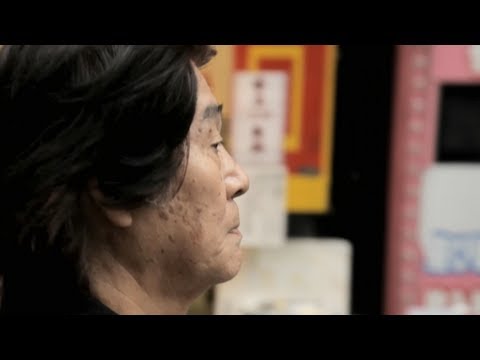
Look at the original work
Watch with a question.
Follow the changes of subject: street, car, person, poster, screen. Which frames make a flat printed surface feel as alive as a person?
Open the source ↗Watch the compact camera in the Tate walk. Notice the distance between photographer and subject before worrying about camera specifications.
Open the source ↗A few bearings
Daido Moriyama moved to Tokyo in 1961 and worked as Eikoh Hosoe’s assistant before beginning his freelance career in 1964. He joined Provoke with its second issue in 1969. The magazine began in 1968 and lasted three issues: a short run with an influence that has vastly outlived the paper.
Tate’s film follows him through Shinjuku with an ordinary compact camera. This matters on a rangefinder-focused site. Moriyama is a useful reference for close, direct, small-camera seeing, not evidence that only one expensive focusing mechanism makes serious photographs.
Try the idea in Liverpool. The following practice studies are Mark C Grant’s photographs, with our editorial readings.
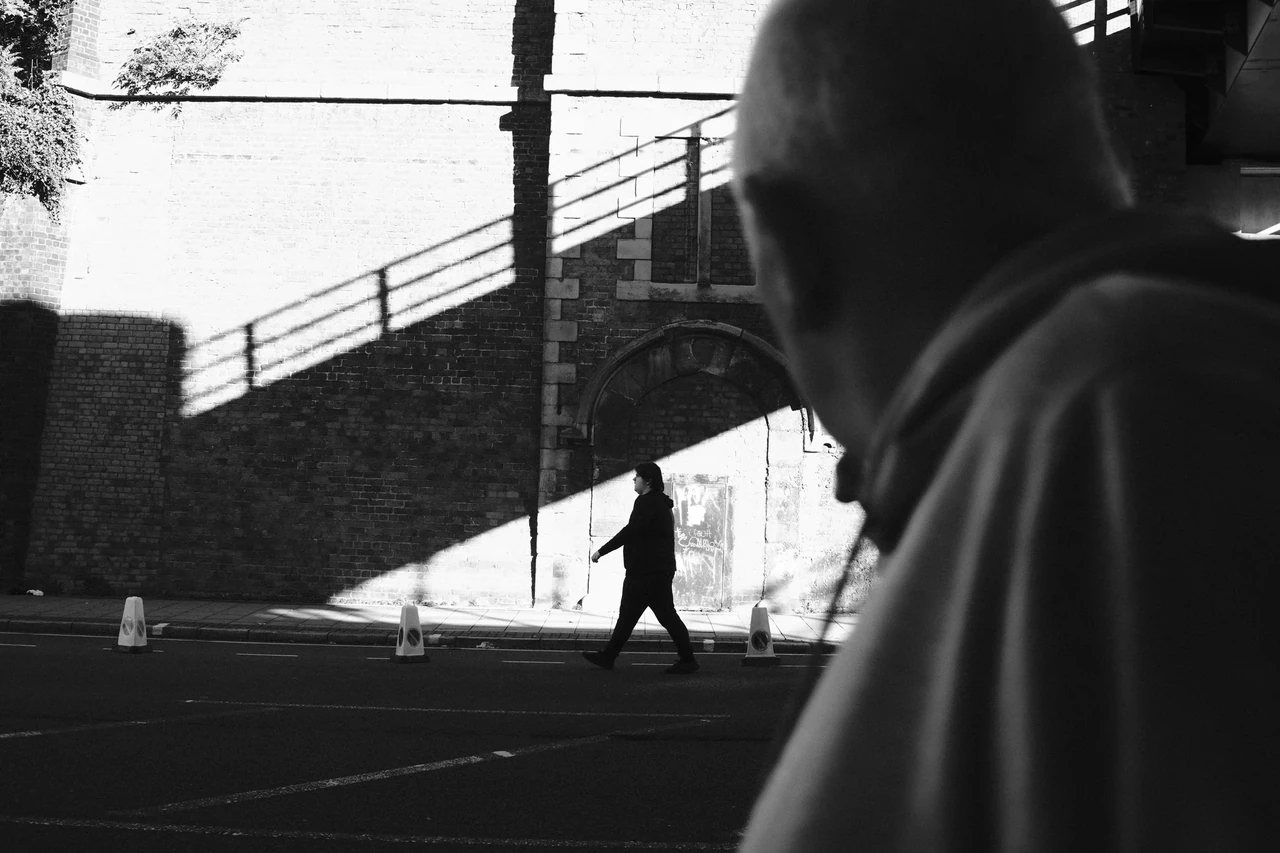
The foreground interrupts
A large, partly cut-off passer-by occupies the near edge while a smaller figure crosses the bright wedge beyond. Your eye has to negotiate two distances. The interruption makes the view feel occupied. Cover the foreground briefly and notice how much tidier—and less layered—the picture becomes.
Passing through the Frame · Photograph © Mark C GrantLook at the frame before the finish
The useful question is not “which preset gets this look?” It is what happens when a frame refuses to settle into a tidy account of a place. Fragments, interrupted bodies, signs and unstable edges can make a street feel encountered rather than catalogued. That is an interpretation to test against the pictures, not a recipe he handed down.
Grain and hard contrast can carry that energy. Applying them to an indifferent composition does not manufacture the same tension. Look at where the frame cuts, how close the camera feels and what remains unresolved. There is more to learn there than in a shopping list.
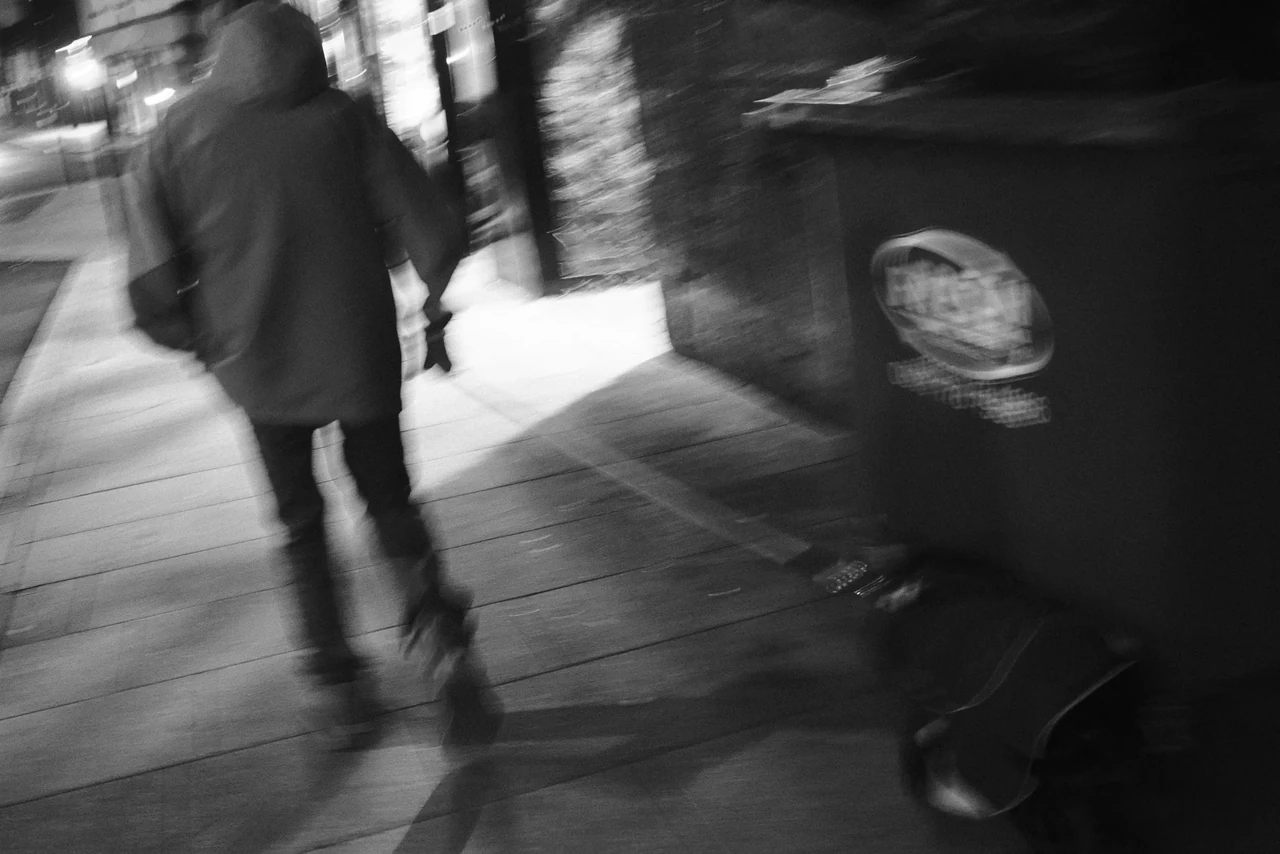
Movement becomes a shape
The pedestrian is softened into movement, while the street furniture supplies a more fixed reference. The useful question is what remains legible: direction, mass and the relationship between moving and stationary forms. A guessed shutter speed would add less than actually looking at those edges.
Passing in a Blur · Photograph © Mark C GrantTake the question home
Go out with a small camera and make pictures of what interrupts your attention: a reflection, a sign half hidden by a body, a sudden change of scale. Work with what is in your own street. A borrowed Tokyo mood pasted over Liverpool can turn influence into fancy dress.
Then edit hard. Restless seeing does not mean publishing every restless exposure. Put six images together and ask whether their friction creates something more than noise. The lesson is permission to look differently, not a free pass for a weak contact sheet.
Sources & further looking
Facts checked 22 October 2026. The practical exercises and critical readings are this publication’s editorial interpretation.
Take this to the discussion.
A question, an example, a picture that proves us wrong. Specific beats loud.
Open the conversation ↗Keep looking
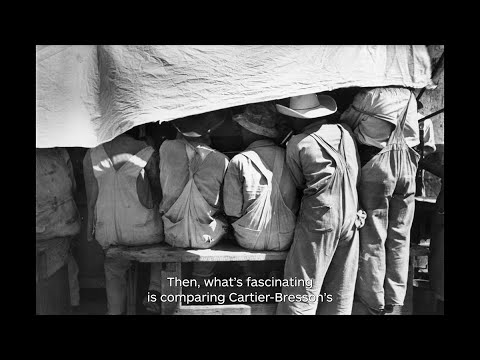
Film preview / Fondation Henri Cartier-Bresson
Photographers
Cartier-Bresson: the background is doing half the shift.
Timing gets the headlines. Geometry was already at work.
Read the piece : Cartier-Bresson: the background is doing half the shift.Film preview / Fondation Henri Cartier-Bresson
Photographers
Helen Levitt: ordinary life is already performing.
Small gestures, second characters and the theatre you do not need to direct.
Read the piece : Helen Levitt: ordinary life is already performing.