In Street Drawing, look between the two girls and the two chalk figures. The repeated shapes make the pavement another participant. What would disappear if the drawing were cropped out?
Open the source ↗Photographers
Helen Levitt: ordinary life is already performing.
Small gestures, second characters and the theatre you do not need to direct.
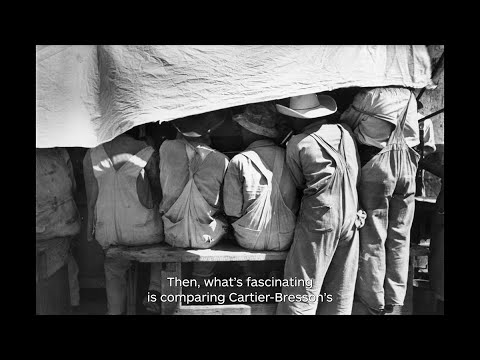
Look at the original work
Watch with a question.
In New York, compare the expression of the woman at the front with the woman behind. How much of the picture's humour comes from having both in the frame?
Open the source ↗Compare Levitt's Tacubaya picture with Cartier-Bresson's newspaper sellers on the Foundation page. Look at the space around the people as carefully as their faces.
Open the source ↗A few bearings
Helen Levitt photographed everyday New York street life, attending to children, pavement drawings and the small dramas between people and their surroundings. She bought her first Leica in 1936. Her substantial colour work, supported by Guggenheim grants from 1959, matters too: a black-and-white zine should not edit that out of her history.
The Whitney describes a practice that joins documentary observation with the unexpected. It is a useful place to begin looking, without reducing a varied body of work to a single charming mood.
Try the idea in Liverpool. The following practice studies are Mark C Grant’s photographs, with our editorial readings.
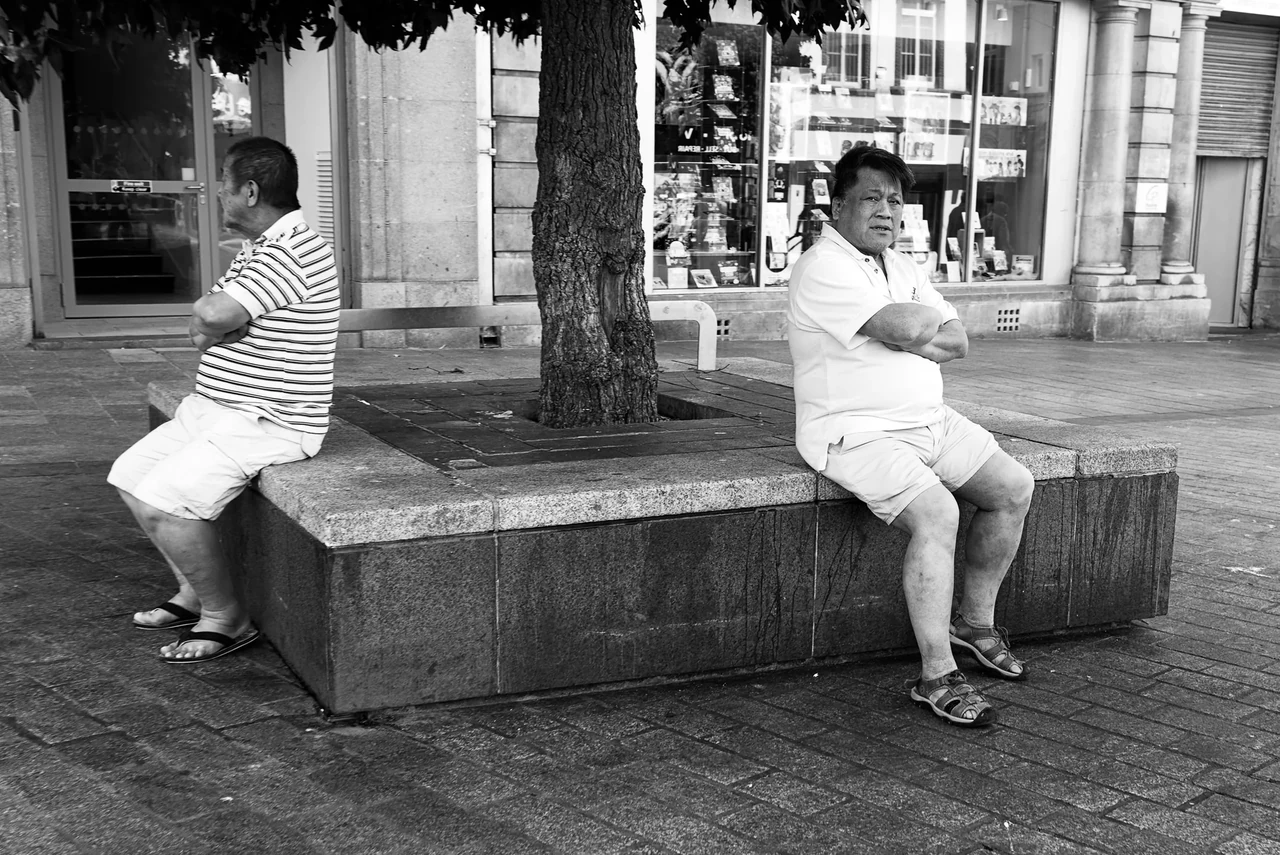
The space between people
Two seated figures share a structure without becoming a single group. Read the direction of their bodies and the empty stretch between them. The gap is active information. You can describe that arrangement without claiming to know whether they are strangers or what either is feeling.
Two Seats beneath a Tree · Photograph © Mark C GrantFind the second character
Look beyond the obvious subject. A watcher at a window, a mark on a wall or another person’s hand can change what a frame seems to say. These relationships are fragile. Move a little, wait a little, and the scene can become more complicated without becoming louder.
This does not require making people perform. The point is to notice the choreography already there. If you find yourself directing strangers while calling the result candid, the label has become less useful than an honest description.
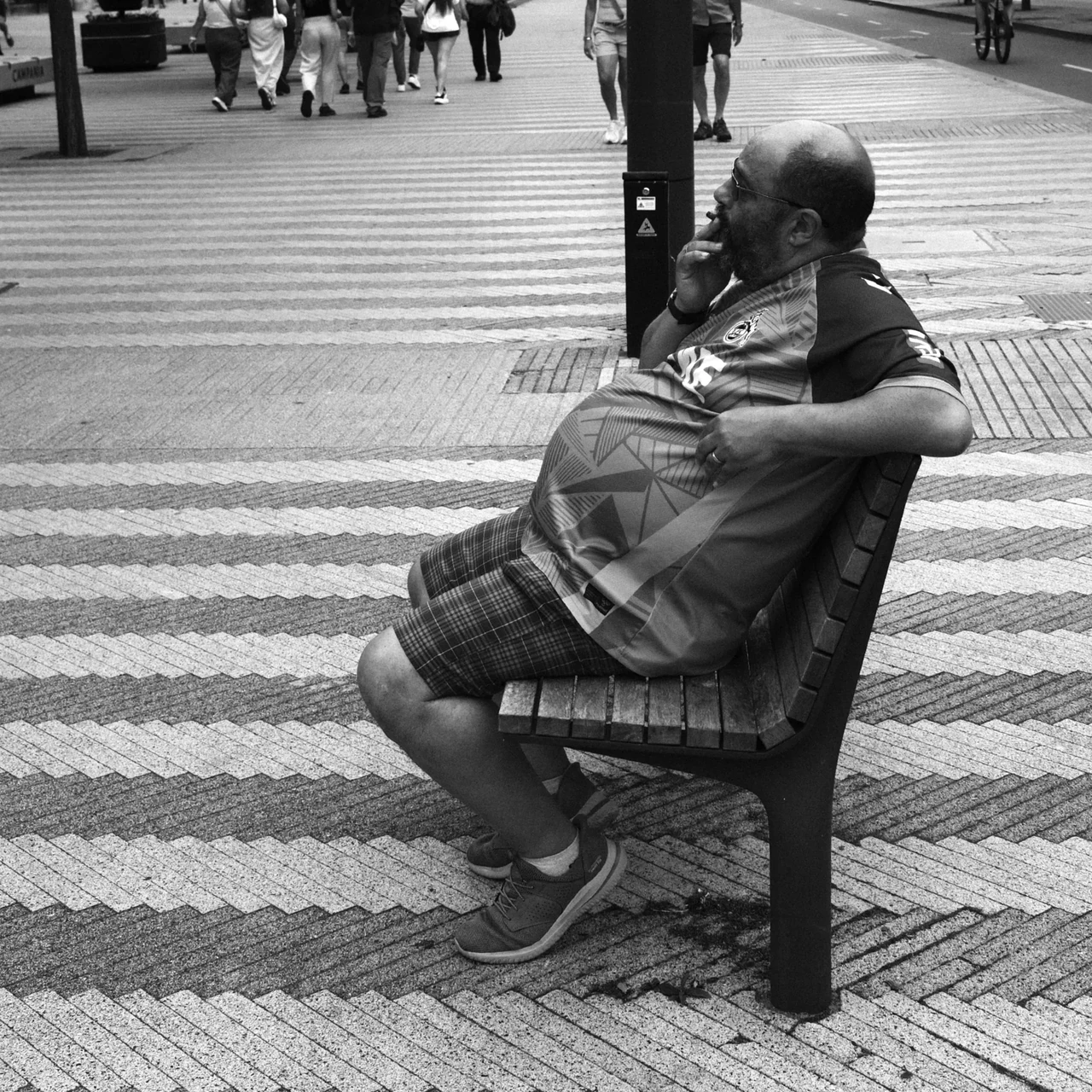
A body changes the geometry
The patterned paving is regular; the seated figure is anything but. Follow the lean of the body, then the direction of the bench. The interruption gives a very orderly surface something human to do. There is no need to invent what the person is thinking. Their posture is enough.
A Pause on the Bench · Photograph © Mark C GrantAttention without entitlement
Historical pictures of children in public space are not a blanket instruction for how to work now. Exercise judgement about vulnerability, context and publication. If someone is uncomfortable, the photograph is not more important than the person. You can study gestures and relationships without borrowing every subject or method from a past era.
For an exercise, use adults in a wide public scene, or objects and traces if that feels more appropriate. Give the frame a primary action and a quieter echo. Let humour come from the visual relationship rather than from making a stranger the butt of a joke.
Sources & further looking
Facts checked 22 October 2026. The practical exercises and critical readings are this publication’s editorial interpretation.
Take this to the discussion.
A question, an example, a picture that proves us wrong. Specific beats loud.
Open the conversation ↗Keep looking
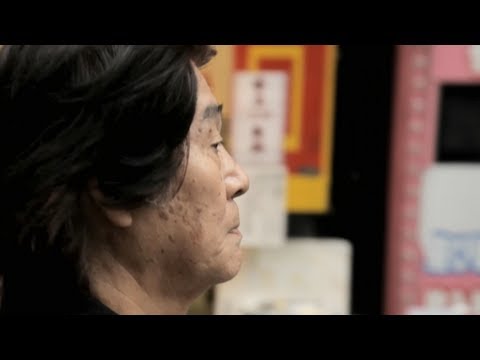
Film preview / Tate
Photographers
Daido Moriyama: the pavement does not care what your camera cost.
Fragments, proximity and a restless eye. Start with the looking; the grain can wait.
Read the piece : Daido Moriyama: the pavement does not care what your camera cost.Film preview / Fondation Henri Cartier-Bresson
Photographers
Cartier-Bresson: the background is doing half the shift.
Timing gets the headlines. Geometry was already at work.
Read the piece : Cartier-Bresson: the background is doing half the shift.