Set a boundary you can keep
Pick one focal length, one short route and a limit of thirty-six exposures. Film users know this limit already. Digital users can borrow it without buying a developing tank. The point is to spend a little more attention before each exposure, not to prove that film is morally superior.
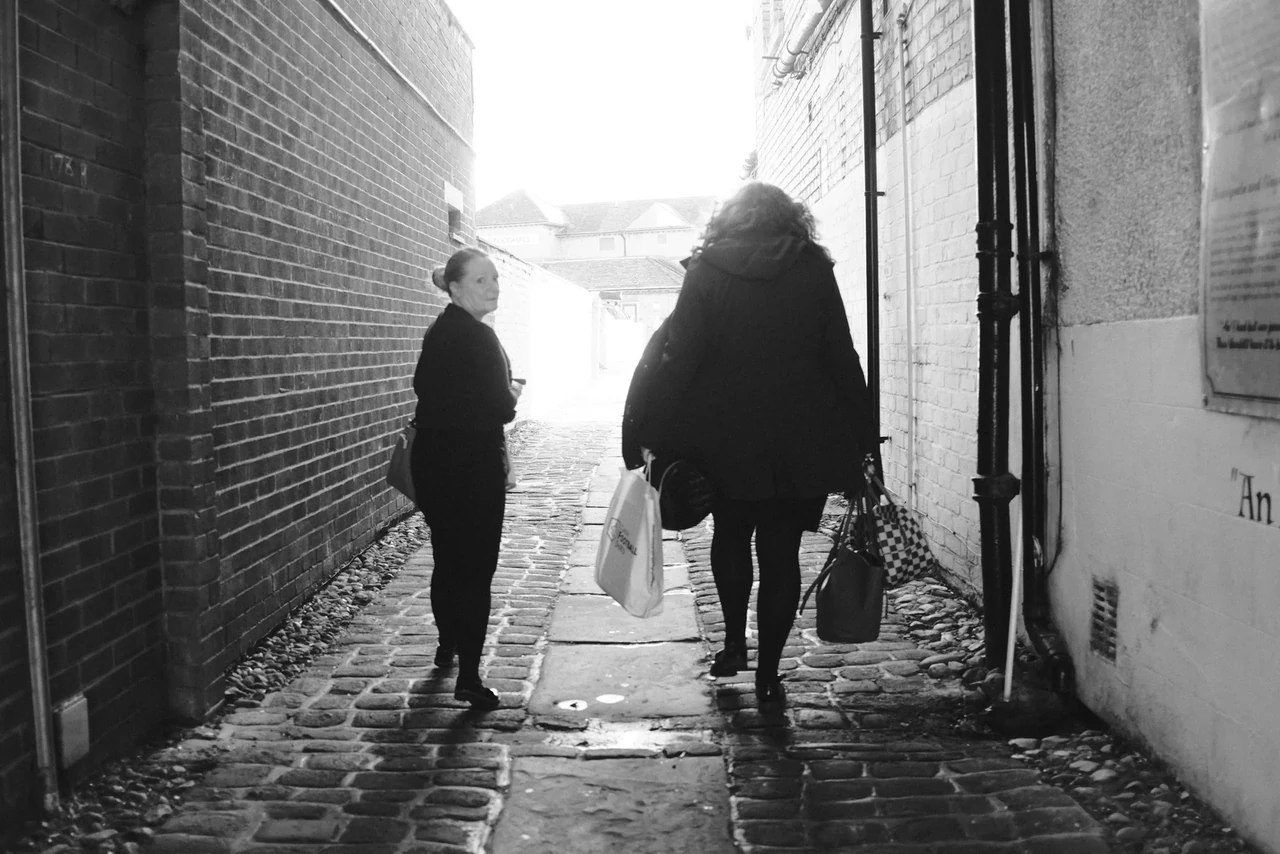
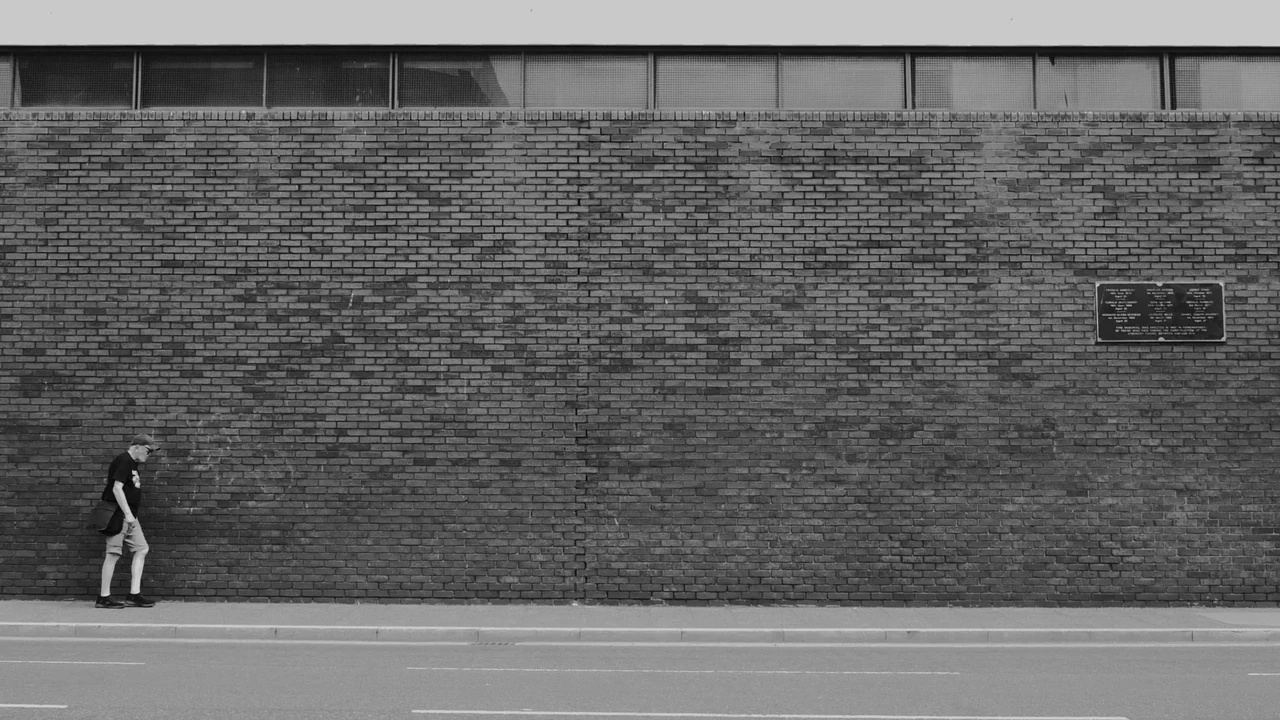
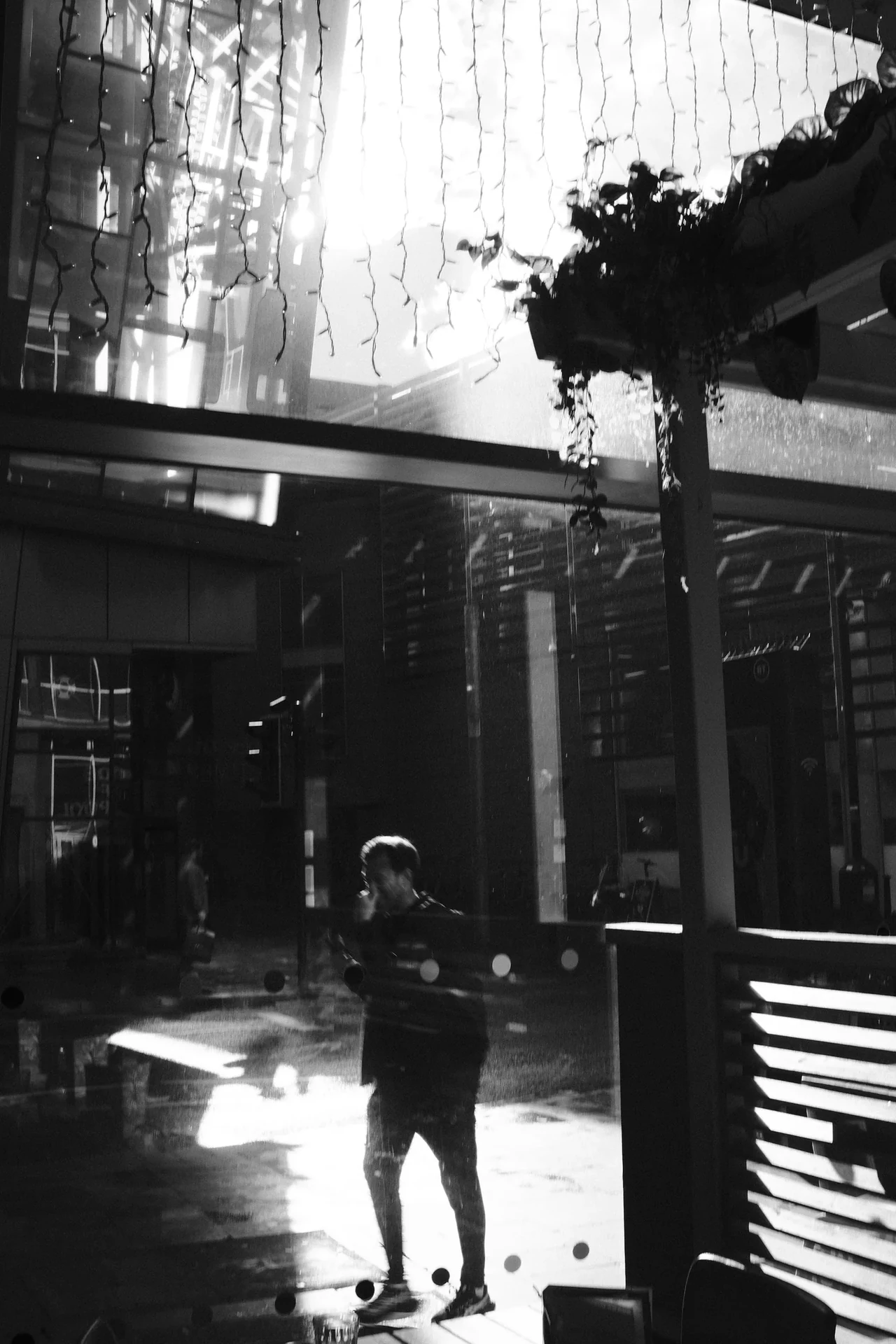
Choose one question for the walk: waiting, hands, thresholds, reflections or the space between people. Avoid a subject so broad that every photograph qualifies. “Urban life” can let you off almost anything.
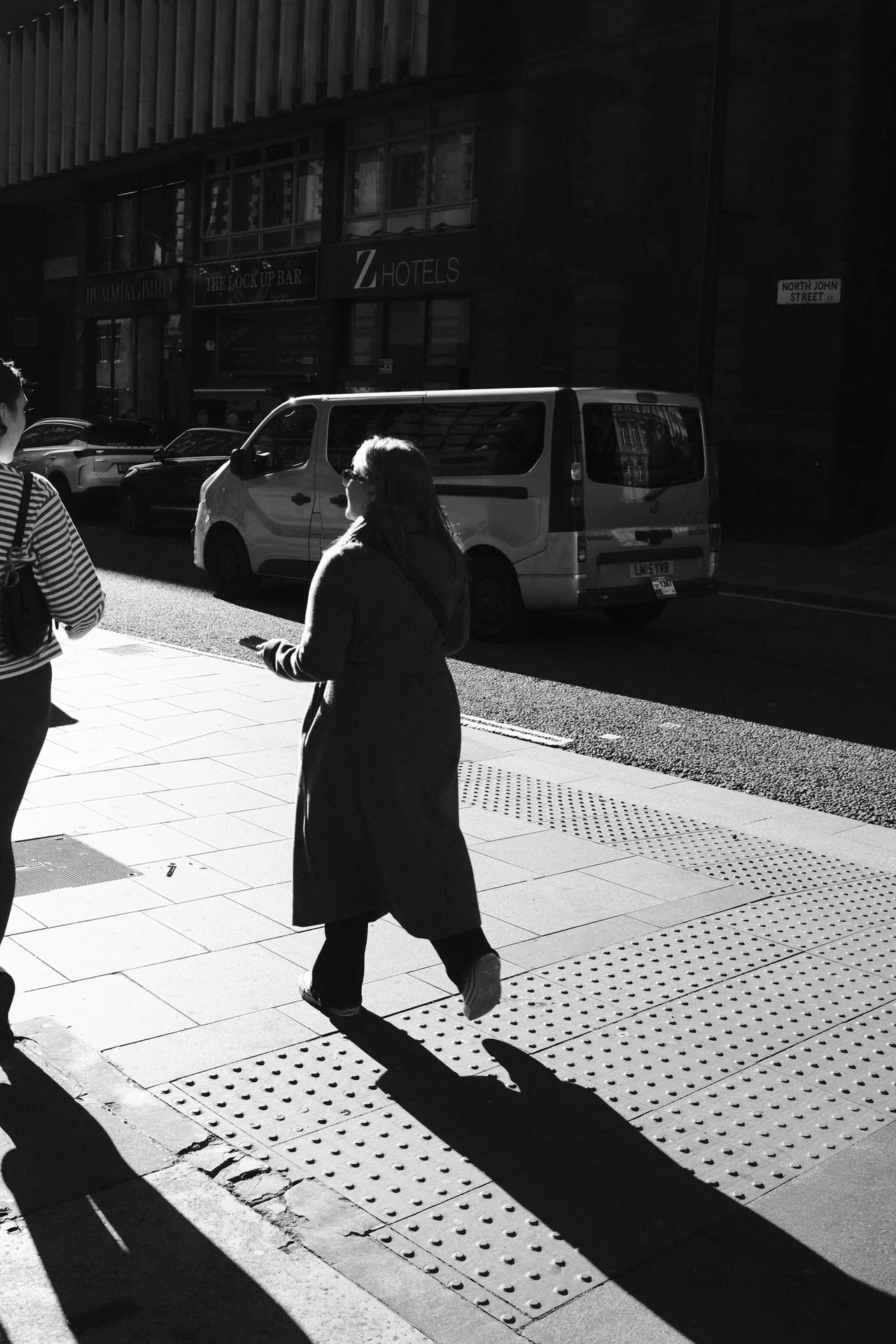
One step changes the picture
A figure crosses a sharply divided patch of pavement, with a long shadow extending across it. Light makes the pedestrian and the ground separate clearly. Follow the shadow towards the edge. It is part of the composition, not an accessory to the person.
Crossing into Sunlight · Photograph © Mark C GrantDo a lap without shooting
Look first. Notice the light, the direction of travel and the places you can pause. Take a mental note of two possible compositions. Then put the camera into a simple, usable state: a shutter that suits the movement, a workable aperture and a focus method you understand.
A fixed focal length is a useful constraint because it makes you decide where to stand. It does not mean you must get uncomfortably close to people. Move your position when appropriate, or accept that the picture is unavailable. The assignment is not a licence to be a nuisance.
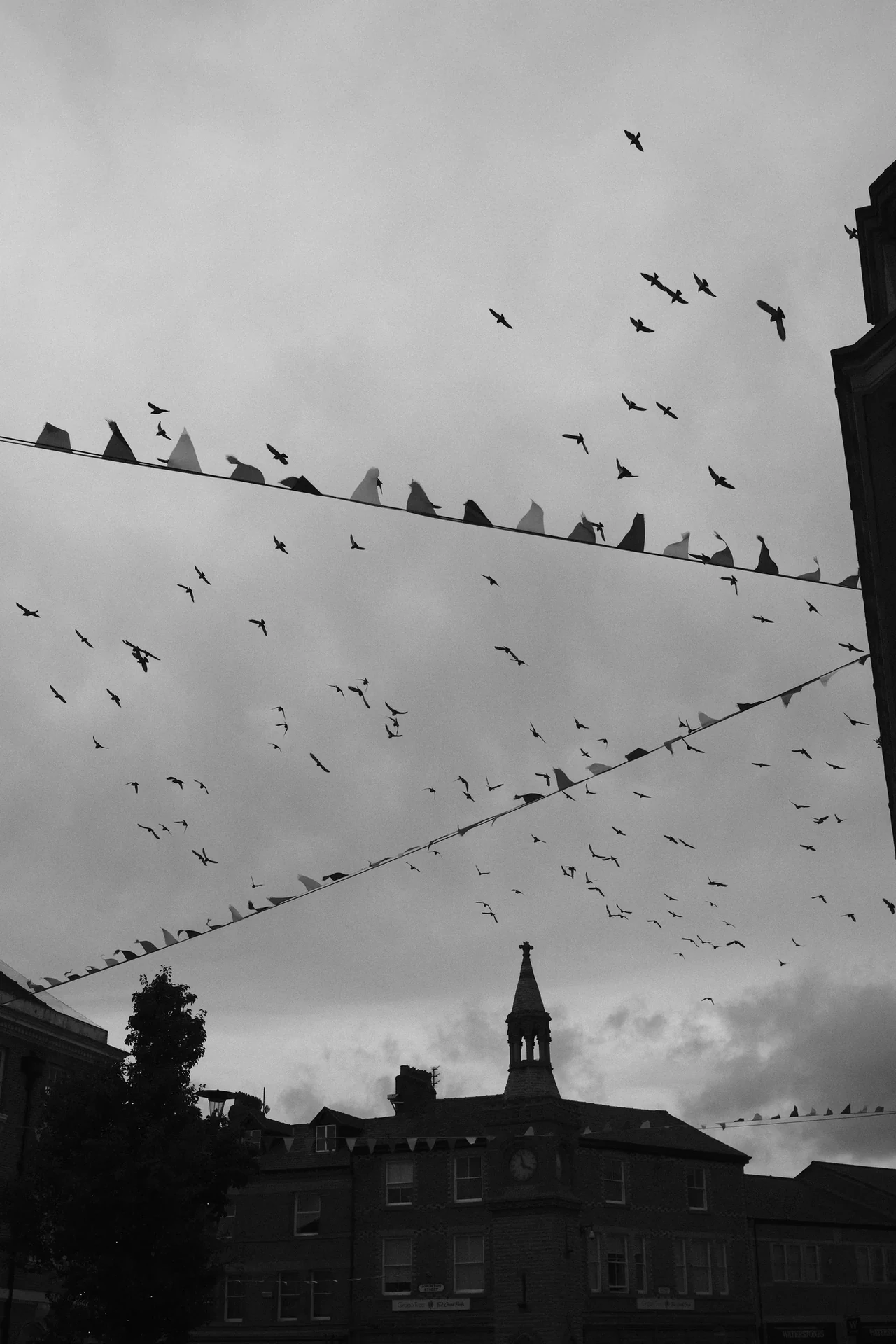
A loose line above a hard edge
Bunting, birds and the roofline make different sorts of marks against the sky. The architecture is solid; the birds are irregular and temporary. Follow that change in rhythm across the frame. Empty sky gives the small shapes room to be seen.
Birds above the Bunting · Photograph © Mark C GrantSpend the frames deliberately
Make variations when there is a real difference to explore: a subject entering a gap, a changed gesture, a cleaner edge. Do not spend twelve frames because you are frightened to choose. Equally, do not refuse a useful second exposure because you are performing discipline.
If you reach the limit early, finish the walk looking. If you come home with fewer exposures, that is fine. A limit is a ceiling, not a sales target.
Edit tomorrow
Make a contact sheet, pick twelve, then six. Ask whether they belong together. Write a one-sentence description of the set without using “cinematic”, “gritty” or “timeless”. If the description is difficult, the sequence may need a clearer idea.
Use the downloadable walk log to note what you learned. Repeat the same route next week before deciding the experiment needs a new lens. Repetition is considerably cheaper, and occasionally more useful.
Practical guidance from Captured Moment. Starting points to test in your own work, not universal camera settings.
Take this to the discussion.
A question, an example, a picture that proves us wrong. Specific beats loud.
Open the conversation ↗