A broad practice, with plenty of arguments
Street photography is large enough to contain different intentions: formal play, social observation, neighbourhood memory, political witness and the pleasure of seeing something peculiar on the way to the shops. Calling it a movement makes sense as a shared appetite for public life. It becomes misleading if we imagine one organised school, one founding moment or one compulsory look. There has never been a universal committee approving the shadows.
The International Center of Photography’s 2024 exhibition We Are Here brought together more than thirty photographers from around the world, tracing public life from the 1970s onwards. Its themes included neighbourhood, self-presentation, urban space and protest. That is evidence of breadth, rather than a statistic proving a sudden boom. The photograph of an encounter and the portrait made through a conversation can belong in the same wider discussion.
This site favours black and white, small cameras and pictures made through looking. Those are working preferences, not entry requirements for seriousness. A photograph has to offer a relationship worth seeing. The camera’s badge cannot supply it.
The background is already working
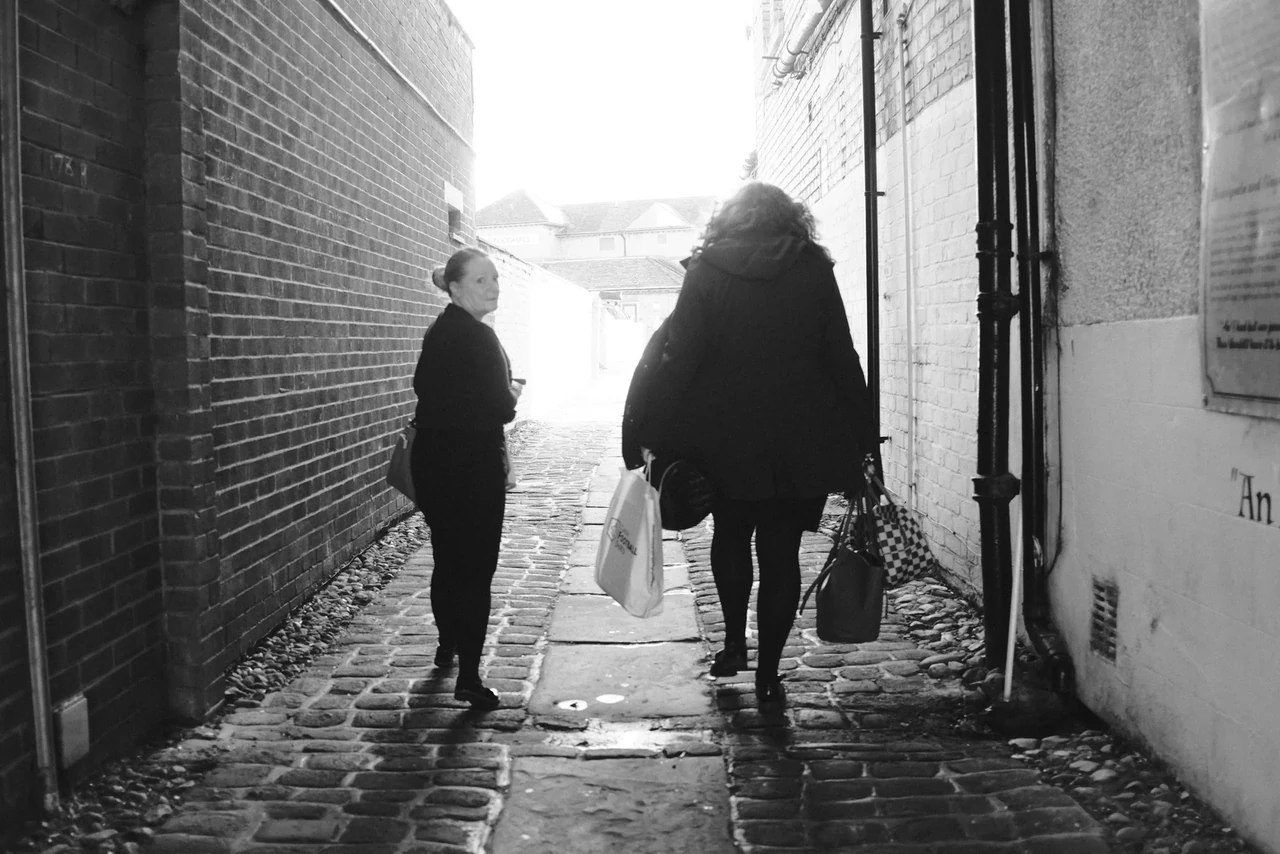
The bright opening pulls the eye through a darker passage. People crossing that route supply changing silhouettes and overlaps. Look at the gap between the two larger figures. You can understand the composition without knowing their destination, their names or the camera settings.
Figures in the Cobbled Passage · Photograph © Mark C GrantThe moment is a relationship
A useful moment need not contain a dramatic gesture. It can be the temporary alignment of a person, a gap and a patch of light. A head turns; someone moves into the near edge; the frame becomes a different arrangement. Photography can hold that arrangement long enough for another person to inspect it. The apparent smallness of the event is part of the attraction.
MoMA’s account of its 1967 New Documents exhibition describes Diane Arbus, Lee Friedlander and Garry Winogrand turning documentary methods towards personal inquiry. Their work was not one style, and the exhibition is one historical thread rather than the birth certificate of street photography. It supports a useful question today: what are your photographs helping you notice that you would otherwise pass?
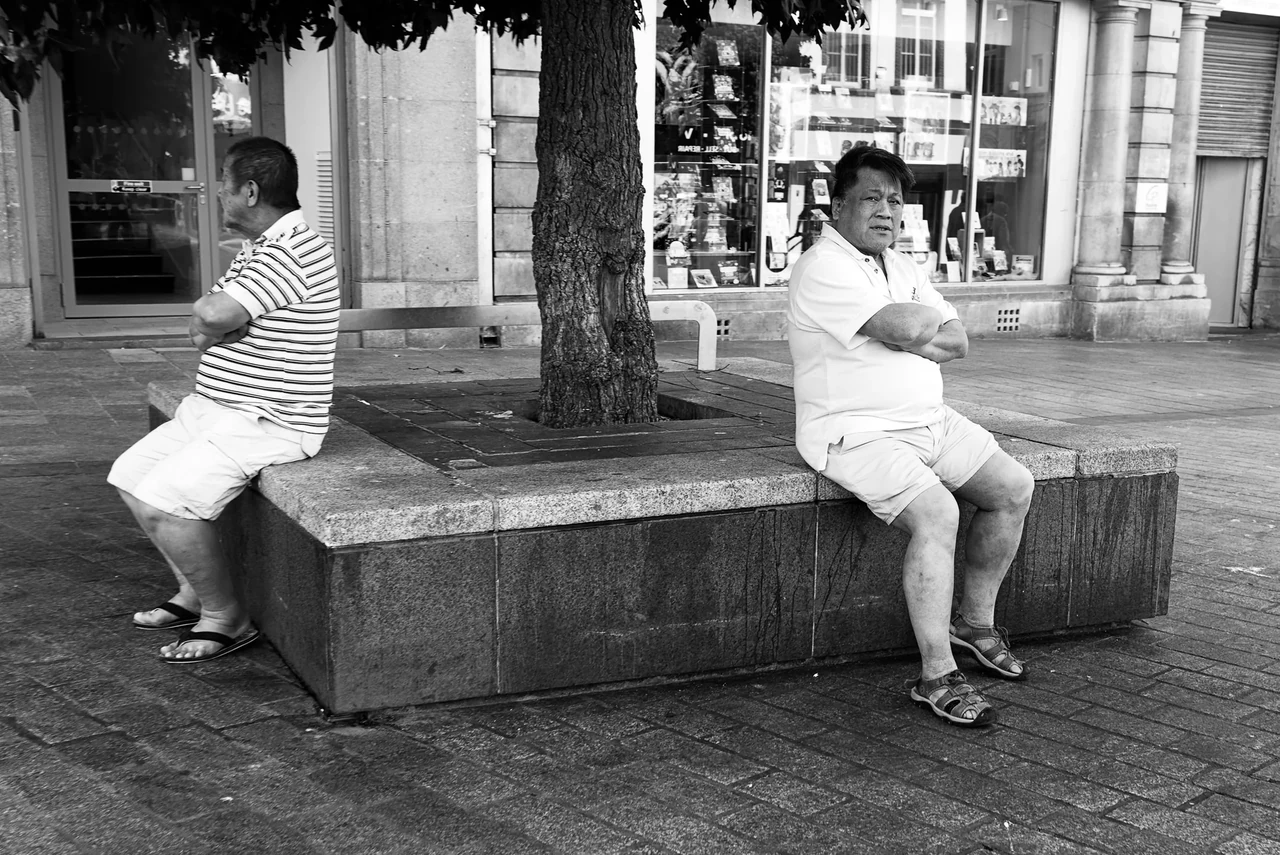
Look at Two Seats beneath a Tree in Mark’s archive. The bodies and the space between them invite attention. They do not tell us whether the people know each other or what they feel. A picture can suggest a connection without giving us permission to write a stranger’s biography.
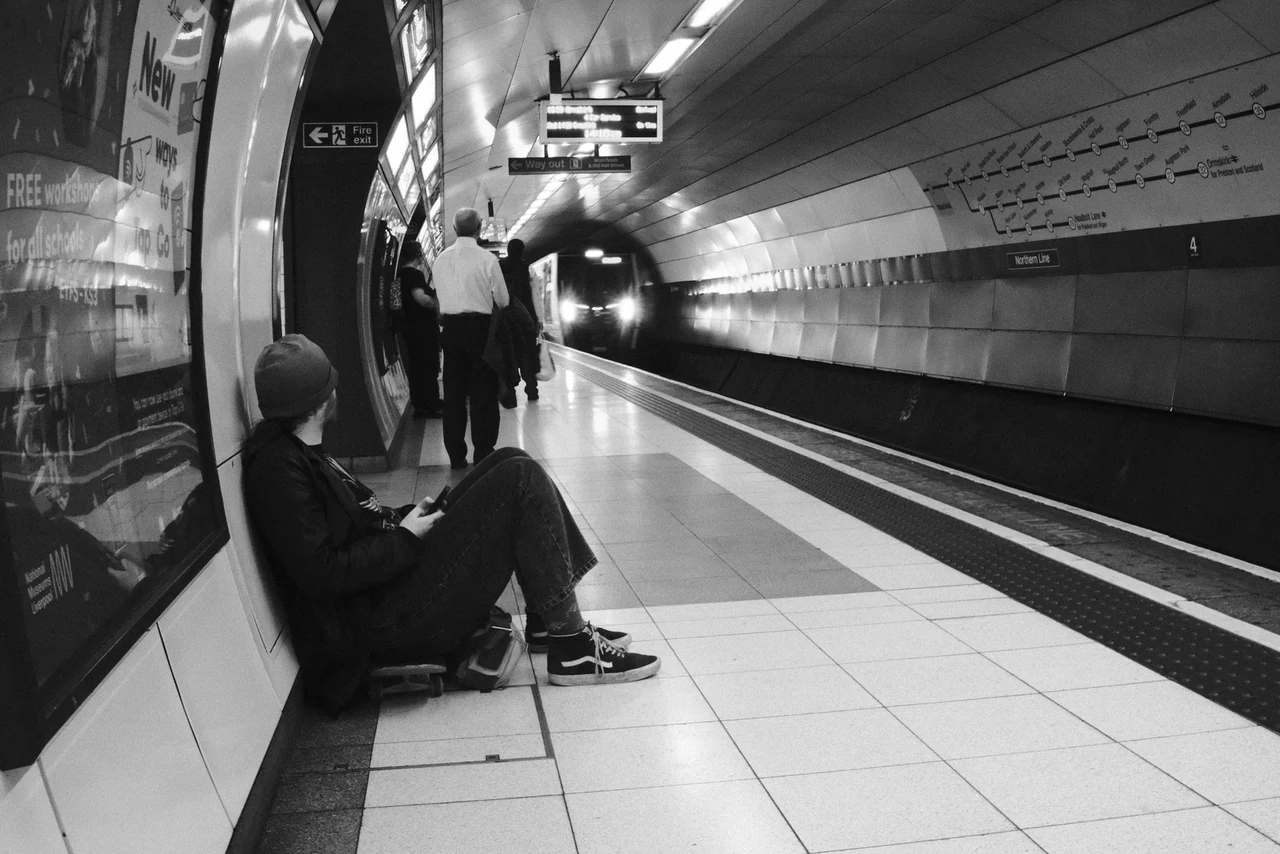
A still figure, an approaching light
The seated passenger and the approaching train set up different kinds of time. One holds still while the other advances. The platform lines connect them. Notice how little information the dark tunnel needs to contain: the approaching light already gives that darkness a purpose.
Waiting at Moorfields · Photograph © Mark C GrantWatch, then try
#LeicaConversations - Street Photography and Beyond with Matt Stuart

Compare the discussion of London street pictures with the longer community project. What changes when a photographer returns and gets to know a place?
Connection sometimes starts after the shutter
A candid photograph may connect a later viewer with a fleeting public arrangement. Making a portrait through conversation creates another kind of connection, with the photographed person participating in the encounter. Neither happens automatically because a camera is present. You can photograph a neighbourhood for years and still treat its residents as convenient scenery.
Return to places. Listen when someone talks. If you ask for a portrait, explain where you intend to publish it and give the person room to decline. If you offer a copy, deliver it. A straightforward exchange is more useful than rehearsing a mystical speech about capturing souls outside the chippy. The person has probably only asked whether you work for the paper.
Consider publication separately from exposure. Embarrassment, distress and vulnerability are not free compositional ingredients. A visually striking frame can still be a poor decision to share. A refusal, an uncomfortable expression or a context you do not understand is a reason to pause. Respect can leave a gap in the contact sheet. That is an acceptable result.
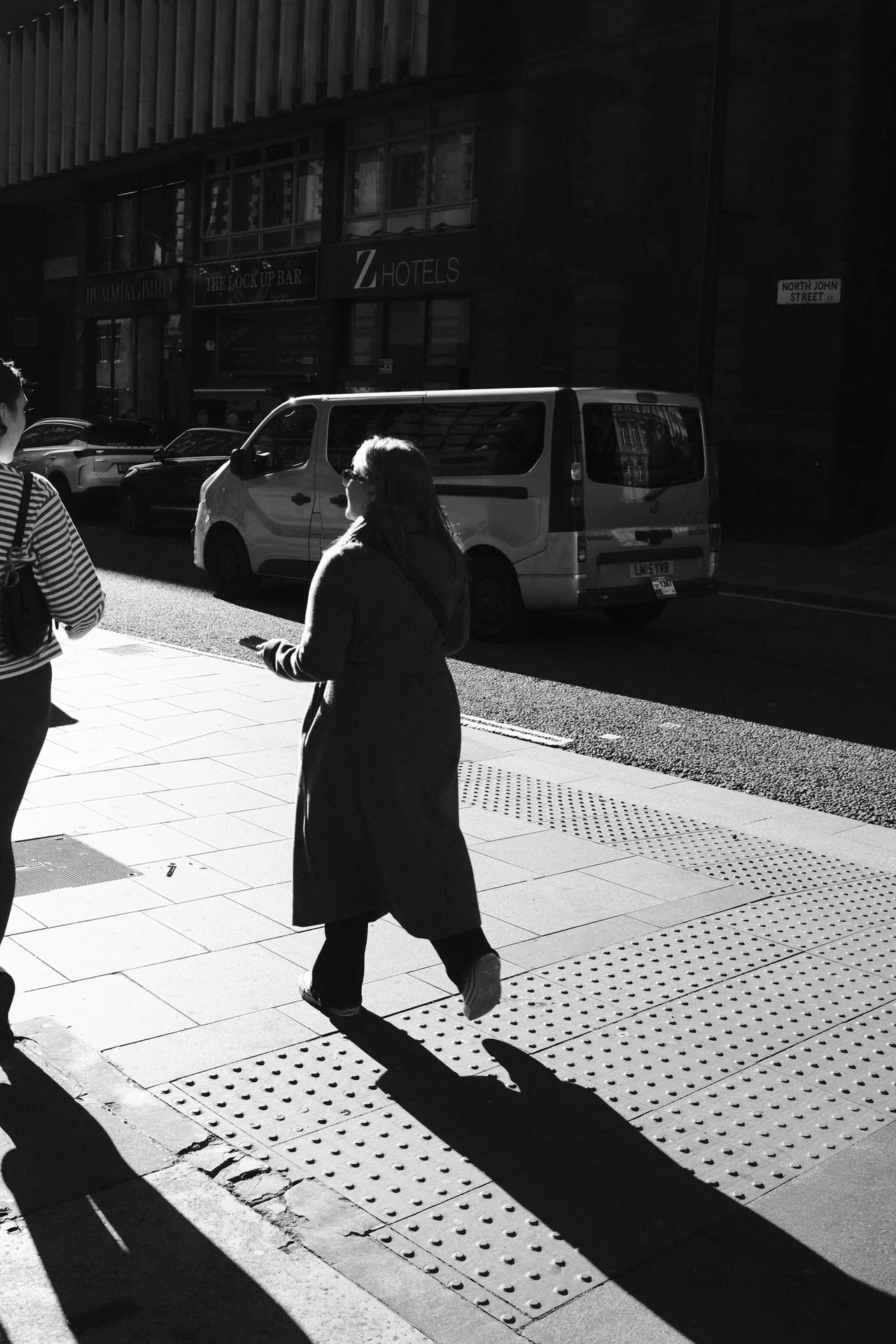
One step changes the picture
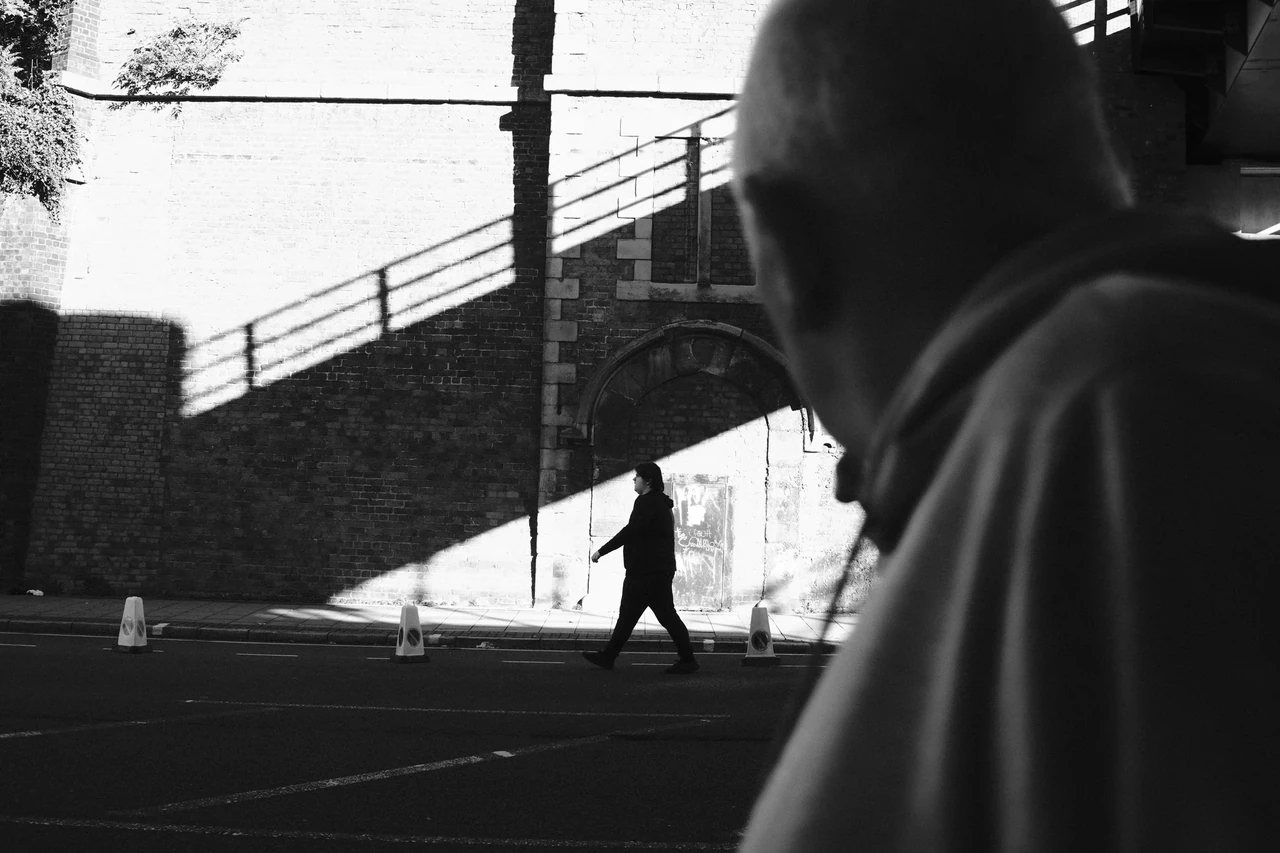
A figure crosses a sharply divided patch of pavement, with a long shadow extending across it. Light makes the pedestrian and the ground separate clearly. Follow the shadow towards the edge. It is part of the composition, not an accessory to the person.
Crossing into Sunlight · Photograph © Mark C GrantPrecision helps; attention chooses
Sharpness lets a small gesture survive enlargement. Accurate focus can save a passing expression. Better low-light capture can preserve a scene you could barely photograph before. Google’s HDR+ research gives a concrete example: several recorded frames are aligned and merged to manage noise and dynamic range. Computational photography can help describe an encounter; its presence alone does not make the encounter fictional.
Yet technical precision and expressive precision are different achievements. An image can contain every paving stone and leave us uncertain why we are looking. It can lose fine detail and make a relationship unmistakable. Decide what the photograph needs: a readable face, the separation of two silhouettes, the movement of a body, the density of a crowd.
Rangefinder practice can make those decisions deliberate because distance, framing and anticipation ask for attention. It can also keep you so busy with the patch that the photograph walks past. Learn the mechanism, then allow it to become ordinary. There is no extra artistic credit for struggling with equipment in public.
A convincing image and an actual encounter
Generative imaging can produce a plausible street without the depicted people ever meeting. Adobe’s documentation distinguishes generating whole images from adding or replacing parts of an existing one. Both are different from selecting a camera exposure of an encountered scene. A generated illustration may be imaginative and valuable. It cannot document that invented encounter having occurred.
The value we place on witnessed moments is an editorial position, not a claim that photographs are mechanically honest. A recorded scene can be staged; an accurate frame can carry a false caption; a sequence can imply a connection between unrelated events. Photographic evidence needs context. A file’s appearance, whether beautifully clean or battered with grain, does not establish its history.
For this practice, preserve the captured files and describe major interventions plainly. Keep tonal interpretation distinct from changing who or what was present. Noise reduction, automated selection and generated replacement are not interchangeable operations. Ask what the tool changed and what you are claiming, rather than settling the argument with either “AI” or “authentic”.
Make a record worth coming back to
The persuasive answer to endless polished imagery is to make photographs with particular attachments: this crossing, this weather, this temporary arrangement, this person who agreed to be seen. Repeated visits can build a record that a single spectacular frame cannot. Shops change, bodies move differently through a place, and your own attention changes. Keep dates and locations where appropriate; protect details that would expose someone unnecessarily.
Edit for difference as well as consistency. Let a wide view establish the space, a near frame complicate it and a quiet photograph slow the reader down. Keep enough context to resist turning everyone into an interchangeable silhouette. Share the work in ways that invite looking and, where possible, conversation. A small print shown to someone who knows the place can begin an exchange that a thousand passing thumbnails never will.
The street remains worth photographing because it continues beyond our intentions. People surprise us. Light fails to cooperate. A good picture can hold a piece of that encounter while acknowledging how much remains outside the frame. That is plenty to work with. Take the camera for a walk.
Watch, then try
Take Better Photos Episode 8 - What to Photograph
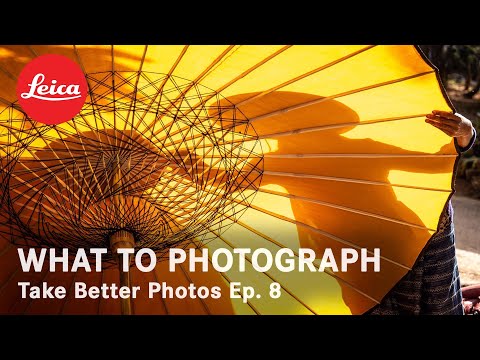
Notice how habits determine what becomes a subject. On the next walk, photograph one ordinary thing you normally pass without considering.
Sources & further looking
Facts checked 22 October 2026. The practical exercises and critical readings are this publication’s editorial interpretation.
Take this to the discussion.
A question, an example, a picture that proves us wrong. Specific beats loud.
Open the conversation ↗