Set a distance you can recognise
Zone focusing means setting focus in advance and working within a depth range that looks acceptably sharp for your intended output. It is not the claim that everything is in focus. Start by learning what two, three and five metres look like. Check your guesses against a known distance at home, then practise on static objects outdoors.
Choose a camera position and let a moving subject enter the useful range. This is different from chasing someone while hoping the scale on the lens will sort it out. The technique works best when your composition and your distance are decisions you have already made.
A moving shape against a steady one
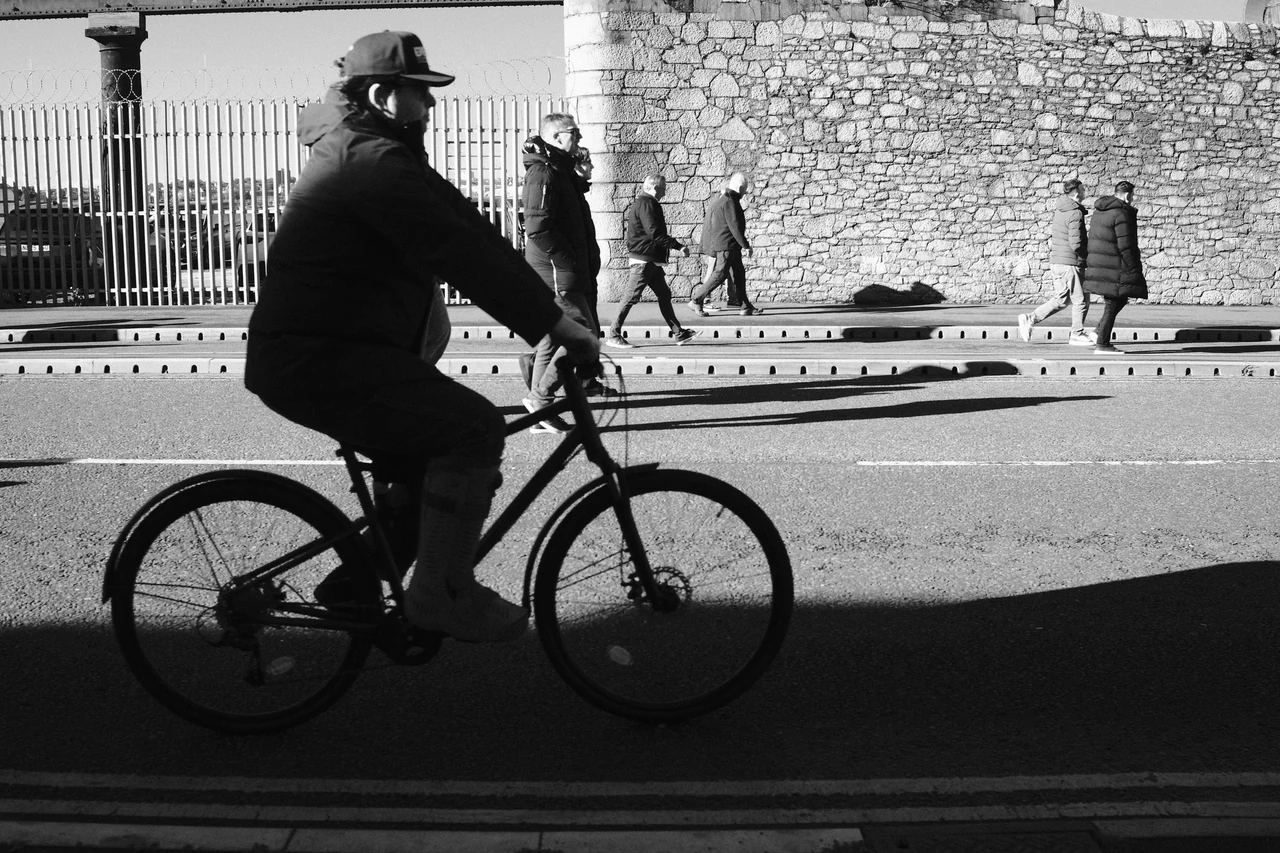
The cyclist occupies the dark foreground while the sunlit wall supplies a broad, textured backing. The wheels and the body form a shape you can recognise quickly. Read the silhouette first, then the smaller figures along the wall. The second look brings another scale into the photograph.
Cyclist by the Dock Wall · Photograph © Mark C GrantThe variables still apply
A smaller aperture generally increases depth of field, while a longer actual focal length and a shorter focus distance tend to make it shallower. The acceptable range also depends on the sharpness criterion: enlargement, display size and viewing distance matter. A lens scale is a guide, not a guarantee that a pixel-level inspection will look perfect.
Use the Notebook’s depth-of-field calculator to explore the relationship. It uses a conventional circle of confusion, clearly shown alongside the result. Enter the actual focal length, not its full-frame equivalent. For a 23mm lens on APS-C, enter 23mm and choose APS-C.
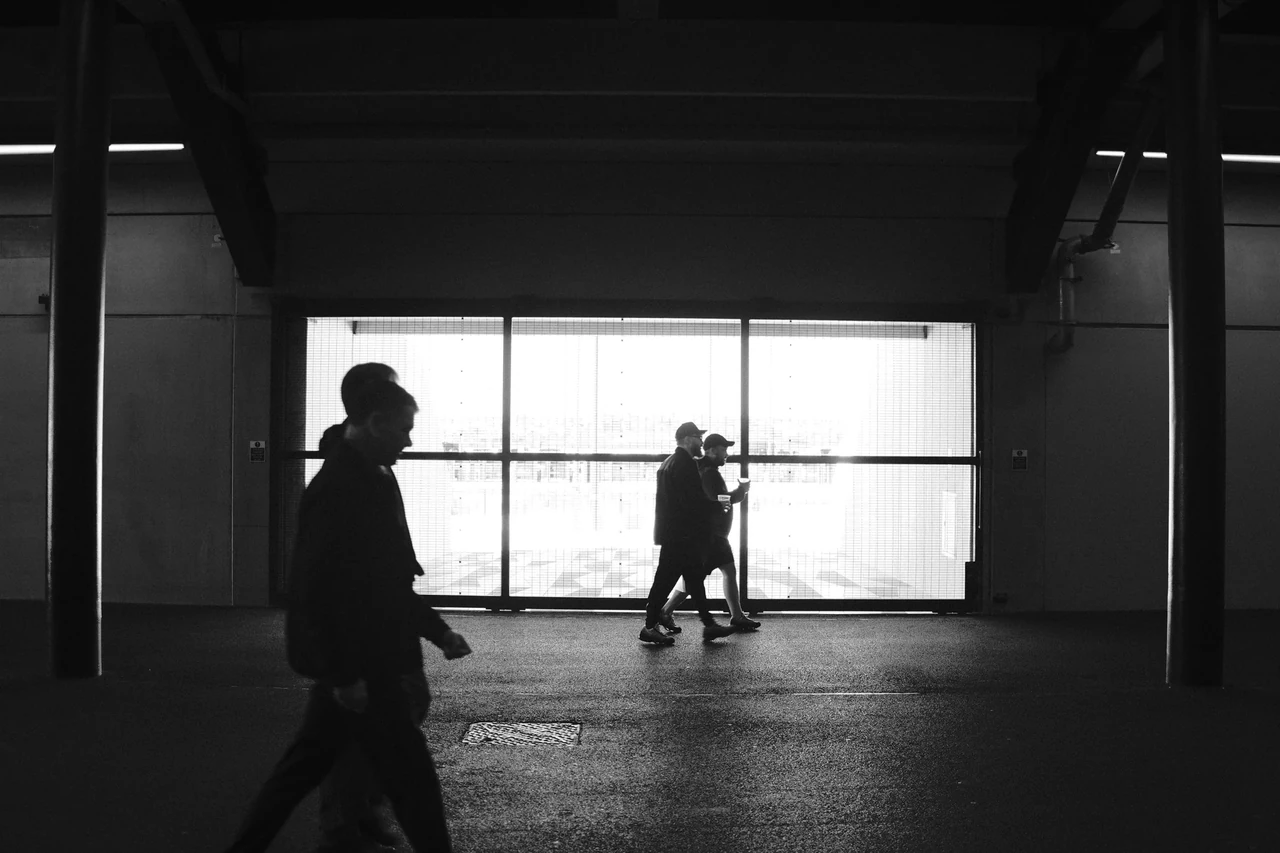
Separate silhouettes
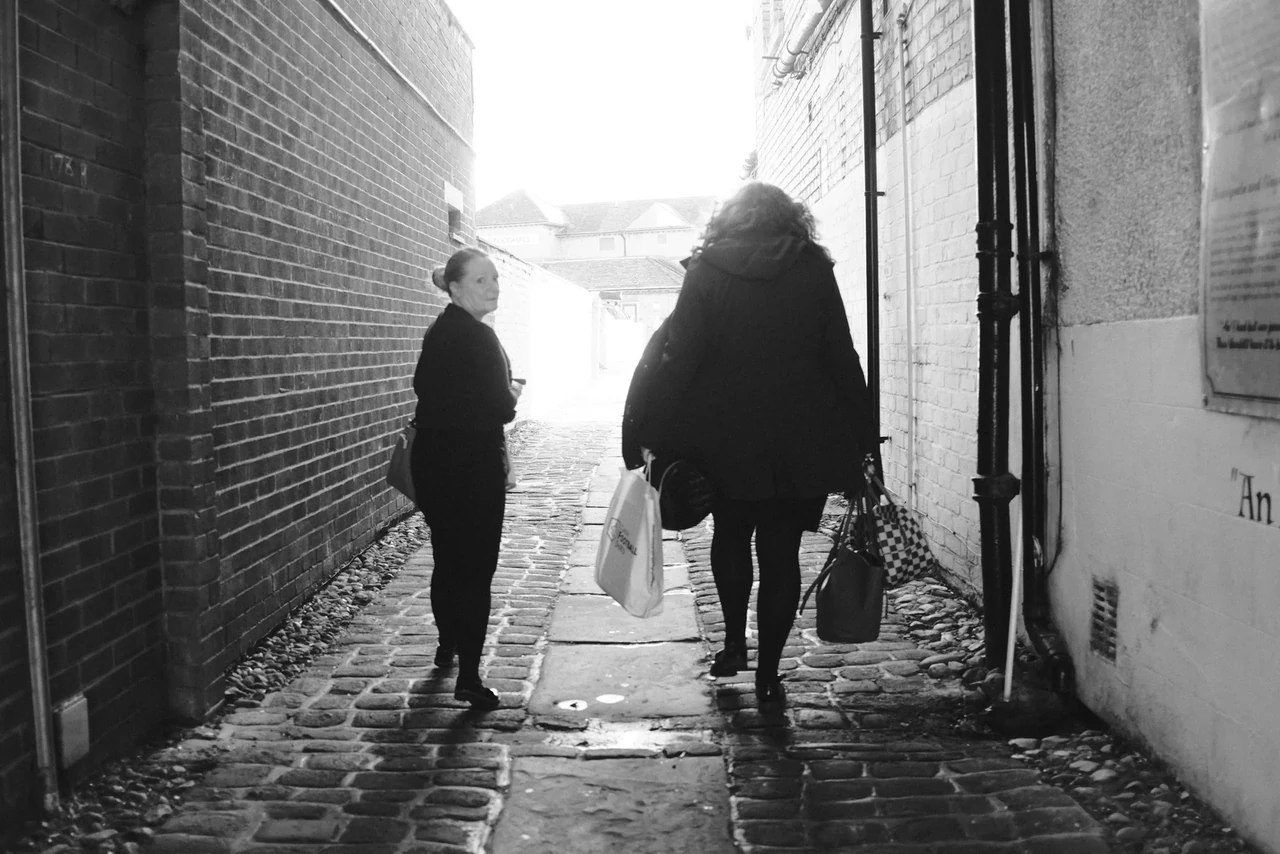
The bright opening gives the figures a clear background. The foreground silhouette and the smaller people beyond sit on different planes. Look at the space around each outline. When two silhouettes touch, separate bodies can become one difficult shape; a tiny change in timing can matter.
Figures against the Light, Bramley Moore · Photograph © Mark C GrantExposure has to come along
Stopping down costs light. If that forces the shutter too slow for a walking subject, you have traded a focusing problem for motion blur. In bright conditions, f/8 and a reasonably fast shutter can be a useful experiment. In dim light, you may need more ISO, a wider aperture, a different focus method or a different picture.
There is no universal street setting. Start around 1/500 second for ordinary walking movement when the light allows, inspect your results, and adjust for subject speed and your own steadiness. Stabilisation can help camera shake; it does not stop the person moving through the frame.
Test it before trusting it
Make a small sequence with subjects at the near boundary, the focus point and the far boundary. Judge them at your actual output size. If the near edge disappoints, allow more margin. If the whole image is smeared in one direction, investigate movement rather than the distance scale.
Autofocus is not a moral failure. Zone focus earns its place when it removes a delay and helps you see. Use the method that serves the frame, not the one that wins the pub argument.
Practical guidance from Captured Moment. Starting points to test in your own work, not universal camera settings.
Take this to the discussion.
A question, an example, a picture that proves us wrong. Specific beats loud.
Open the conversation ↗