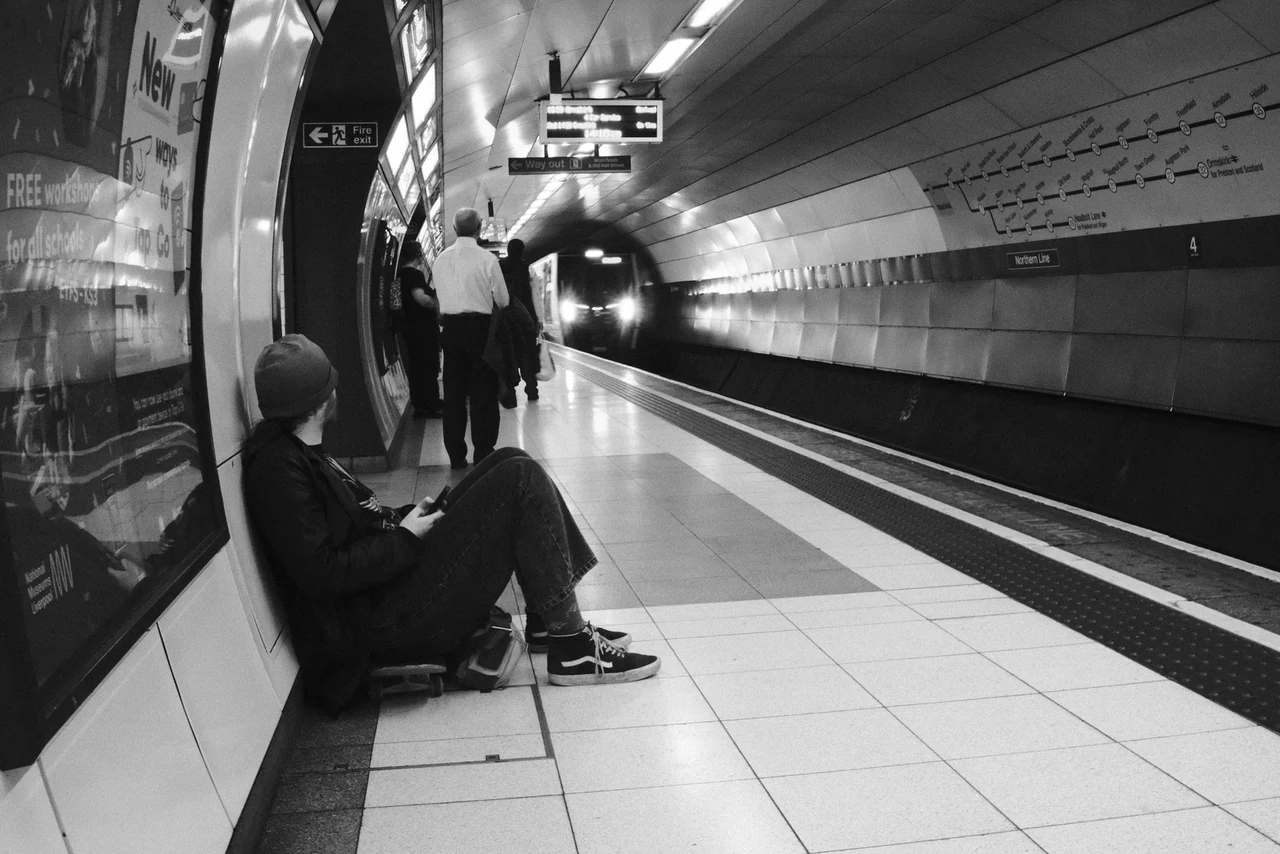
Begin with attention, not ambush
Walk the route once without taking a photograph. Notice where people pause, how light changes a doorway and which places need room to breathe. Make a few pictures about space rather than faces. Learn to be present before trying to be brave.
Hold the camera normally. Concealment and sudden lunges can make you seem more alarming than the camera itself. There is no reliable technique for making everybody ignore you, and no entitlement to their comfort. Aim for considerate behaviour rather than the fantasy of never being noticed.
The background is already working
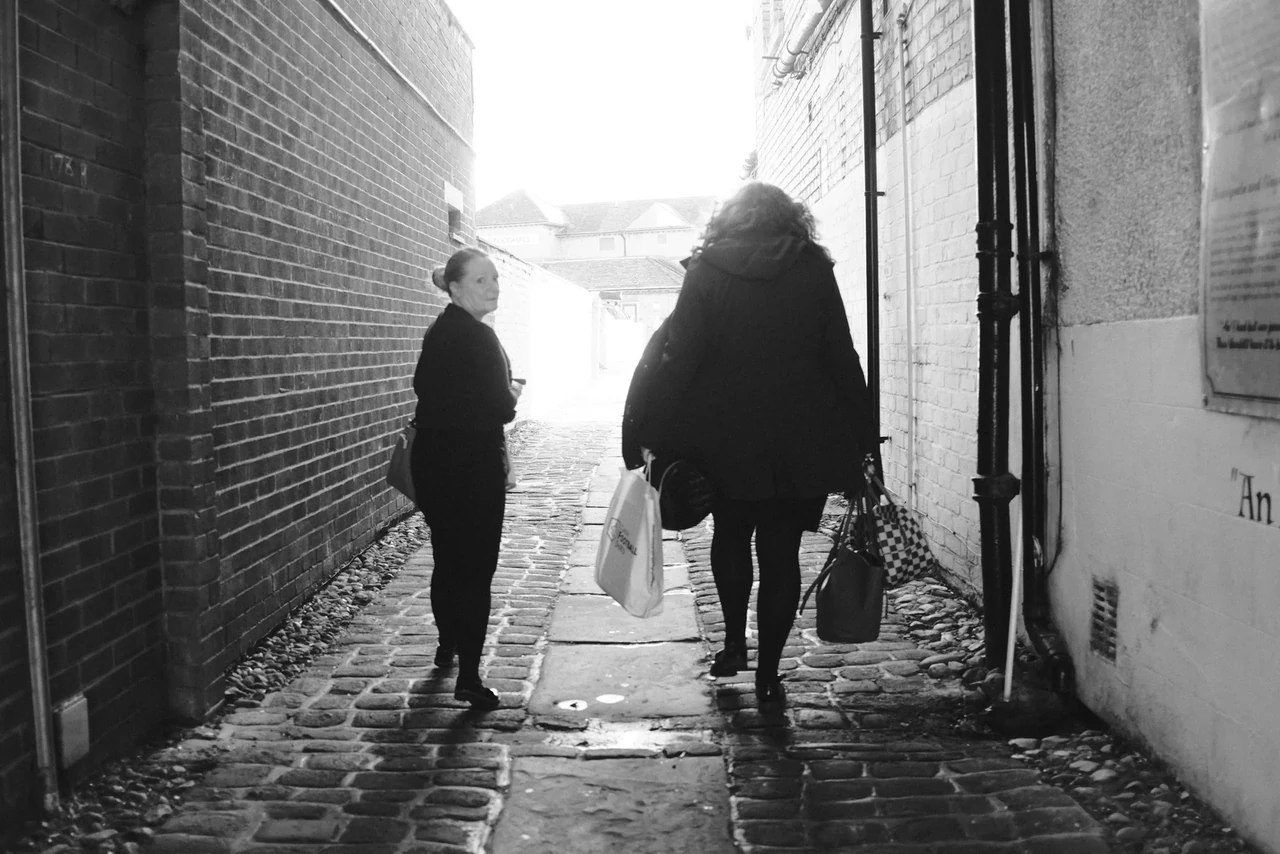
The bright opening pulls the eye through a darker passage. People crossing that route supply changing silhouettes and overlaps. Look at the gap between the two larger figures. You can understand the composition without knowing their destination, their names or the camera settings.
Figures in the Cobbled Passage · Photograph © Mark C GrantHave a plain explanation ready
If somebody asks, explain honestly that you are making street photographs and what caught your eye. Do not claim to work for a newspaper, charity or project that does not exist. If the conversation is welcome, show the frame where practical. Do not promise a copy or removal you cannot deliver.
A posed portrait after a conversation and an unposed street scene are different kinds of photograph; both can matter. Describe the circumstances honestly. Candid is a method, not a certificate of artistic superiority.
Look through the shade
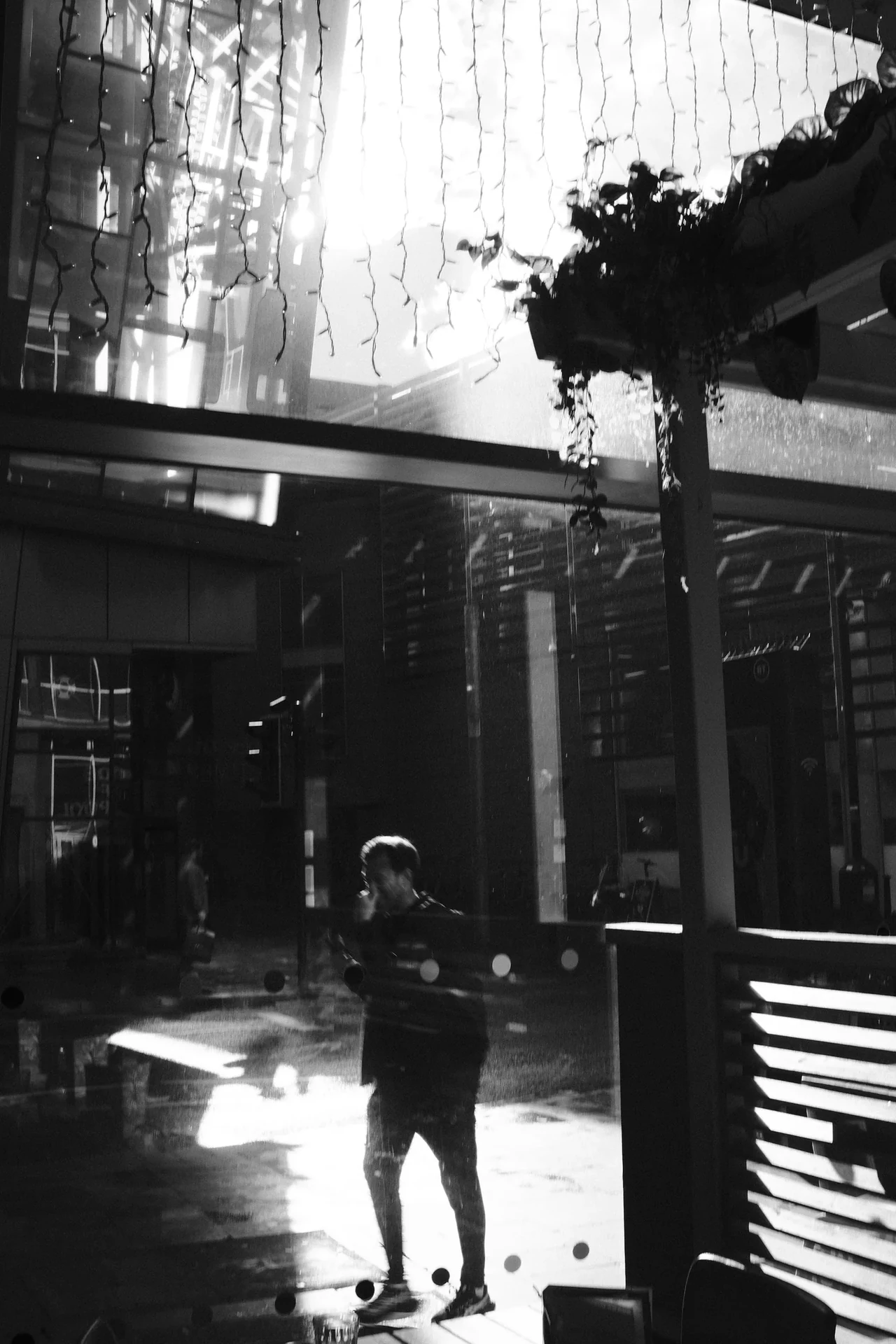
The shaded frontage creates a near layer; the brighter pavement and figure create another beyond it. The contrast invites the eye outward. Notice how the surrounding darkness frames the light without needing to disappear entirely. Keep enough of that structure to understand where you are looking from.
Light outside the Cafe · Photograph © Mark C GrantWatch, then try
#LeicaConversations - Street Photography and Beyond with Matt Stuart

Compare the discussion of London street pictures with the longer community project. What changes when a photographer returns and gets to know a place?
A refusal is information
Do not chase, block or repeatedly photograph someone who is trying to disengage. A request to stop is a reason to stop and reconsider the frame. Be especially careful around distress, vulnerability and children. An image can be legally possible and still be a poor choice to make or publish.
This lesson is conduct guidance, not a summary of photography law. Rules differ by place, access conditions and intended use. For a specific situation, check relevant current official guidance rather than treating a slogan about public space as a universal answer.
Connection does not require a biography
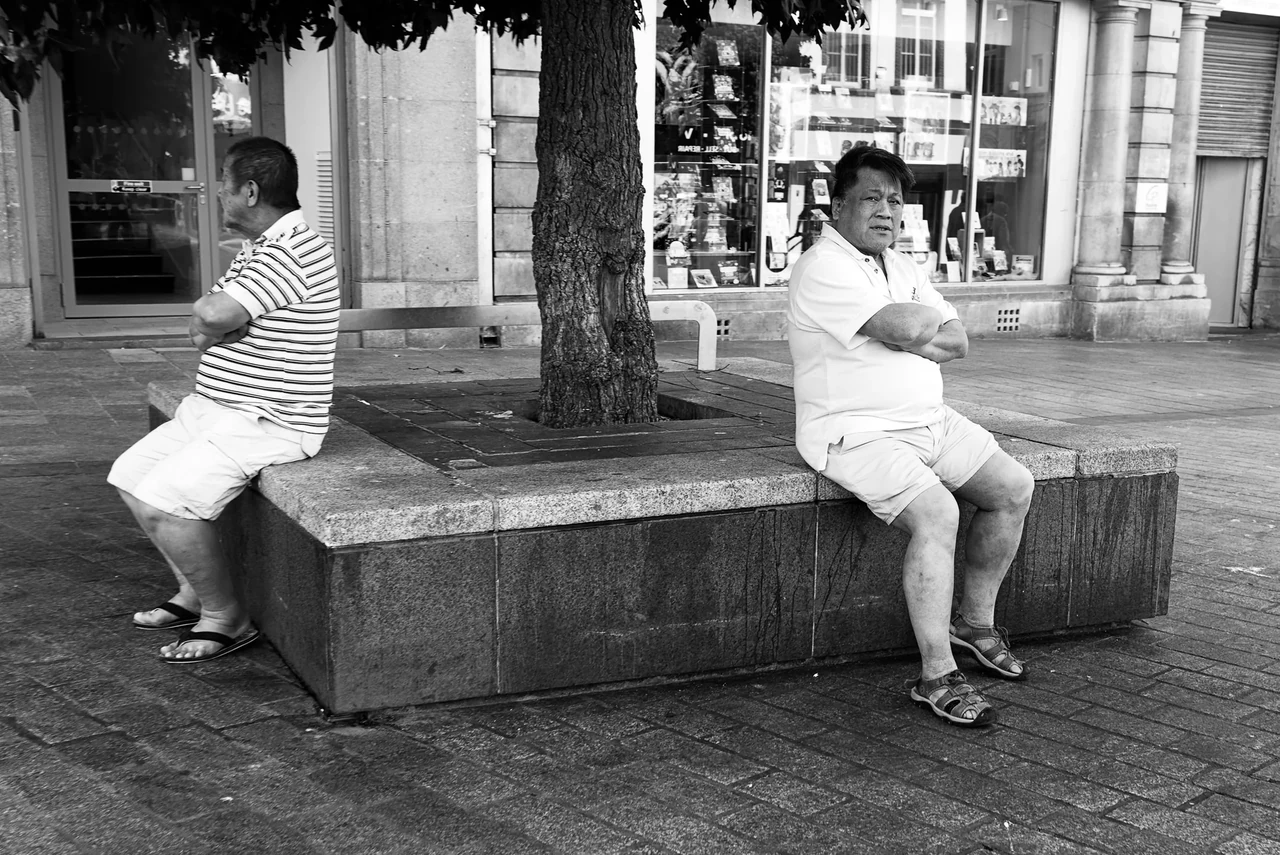
The photograph of two seated figures gives us posture, distance and a shared structure. It does not tell us whether they know each other. That uncertainty can stay in the picture without an invented caption claiming loneliness, friendship or a secret quarrel.
After a walk, write factual captions: what you can identify, where and when if known, and whether anything was arranged. Separate those facts from your interpretation. Connection can begin with giving somebody your attention; it should not end by assigning them a story that belongs to you.
Watch, then try
Take Better Photos Episode 8 - What to Photograph
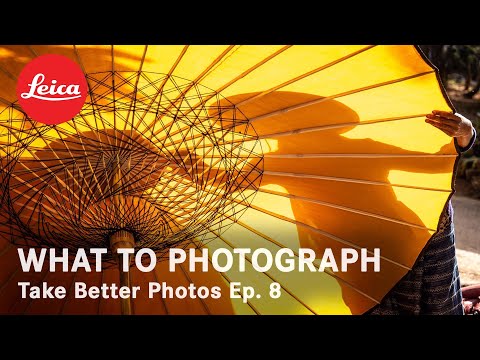
Notice how habits determine what becomes a subject. On the next walk, photograph one ordinary thing you normally pass without considering.
Review your photographs
- Did your behaviour leave people room to carry on?
- Are your captions facts rather than invented emotions?
- Would you stand by the publication context if the subject saw it?
If it is not working yet
If fear makes you snatch every frame, practise space and light first. If confidence becomes entitlement, put the camera down and reset.
Practical guidance from Captured Moment. Starting points to test in your own work, not universal camera settings.
Take this to the discussion.
A question, an example, a picture that proves us wrong. Specific beats loud.
Open the conversation ↗