William Klein: In Pictures
Look for how the book and the street change each other. After watching, place six of your own photographs in two different orders and describe the difference without using the word cinematic.
Watch / 30 films
Rangefinder demonstrations, photographic fundamentals and artists at work. Pick a question, watch a film, take it outside.
Look for how the book and the street change each other. After watching, place six of your own photographs in two different orders and describe the difference without using the word cinematic.

Listen for why a scene earns a photograph. On your next walk, look for a relationship between two things rather than a single interesting person; make three frames from different positions.

Watch how surprise and time with people sit together. Return to one familiar place, have a conversation if welcome, and make one picture whose meaning depends on what you learned.

Notice who is being represented and who has a voice in that representation. With a willing participant, agree how a portrait will be used, make it together, and let them respond to your selection.

Look for a small ordinary detail that becomes strange through attention. Make a quiet three-picture sequence near home, connected by a shape or gesture rather than by identical subjects.

Listen for what carries across photography, film and a small screen. Make a five-frame account of one short walk: an opening, a detail, an encounter, a change and a departure.

Watch how a few marks make a figure move. On the street, look for one clear silhouette or gesture; leave enough space for the action to read before adding another element.

A manufacturer’s promotional film, not a recipe tutorial. Compare the bright edges, middle greys and dark areas. Choose a tonal direction for your own twelve frames; the photographs here do not promise the same result from one setting.
An independent walkthrough of assigning custom settings. Follow the saving process, then check your own model’s manual: menus and the settings stored in a bank vary. Name one saved bank before starting your twelve exposures.

Japan House at the University of Illinois introduces the tea bowl. Watch the attention given to the object and its handling. Afterwards, spend two minutes with an ordinary object before deciding what belongs in the frame.

Jamie Windsor examines how a successful frame is recognised. Before accepting a selection, compare what changes in its neighbours. Write a visible reason for choosing your own frame.

Ted Forbes opens Magnum Contact Sheets. Follow the relationship between a working sheet and a chosen photograph; then keep the complete sequence from your next walk.

An independent creator offers a different Moriyama-inspired Fujifilm interpretation. This is not Moriyama teaching his settings, and it is not the Justin Gould recipe tabulated here. Compare the visual priorities rather than mixing two sets of numbers.

Leica Camera / 3 min
Watch the focusing patch become one image. Then lower the camera and practise moving between a near edge and a distant edge before worrying about a photograph.
Open the lesson ↗
RedDotForum / 17 min
Start with the patch demonstration, then compare zone focusing at 4:33 with distance estimation at 7:41. Which decisions can you make before lifting the camera?
Open the lesson ↗
Eric Kim / 11 min
Watch how the distance and aperture scales work together. Set a modest working zone, then test its near and far limits on your own files at the size you actually use.
Open the lesson ↗
Leica Camera Australia / 47 min
Watch for what changes besides brightness when the aperture changes. Make two frames of the same layered scene and compare whether the background helps or competes.
Open the lesson ↗
Leica Camera Australia / 49 min
Pause on the movement examples. Choose whether your own passing subject should freeze or smear before you choose the shutter speed.
Open the lesson ↗
Leica Camera Australia / 56 min
Separate a brighter preview from more light reaching the sensor. Pick the shutter speed for movement and the aperture for depth, then work out what ISO is doing.
Open the lesson ↗
Leica Camera Australia / 71 min
Notice which choices change the appearance of sharpness. Test a nearby subject and its background instead of treating a depth-of-field scale as a guarantee.
Open the lesson ↗
Leica Camera Australia / 65 min
Look for relationships between elements rather than a grid to obey. Pause on a frame and name what changes if one object touches the edge.
Open the lesson ↗
Leica Camera Australia / 54 min
Notice how habits determine what becomes a subject. On the next walk, photograph one ordinary thing you normally pass without considering.
Open the lesson ↗
Leica Camera / 5 min
Watch the relationship between a position in the street and the finished frame, then the digital editing choices. Decide which part of the picture was made by waiting and which by processing.
Open the lesson ↗
Leica Camera / 83 min
Listen for the role of repetition and failed attempts. Choose one useful habit to repeat for a week rather than expecting every walk to produce a keeper.
Open the lesson ↗
Leica Camera USA / 67 min
Compare the discussion of London street pictures with the longer community project. What changes when a photographer returns and gets to know a place?
Open the lesson ↗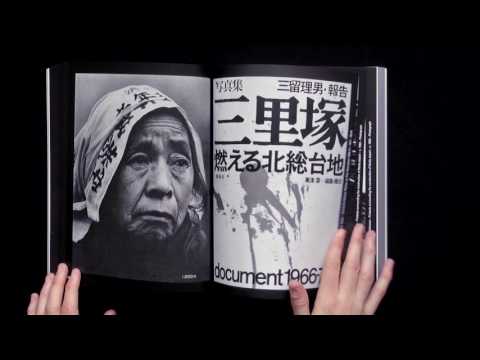
Fotomuseum Winterthur / 13 min
Watch the catalogue as a sequence, not a bag of gritty effects. Notice page turns, scale and competing images; read the accompanying history before treating blur as the whole argument.
Read the essay ↗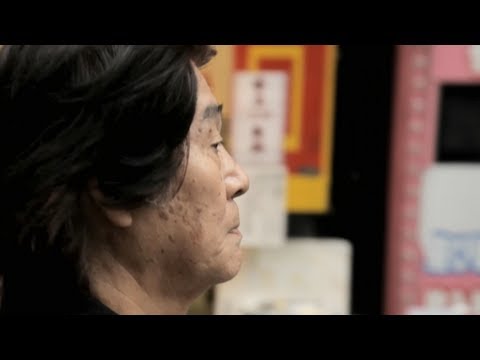
01 / Tate
Start with Misawa, the stray dog. What do you read in the face before you learn the story of the encounter? Moriyama says the print surprised him: the meaning was not all settled at the shutter.
Second look: Follow the changes of subject: street, car, person, poster, screen. Which frames make a flat printed surface feel as alive as a person?
Read the profile ↗02 / SFMOMA
Start with Misawa, the stray dog. What do you read in the face before you learn the story of the encounter? Moriyama says the print surprised him: the meaning was not all settled at the shutter.
Second look: Follow the changes of subject: street, car, person, poster, screen. Which frames make a flat printed surface feel as alive as a person?
Read the profile ↗03 / SFMOMA
As the film moves through Pottery Town, look for the small workshops and chimneys. How does an industry become visible in the surrounding air and streets, not just in a worker's portrait?
Second look: Watch the shift from Seto's coal smoke to Yokkaichi's petrochemical industry. Which visual details would tell you a place was changing if the captions were removed?
Read the profile ↗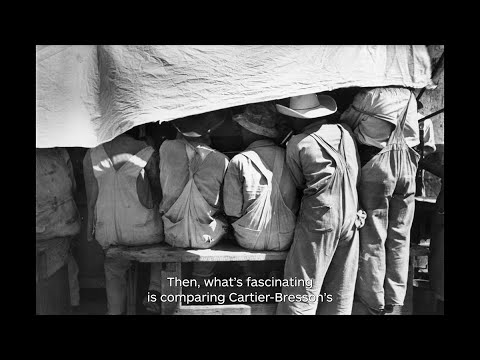
04 / Fondation Henri Cartier-Bresson
Open Vendeuses de journaux, Calle Cuauhtemoctzin, Mexico, 1934–1935 on the Foundation page. Follow your eye through the sellers, newspapers and frame edges. Which relationship holds the scene together?
Second look: Compare the Foundation's paired Mexico pictures. How does each photographer make the people feel close without turning the city into a postcard?
Read the profile ↗28 YouTube films play here after you choose Play; two SFMOMA films open at the museum. Publisher links remain available. Availability and captions can change. No gear commission or purchase requirement.